
• About Us
  • Contact
  • Privacy Policy
  • Terms and Conditions
Tuesday, May 26, 2026
  • Login
  • Register
Page3News Worldwide
  • Home
  • Page 3 Family
    • E-Paper
    • E-Magazine
    • Management Team
  • Subscriptions
  • Countries
    • USA
    • Canada
    • India
    • Balochistan
    • Thailand
    • UK
    • Australia
  • Language Wise News
    • Thai News
    • Punjabi News
    • Hindi News
  • Other News
    • World News
    • Latest Movie Reviews
    • Culture
    • Finance
    • Hollywood
    • Business
    • Entertainment
    • Sports
    • Lifestyle
    • Fashion
    • food
    • Health
    • Travel
    • Politics
    • Science
    • Tech
  • Multilingual Editorial
    • English Editorials
    • Thai Editorials
    • Hindi Editorials
    • Punjabi Editorials
    • Page3News Special
No Result
View All Result
  • Home
  • Page 3 Family
    • E-Paper
    • E-Magazine
    • Management Team
  • Subscriptions
  • Countries
    • USA
    • Canada
    • India
    • Balochistan
    • Thailand
    • UK
    • Australia
  • Language Wise News
    • Thai News
    • Punjabi News
    • Hindi News
  • Other News
    • World News
    • Latest Movie Reviews
    • Culture
    • Finance
    • Hollywood
    • Business
    • Entertainment
    • Sports
    • Lifestyle
    • Fashion
    • food
    • Health
    • Travel
    • Politics
    • Science
    • Tech
  • Multilingual Editorial
    • English Editorials
    • Thai Editorials
    • Hindi Editorials
    • Punjabi Editorials
    • Page3News Special
No Result
View All Result
Page3News Worldwide
No Result
View All Result
Home World News

Taliban’s New Law Legalises Slavery In Afghanistan, Makes Mullahs Immune

by Page 3 News International Desk
January 29, 2026
in World News, Page3News Special
0
Taliban’s New Law Legalises Slavery In Afghanistan, Makes Mullahs Immune
0
SHARES
4
VIEWS
Share on FacebookShare on TwitterShare on WhatsappShare on TelegramShare on LineShare on Email

Under the new system, punishment for the same crime is no longer determined primarily by the nature or gravity of the offence but by the social status of the accused.

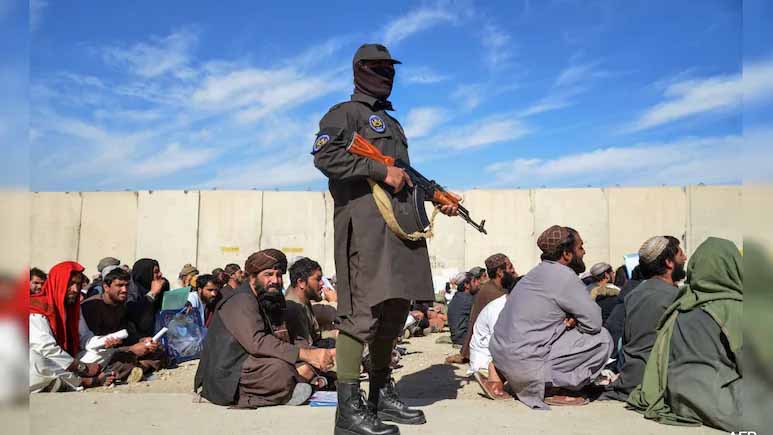
The Taliban has formally entrenched a class-based justice system in Afghanistan under a newly enacted Criminal Procedure Code signed by its supreme leader, Hibatullah Akhundzada, a move that has sparked outrage among human rights organisations and renewed international concern over the direction of the country’s legal and political order.

The new code, issued on January 4, 2026, and circulated to courts across the country, has been obtained by Rawadari, an Afghan human rights organisation that monitors violations and advocates for accountability. While the document spans 119 articles across three sections and 10 chapters, critics say one of its most alarming features is the explicit legalisation of social hierarchy within the justice system itself.

Hierarchy-Based Division

At the centre of the controversy is Article 9, which divides Afghan society into four categories: religious scholars (ulama or mullah), the elite (ashraf), the middle class, and the lower class. Under this system, punishment for the same crime is no longer determined primarily by the nature or gravity of the offence but by the social status of the accused.

According to the code, if an Islamic religious scholar commits a crime, the response is limited to advice. If the offender belongs to the elite, the consequence is a summons to court and advice. For those in the so-called middle class, the same offence results in imprisonment. But for individuals from the “lower class”, the punishment escalates to both imprisonment and corporal punishment.

Human rights groups said this provision effectively grants clerics and religious figures near-total immunity from meaningful criminal accountability while exposing poorer and more marginalised Afghans to harsher and more violent penalties. 

“This is not a justice system; it is a legally codified hierarchy of privilege,” Rawadari said in a statement, warning that the code destroys the principle of equality before the law and replaces it with institutionalised discrimination.

Return Of Slavery? 

Legal experts note that the move marks a sharp departure even from basic concepts of modern criminal law, where punishment is supposed to be proportionate to the crime and based on individual responsibility, not social background. By contrast, the Taliban’s new code openly embraces social stratification as a legal principle, turning courts into instruments for preserving and enforcing a rigid social order.

RelatedPosts

Part 1: Khair Baksh Marri as a Political Philosopher and the Baloch National Case

China Intensifies Crackdown on Taiwanese Religious Followers, Three Detained

Can AI fix Dhaka’s traffic chaos? Bangladesh police say results already visible

The class-based system is compounded by another deeply controversial element– the code’s repeated references to “free” persons and “slaves”. 

In several articles, including provisions on punishment, the law explicitly distinguishes between free individuals and enslaved ones, a terminology that human rights advocates say amounts to the legal recognition of a status that is absolutely prohibited under international law. Slavery is banned in all circumstances under peremptory norms of international law, yet the Taliban’s code treats it as a normal legal category.

Words Over Proof?

Beyond social hierarchy, the new Criminal Procedure Code also strips away many of the most basic safeguards of due process. The document does not recognise the right to a defence lawyer, the right to remain silent or the right to compensation for wrongful punishment. It relies heavily on “confession” and “testimony” as the main means of proving guilt, while removing the requirement for independent investigation and failing to set clear minimum and maximum penalties for crimes.

Rights groups warned that this legal framework dramatically increases the risk of torture and forced confessions, particularly in a system where judges and law enforcement operate without oversight or accountability.

The code also significantly expands the use of corporal punishment, including flogging, and introduces vaguely defined offences such as “dancing” or being present in “gatherings of corruption”, giving judges sweeping discretion to detain and punish people for ordinary cultural or social activities.

A Human Rights Challenge 

For many observers, however, the formalisation of class-based justice is the clearest signal yet that the Taliban is not merely imposing harsh laws, but reconstructing the entire legal system around privilege, loyalty and religious status. “By placing clerics and religious elites above the law, the Taliban has effectively announced that some people are untouchable, while others are permanently disposable,” Rawadari said.

The organisation has called for the immediate suspension of the code’s implementation and urged the United Nations and the international community to use all available legal and diplomatic mechanisms to prevent its enforcement. It has also pledged to continue monitoring the situation and to publish regular reports on how the new legal framework is being used in practice.

As Afghanistan becomes increasingly isolated and its internal repression deepens, critics say the new criminal code sends a stark message – under Taliban rule, justice is no longer blind, it is stratified, selective and firmly aligned with power.

Get real time update about this post categories directly on your device, subscribe now.

Unsubscribe
Page 3 News International Desk

Page 3 News International Desk

The Page 3 News is a Multilingual Worldwide daily newspaper founded in 2021. It is published in Bangkok, Thailand by the Page 3 News Thai Limited Partnership. Page 3 News is available to the world in all the three formats i.e. e-Paper, digital and print. The Page 3 News is having offices in many countries like Thailand, India, Canada, USA, etc. and is currently published in English, Thai, Hindi and Punjabi languages.

Related Posts

Part 1: Khair Baksh Marri as a Political Philosopher and the Baloch National Case

by Page 3 News International Desk
May 25, 2026
0
86

By Mehr Jan Gidaan TV “There is no greatness where there is no simplicity, goodness, and truth.” Leo Tolstoy Generally,...

China Intensifies Crackdown on Taiwanese Religious Followers, Three Detained

China Intensifies Crackdown on Taiwanese Religious Followers, Three Detained

by Page 3 News International Desk
May 25, 2026
0
7

Taiwan has sharply accused China of escalating its intimidation campaign against Taiwanese religious followers after three citizens linked to the...

Can AI fix Dhaka’s traffic chaos? Bangladesh police say results already visible

Can AI fix Dhaka’s traffic chaos? Bangladesh police say results already visible

by Page 3 News International Desk
May 25, 2026
0
2

In April, Dhaka police introduced an AI-powered traffic monitoring system that links roadside cameras with software capable of automatically detecting...

Trump’s Abraham Accords push puts Pakistan in existential bind

Trump’s Abraham Accords push puts Pakistan in existential bind

by Page 3 News International Desk
May 25, 2026
0
1

US President Donald Trump has reportedly urged Pakistan and several Muslim-majority nations to join the Abraham Accords after the Iran...

Toshifumi Suzuki, father of Japan’s convenience stores, dies at 93

Toshifumi Suzuki, father of Japan’s convenience stores, dies at 93

by Page 3 News International Desk
May 25, 2026
0
1

Toshifumi Suzuki pioneered the use of data to tailor inventory and built a business model centred on ready-to-eat meals and...

China coast guard ship withdraws after tense standoff with Taiwan near Pratas Islands

China coast guard ship withdraws after tense standoff with Taiwan near Pratas Islands

by Page 3 News International Desk
May 25, 2026
0
1

Pratas Islands standoff escalated after a Chinese coast guard ship entered waters near the Taiwan-controlled atoll before withdrawing following a...

Facebook Twitter Youtube Instagram Tumblr Pinterest

Page 3 News Multilingual Worldwide

The Page 3 News is a Multilingual Worldwide daily newspaper founded in 2021. It is published in Bangkok, Thailand by the Page 3 News Thai Limited Partnership. Page 3 News is available to the world in all the three formats i.e. e-Paper, digital and print.

The Page 3 News is having offices in many countries like Thailand, India, Canada, USA, etc. and is currently published in English, Thai, Hindi and Punjabi languages.

Category

Calanderwise News

May 2026
MTWTFSS
 123
45678910
11121314151617
18192021222324
25262728293031
« Apr    

© 2024 Page 3 News - First Multilingual Worldwide Newspaper based in Thailand.

Welcome Back!

Login to your account below

Forgotten Password? Sign Up

Create New Account!

Fill the forms below to register

*By registering into our website, you agree to the Terms & Conditions and Privacy Policy.
All fields are required. Log In

Retrieve your password

Please enter your username or email address to reset your password.

Log In

Add New Playlist

No Result
View All Result
  • Home
  • E-Magazine
  • Management Team
  • Subscriptions
  • E-Paper
  • World News
  • Balochistan
  • USA
  • India
  • Thailand
  • Canada
  • UK
  • Australia
  • About Us
  • Contact
  • Privacy Policy
  • Terms and Conditions
  • Disclaimer

© 2024 Page 3 News - First Multilingual Worldwide Newspaper based in Thailand.

This website uses cookies. By continuing to use this website you are giving consent to cookies being used. Visit our Privacy and Cookie Policy.