

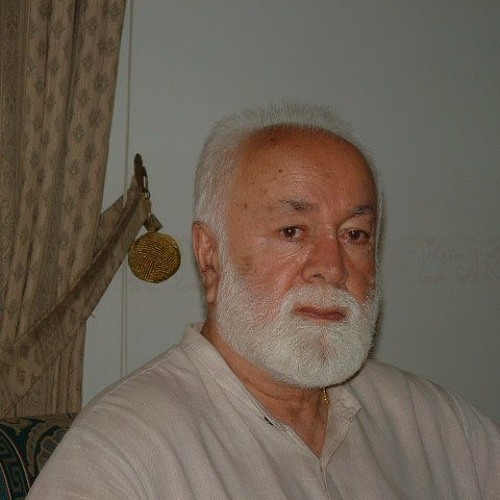
By Mehr Jan Gidaan TV
“There is no greatness where there is no simplicity, goodness, and truth.” Leo Tolstoy
Generally, in the field of philosophy, those who present their philosophical system are considered philosophers. However, if philosophers are evaluated by this strict criterion, then Socrates would be the first to be excluded from the list of philosophers. He endeavored to rationalize societal conventions through critical thinking; seeking conclusions that justified their existence. Socrates is regarded as a philosopher due to his emphasis on contemplation, questioning, dialogue, and seeking truth in order to explore political, moral, and philosophical paths. His act of encouraging young minds in Greece’s streets to think, understand, and ponder; questioning the gods of the time, ultimately led to his punishment – being forced to drink the cup of poison. According to Alain Badiou, this very approach earns him a place in the ranks of philosophers.
In contrast, Galileo’s approach of questioning established beliefs through reasoning and experimentation, and choosing to live, doesn’t exclude him from being a philosopher either. Both figures swam against the tide of popular and accepted ideas of their time; one accepted death after questioning and debating, while the other persevered and continued his work. Nawab Khair Baksh Marri, drawing parallels with Socrates’ defiance, challenged the powers that be to stir Baloch national awakening. Emulating Galileo’s resolve, he survived to chart the course for Baloch resistance. Nawab Khair Baksh Marri was never in favor of mere political adventurism, like political opportunists, but rather followed Socrates’ approach of contemplation, reflection, and principled stance, raising various questions, not only diagnosing the disease but also providing treatment through practical action.
He used to emphasize that “we should think, reflect, analyze collectively, and scrutinize thoroughly that what is the essence of Baloch nationalism? Moreover, what are our national objectives? What are our national issues? How should we determine the path for national struggle? Our journey is bitter and arduous, can we bear the burden and withstand the challenges? How robust is our nationalism? What kind of thinking should we have? What sort of preparation should we have? Is our training and preparation sufficient? Should a nationalist party be affiliated with the nation, homeland, or administrative unit? What are our national issues? What is the historical background and character of the enemy facing the Baloch? When and how was Pakistan formed? Was it formed forcibly or voluntarily?”
He, like Socrates, raises the question to world nations: “Is there a law made in the world that is equal for all? Against this background, he describes running after the laws made by the powerful as ritual and pretense, he questions the “definition” of terrorism set to defend imperialist ambitions: what is terrorism? When it comes to colonialism or neo-colonialism, he asks whether the British benefited India more or harmed it. Did the Roman Emperor, the English occupiers and other capitalist countries not loot the nations by harping on development in the past? Can history set an example of the occupying nations expending their energies for the well-being and development of the conquered nation beyond their own interests or out of pity?
This question to so-called champions of human rights is quite meaningful. Why should we call them the champions of human rights who want to maintain colonial Pakistan? Nawab Marri was definitely like a mind for the Baloch nation, who not only raised questions like a political philosopher in the field of politics, but also paved the way for resistance by awakening the Baloch nation from its stagnant thoughts and dreamy situations.
The term ‘Sardar Philosopher’ was first used to describe Nawab Marri in his first interview after returning from Afghanistan, published in the weekly magazine ‘Zindagi’.”
In the interview where Baba Marri discusses global capitalism with philosophical depth for over an hour, saying: ‘A flood of money has engulfed one segment of society, undermining fundamental values’. In fact, Nawab Marri was repeating the same things about capitalism, i.e., about his land, which Marx had written about how invisible forces work in capitalism and create a form of alienation. Nawab Marri also repeats the words of a French writer in this regard that “where capital dominates, the army is the biggest protector” and according to him, “Pakistan is a link in this chain of global capitalism and its territories are smaller parts of this link and the machine of global capitalism is moving.” If there is no will of this big part (country), then what will be the will of the small parts?
Nawab Marri frequently cautioned in private gatherings that while the Baloch may triumph in conventional battles and make gains in the war of media, the most perilous challenge comes from the corrupting influence of money, which has become the ultimate value in today’s world, determining the worth of all things, and disregarding national values, spirit, history etc.
Nawab Marri warned that an influx of money would lead the Baloch astray. Now, amidst this financial frenzy, we’ve wholeheartedly adopted the state’s narrative, focusing solely on criticizing the ‘Sardar’, while neglecting other threats to the Baloch nation, including state-backed elements, also keeping in view that how come a Baloch, abandon the Baloch values and succumb to Pakistani values and consider himself entitled to inheritance from it while harboring ill will against the Baloch. According to Nawab Marri, “This is a phenomenon that has had a political impact. It has also changed the situation both at the social and political levels. There is no denying that money is needed, but now it has become dominant.”
On the war front also, he was thoughtful like a military strategist regarding handling money. He was meticulous with expenses. Upon learning that a Marri guest was sent via a taxi from Karachi Defense to Malir, Nawab Marri exclaimed, ‘Taxi sak geran int’ (i.e., the fare is too high). He was resolute in his commitment to utilizing war resources prudently and efficiently for the only purpose of warfare.