
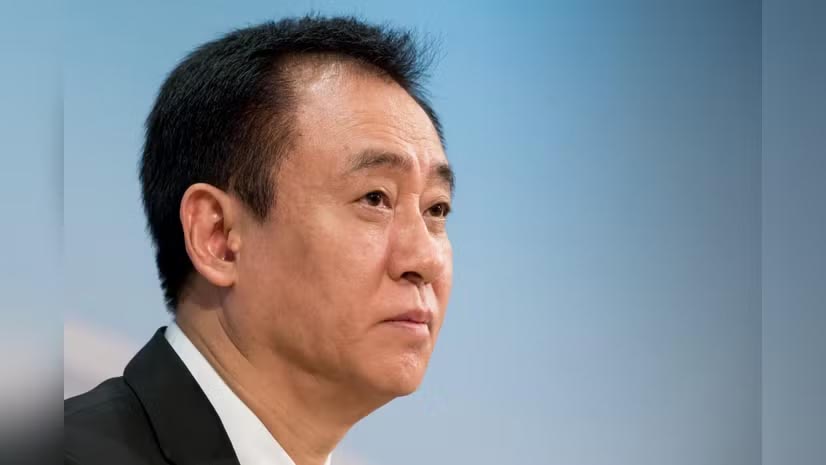
Evergrande Group’s founder Hui Ka Yan had been accused of a litany of crimes including illegally absorbing public deposits and fundraising fraud
China Evergrande Group’s founder has pleaded guilty to a number of charges including fundraising fraud and bribery in a Chinese court, cementing the downfall of a property tycoon who was emblematic of the country’s real estate boom and bust.
Hui Ka Yan, who rose from humble origins to turn Evergrande into a real estate giant that was at one time the world’s most indebted developer, had been accused of a litany of crimes including illegally absorbing public deposits and fundraising fraud, according to the official Xinhua News Agency on Tuesday.
Hui’s swift two-day trial came about three years after he was placed under police control on suspicion of criminal activity. The plea marks a crucial chapter in the aftermath of Evergrande’s collapse, which has left international bond investors and Chinese banks nursing billions of dollars of losses and raised troubling questions about when the real estate market will finally be able to return to health.
Once Asia’s second-richest man, Hui is the latest in a long line of billionaire tycoons to be ensnared by Beijing’s widening crackdown. But his fall was more prominent than most: Evergrande, which had liabilities exceeding $300 billion at its height, has been cited as a key trigger for a prolonged slump in China’s property market, which went into a downward spiral in 2021.
Hui was accused of bribery, embezzlement, unlawfully issuing loans, fraudulent issuance of securities, and illegal disclosure of material information. Evergrande was charged with fraudulent issuance of securities.
The company and Hui delivered their final statements, with Hui pleading guilty in court and expressing remorse, the report said.
Hui’s sprawling Evergrande empire stretched from property development to electric vehicles. Rising from humble beginnings, Hui became one of China’s most iconic rags-to-riches stories during the country’s decades of rapid economic growth.
Also known as Xu Jiayin in Mandarin, Hui was born in Henan province in 1958 and grew up in poverty. Encouraged by the prospect of Deng Xiaoping’s economic reform plan, the son of a wood cutter quit his job at a steel firm in 1992 and later began developing property in Guangzhou, the provincial capital of Guangdong. He then founded Evergrande in 1996, riding the wave of China’s unprecedented real estate boom.
Evergrande, which means “permanence and greatness” in Chinese, relied on heavy borrowing to fuel its growth, becoming the largest dollar-debt borrower among its peers and for a time the country’s biggest developer by sales. During its prime, the firm built more than 1,300 projects across 280 cities. Supercharged by real estate riches, it also expanded its reach into industries ranging from bottled water to professional soccer and electric vehicles.
 "China's Evergrande Group founder pleads guilty to fraud in downfall 2")
For a long time, Evergrande skirted liquidity scares by tapping tycoons in China and Hong Kong to buy the firm’s stock and bonds. Hui also turned to his own suppliers and retail investors for financial backing. But Beijing’s crackdown on the property sector since 2020 capped its borrowing capacity, effectively cutting Hui off from credit markets.
Evergrande defaulted on its debt in late 2021. Following failed restructuring attempts, Evergrande was given a winding up order in Hong Kong in 2024, marking a significant escalation in the unraveling of the sector. Later that year, a mainland Chinese court accepted a liquidation application filed against one of its major onshore units. The company has since delisted.
In 2024, Chinese regulators accused Evergrande’s main onshore unit of inflating more than 560 billion yuan ($82 billion) of revenue by recognizing sales in advance, an alleged fraud that dwarfs that of Luckin Coffee Inc. and Enron Corp. China then suspended the operations of PricewaterhouseCoopers LLP, Evergrande’s long-time auditor, for six months and imposed fines.
 "China's Evergrande Group founder pleads guilty to fraud in downfall 3")
China laid much of the blame on Hui, who allegedly instructed other personnel to “falsely inflate” annual results. He was fined 47 million yuan for that and other alleged violations, and banned for life from capital markets activities. Other former executives Xia Haijun and Pan Darong were also among people punished with fines and market bans.
Much of Hui’s known wealth is derived from his controlling stake in Evergrande and the cash dividends he’s received from the company since its 2009 listing in Hong Kong. Hui has pocketed more than $7 billion over the past decade, thanks to the firm’s generous payouts, according to Bloomberg calculations.
Offshore, court-appointed liquidators have escalated steps to recoup some of what creditors are owed. The liquidators have sought to recover $6 billion in dividends and remuneration paid by the company on the basis that financial statements were allegedly misstated for several years going back to 2017. They have filed lawsuits against Hui, his ex-wife Ding Yumei, former CEO Xia, former Chief Financial Officer Pan, among others.
Hui’s downfall follows a long list of corporate magnates who have faced harsh punishment by Chinese authorities.
Anbang Group Holdings Co.’s former Chairman, Wu Xiaohui, was sentenced to 18 years in prison for fraud and embezzlement in 2018. That same year, China Huarong Asset Management Co. Chairman Lai Xiaomin was arrested amid a corruption scandal before being executed in 2021 on charges including bribery. HNA Group Co. Chairman Chen Feng was detained, and was later sentenced to 12 years in prison.