
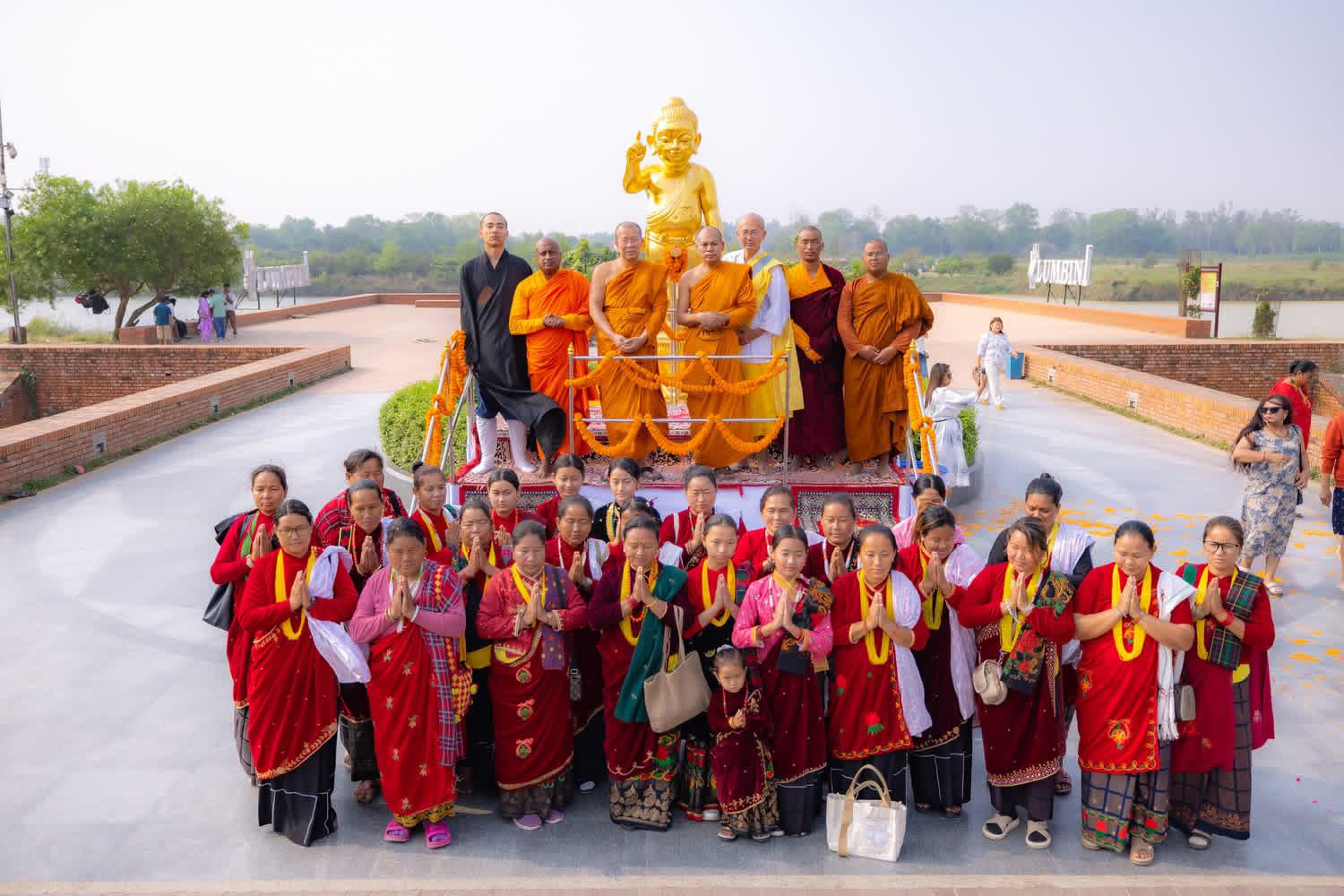
Lumbini, Nepal: An international gathering of Buddhist monks, devotees and visitors marked the annual Songkran Festival with a traditional water-pouring ceremony at Lumbini Garden, the revered birthplace of Siddhartha Gautama.
The ritual was led by Phra Phromwachiraphothiwong, Abbot of Wat Thai Buddhagaya and Head of the Buddhist Missionary Delegation for the India-Nepal region. Participants from Thailand, Myanmar, Sri Lanka, Nepal, Cambodia, China, Japan, South Korea and Austria attended the ceremony.
The highlight of the event was the ceremonial bathing of the “Bodhisattva Prince Siddhartha” statue, symbolising the Buddha at birth. Consecrated in 2013 through the faith of the Thai Buddhist community, the statue is ritually cleansed each year to mark renewal during the Southeast Asian New Year festival.
Addressing the gathering, Phra Phromwachiraphothiwong emphasised the spiritual significance of the ritual, noting that the water symbolises the purification of body, speech and mind, while reaffirming commitment to compassion, wisdom and harmony.
Set around a lotus-shaped basin adorned with marigolds and jasmine garlands, the ceremony featured the chanting of Pali suttas by missionaries, as devotees poured scented water over the statue. Children dressed in white traditional attire offered rice grains and flower petals.
Visitors praised the serene atmosphere, highlighting the sense of spiritual connection and unity fostered by the international presence. Nepalese devotees also described the event as a source of deepened faith and inspiration.
Following the ritual, participants shared vegetarian meals in the garden परिसर and received prayer flags and Bodhi tree saplings as commemorative tokens.
Organisers said the annual ceremony not only strengthens cultural ties between Thailand and Nepal but also promotes pilgrimage tourism and reinforces unity within the global Buddhist community, with Lumbini continuing to serve as a vital centre for preserving and celebrating ancient traditions.