
Iran’s war with the US and Israel and Washington’s inability to shield its Gulf allies are among factors making countries join the nuclear weapons race. However, at least four countries gave up their nukes. Here’s how and why.
The war in Iran, the failure of the US to shield its Gulf allies and China and Russia bolstering their nuclear arsenal have triggered a fresh race for nukes. At least six countries, in Asia and Europe, are either considering getting nuclear weapons or an N-shield. Even as nations seek the power of nuclear deterrence, history has been witness to several countries that have given up their nukes.
The nuclear genie is out of the bottle. A mad rush for nukes has begun.
Though countries are trying to become nuclear powers, there was a time and there were nations who moved in the opposite direction. South Africa, which helped Israel get nukes, gave up six nuclear bombs and scrapped its nuclear programme. Ukraine once had the world’s third-largest nuclear weapons stockpile and 179 ICBMS. It gave it all up.
Countries like Ukraine either dismantled their own weapons or returned stockpiles inherited after the collapse of the Soviet Union. Like Ukraine, Belarus and Kazakhstan surrendered Soviet-era warheads in return for security assurances, global legitimacy and financial support.
Their stories are a stark contrast to at least six others who now see the nuclear bomb as a military asset and an insurance policy. Saudi Arabia, Turkey, South Korea, Japan, Germany and Poland are being discussed as seeking to get nuclear weapons or N-cover because of the Iran war, Russia’s war in Ukraine, and the weakening of US security in the Middle East. Another factor is Russia and China boosting their nuclear arsenal.
HOW IRAN’S WAR IS TRIGGERING NUCLEAR RACE?
The Iran war has strengthened the belief that only nuclear weapons can deter powerful enemies. Non-nuclear countries watching the war in the Middle East have seen how nuclear-armed states like North Korea keep deterring its enemies. While non-nuclear states remain vulnerable, many say.
Tehran’s confrontation with the US, repeated strikes on its facilities and threats of exiting the Treaty on the Non-Proliferation of Nuclear Weapons (NPT), have raised concerns that Iran might not junk its ambitions of nuclear weapons for survival. The US and Israel, its arch enemies, already have nukes.
Iran itself has not declared that it wants or has a bomb. But its uranium enrichment programme, missile capability and repeated threats from Israel and the US have pushed the nuclear question back into focus.
Analysts fear that if Iran gets the bomb, its rivals in the Middle East, such as Saudi Arabia, Turkey and Egypt might also rethink their positions.
The case of Ukraine is central to the nuclear debate. Amid the years-long war with Russia, many Ukrainians believe giving up their Soviet-era arsenal was a historic mistake. It did not stop Russia from annexing Crimea in 2014 and invading it in 2022.
WHY DID UKRAINE GIVE UP THE WORLD’S THIRD-LARGEST NUCLEAR ARSENAL?
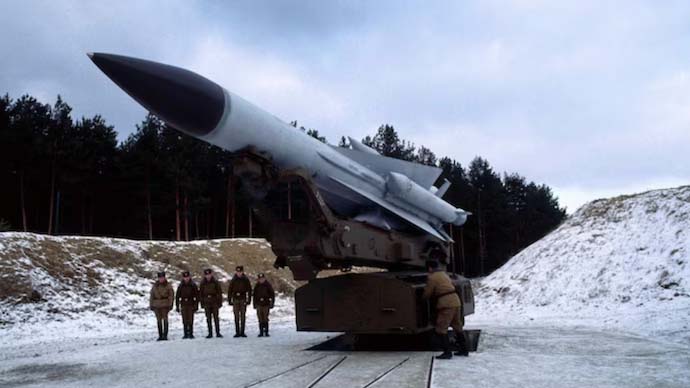
When the Soviet Union collapsed in 1991, one of its many constituents, Ukraine, found itself with the world’s third-largest nuclear arsenal. Around 1,900 strategic warheads, thousands of tactical nuclear weapons, intercontinental ballistic missiles and strategic bombers were stationed on its territory.
Ukraine did not have full operational control over these weapons because launch systems remained tied to Moscow, the capital of the Soviet Union and that of Russia now. Maintaining them was also expensive. Kyiv wanted Western recognition, aid and security guarantees.
That led to the 1994 Budapest Memorandum. Under the deal, Ukraine agreed to transfer its warheads to Russia and join the NPT as a non-nuclear state. In return, Russia, the United States and the United Kingdom promised to respect Ukraine’s sovereignty and borders.
Today, many in Ukraine see the 1994 deal as a blunder. Russia violated those commitments first by annexing Crimea and later by launching a full-scale invasion in February 2022. Ukrainian President Volodymyr Zelenskyy has repeatedly argued that Ukraine either needed nuclear weapons or to be part of strong alliances like Nato.
While Ukraine merely inherited nuclear weapons, the case of South Africa was very different. It became a nuclear power on its own steam.
WHY SOUTH AFRICA GAVE UP ITS NUCLEAR WEAPONS?
South Africa remains the only country in the world to have independently built nuclear weapons and then voluntarily dismantled them.
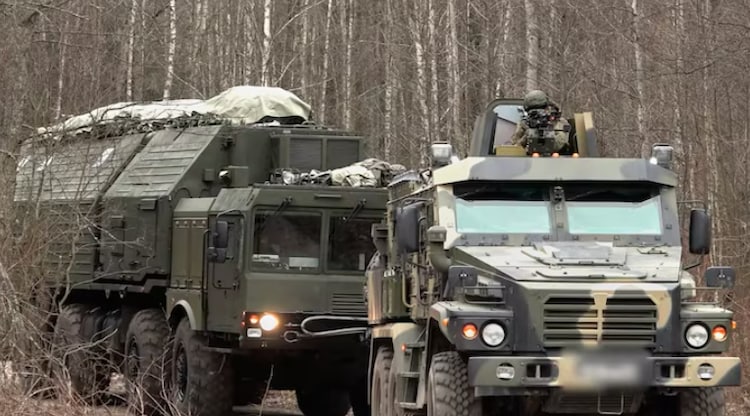
Under the apartheid regime, Pretoria secretly developed six nuclear bombs and had a seventh under construction by the late 1980s. The programme grew out of Cold War fears.
South Africa’s white-minority rulers worried about Soviet influence in southern Africa, Cuban troops in Angola and armed insurgencies at home. The bombs were never intended for battlefield use. They were seen as a last-resort deterrent and a way to force Western powers, especially the US, to intervene diplomatically if the apartheid government came under existential threat.
Meanwhile, South Africa supplied Israel with large quantities of uranium, including yellowcake, at a time when Israel was secretly building its nuclear programme at Dimona. In return, Israel is believed to have shared nuclear expertise, missile technology and possibly support for South Africa’s own weapons programme.
But by the late 1980s, the reasons for keeping the bombs had started to disappear. The Cold War was ending. Soviet-backed conflicts in Africa were winding down. Namibia was moving towards independence and Cuban troops were leaving Angola. At the same time, apartheid was collapsing under domestic resistance, sanctions and global pressure. The government of President FW de Klerk also feared that if the transition to majority rule accelerated, nuclear weapons could end up in the hands of a future African National Congress-led government.
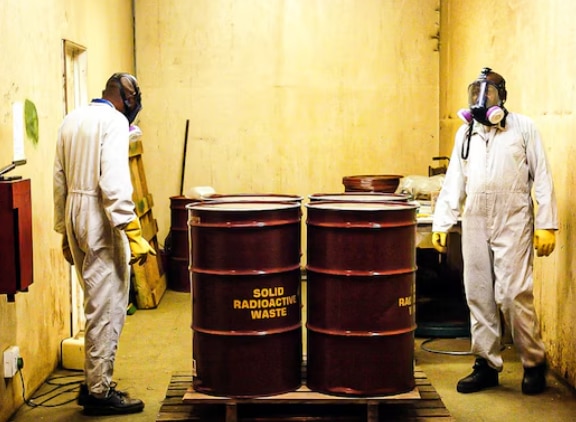
Dismantling the arsenal before political power changed hands allowed the apartheid regime to retain control over the programme’s final chapter — destruction.
There was also a diplomatic and economic calculation behind the move.
South Africa wanted to break out of international isolation, end sanctions and rejoin the global economy.
In 1991, it joined the NPT as a non-nuclear state. In 1993, De Klerk publicly admitted that South Africa had built six nuclear weapons and dismantled them all. The acknowledgement was aimed at showing the world community that the country was changing course. South Africa later became an advocate of nuclear disarmament and supported the Pelindaba Treaty, which turned Africa into a nuclear weapons-free continent.
LIKE UKRAINE, BELARUS AND KAZAKHSTAN RETURNED THEIR NUCLEAR WARHEADS
Like Ukraine, Belarus and Kazakhstan, two other Soviet Republics, also inherited nuclear weapons after 1991.
Like Ukraine, both countries lacked full command of weapons and depended heavily on Russia for maintenance and launch systems.
Belarus agreed to give up its missiles and join the NPT as a non-nuclear state by the mid-1990s. Kazakhstan, which had around 1,400 warheads on its territory, also transferred them to Russia. It later became a major voice for nuclear disarmament because of the environmental and health damage caused by Soviet nuclear tests at Semipalatinsk in eastern Kazakhstan.
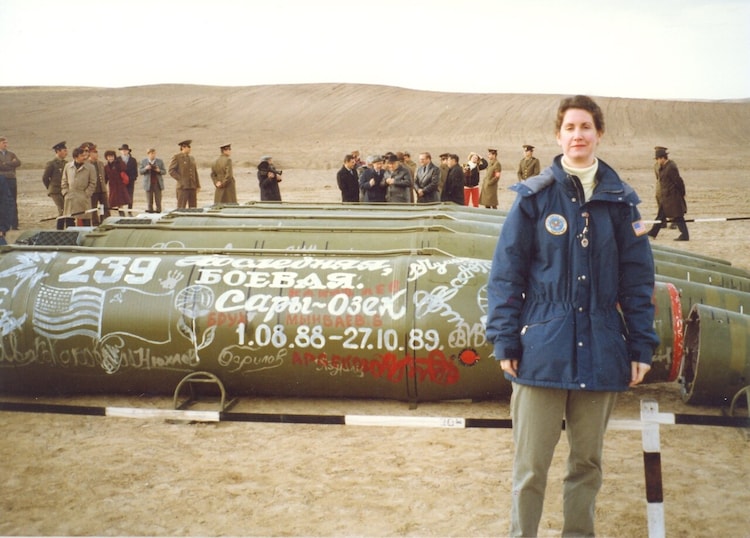
The decision by Belarus and Kazakhstan was also driven by economics. Both needed Western aid, investment and diplomatic recognition after independence. Joining the global non-proliferation system was seen as a way to gain legitimacy and avoid sanctions.
But Minsk has since then moved back under Moscow’s nuclear umbrella. Russian tactical nuclear weapons are now stationed in Belarus.
The stories of Ukraine, South Africa, Belarus and Kazakhstan show that nations believed security would follow treaties, diplomacy and guarantees, more than nuclear bombs. But now, the Iran war, Russia’s invasion of Ukraine and fears over weakening US commitments are making many countries question if they would be safer with nuclear weapons. Every new war is strengthening the argument that nuclear weapons are the ultimate insurance policy against external aggression.