
Earlier this week, Donald Trump pushed back a 48-hour deadline for Iran to reopen the Strait of Hormuz by five days and submitted a ceasefire proposal. That deadline is nearing an end, and there are no signs of a deal. With the US amassing Marines and paratroopers near the Middle East, is a ground invasion on the anvil?
“If a (ceasefire) deal is not agreed to by Friday, then we will just keep bombing our little hearts out,” US President Donald Trump said earlier this week as he pushed back a 48-hour deadline for Iran to reopen the Strait of Hormuz by five days. The deadline is set to end. There are no signs of a deal. And Iran continues to block the key shipping route, even though it has lifted the blockade for India and four ‘friendly’ nations. It has raised the spectre of a much bigger action, with the Pentagon reportedly ready with military options for a “final blow” to Iran. Will the war enter the most dangerous phase and see US boots on the ground?
All signs point to a significant escalation in the conflict, which has already engulfed the Middle East and sent oil prices skyrocketing. While Trump has conveyed, via Pakistan, a 15-point list of demands for Iran to kickstart negotiations, Tehran seems in no mood to take the prospect of diplomacy seriously. The reason: being bombed twice within a year while negotiations were on with the US. It has made Iran wary that Trump’s sudden push for a ceasefire was aimed at buying time to amass thousands of additional troops near Tehran.
However, time seems to be running out for Iran. It was conveyed in no uncertain terms by Trump himself on Thursday. “They’d better get serious soon, before it is too late, because once that happens, there is no turning back, and it won’t be pretty,” the mercurial US President posted.
For Trump, too, time is not on his side. He quickly needs to show some substantial gains in the conflict rather than pay lip service and claim “victory” even as Iran continues to bombard Gulf states.
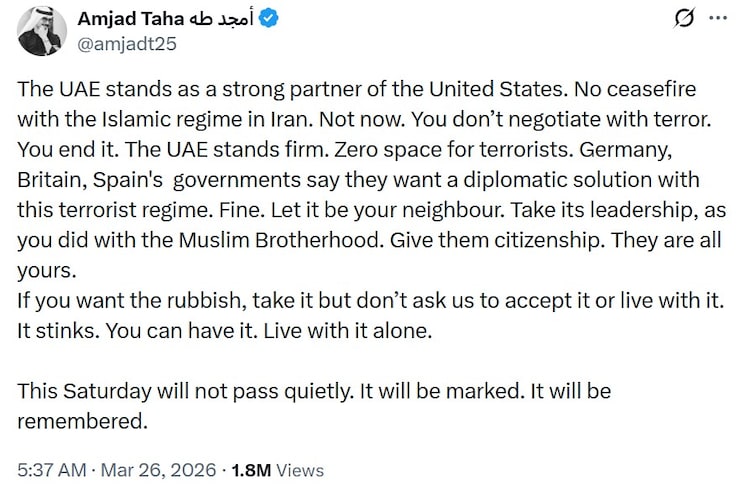
Several experts have predicted that Saturday (March 28) would be the D-day. “You don’t negotiate with terror. You end it. The UAE stands firm… This Saturday will not pass quietly. It will be marked. It will be remembered,” Amjad Taha, a geostrategist from the UAE, tweeted.
WILL TRUMP PUT US BOOTS ON GROUND?
The signals from the White House and the US’s military manoeuvres have provided ample hints that a ground invasion is on the anvil.
According to a report in Axios, based on conversations with US officials, the scale and composition of the forces (this has been explained later) suggest four broad scenarios:
- Invading and seizing Kharg Island, Iran’s economic lifeline.
- Invading Larak, an island that helps Tehran maintain its vice-like grip control of the Strait of Hormuz.
- Seizing the strategic island of Abu Musa and two nearby islands, which are located near Hormuz’s western entrance.
- Ground invasion deep inside Iran to secure nuclear material buried within facilities struck by the US and Israel.
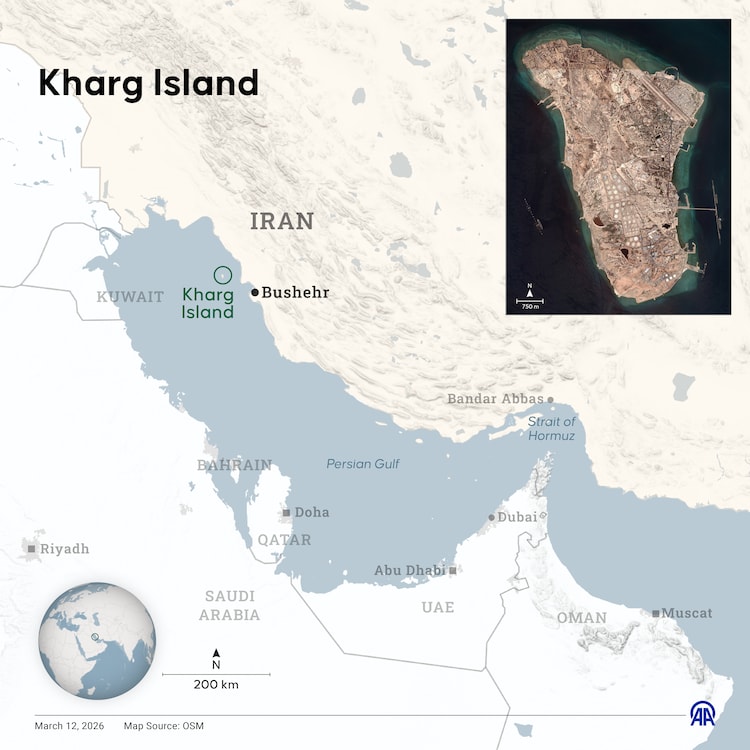
However, all eyes are on Iran’s ‘Crown Jewel’ – Kharg Island. The US already bombed military sites on Kharg, located around 25 km from Iran, on March 14. However, energy infrastructure was spared.
Why is Kharg so important? The reason is simple. It is Iran’s economic lifeline, accounting for more than 90% of its oil exports. As per the latest data, Iran earned around $78 billion (Rs 7.2 lakh crore) from crude oil sales in 2024. Kharg generated a lion’s share of the revenue. The money not only funds the regime’s operations but is key to sustaining Tehran’s drone and missile arsenal.
Thus, if the US seizes Kharg, it will automatically trigger an economic collapse. Trump can then use it as leverage over Iran to coerce them to reopen the Strait of Hormuz, through which 20% of the global oil and gas passes. The sole aim is to break Iran’s stranglehold on global markets.
IRAN TURNS KHARG ISLAND INTO FORTRESS
Iran, it seems, has already sniffed such a possibility and has put in place layered defences. Kharg has, in fact, been turned into a fortress.
It has started laying anti-personnel and anti-armour mines around the island, as well as on the shoreline, where US troops could land, according to a CNN report.
Additional military personnel have been deployed, and air defences have also been strengthened. MANPADs or shoulder-fired, surface-to-air guided missile systems have also been sent to Kharg.
Iran’s Parliament Speaker, Mohammad Bagher Ghalibaf, has already warned against attempts to occupy any Iranian islands. “If they step out of line, all the vital infrastructure of that regional country will, without restriction, become the target of relentless attacks,” Ghalibaf tweeted earlier this week.
Experts, however, have warned that seizing Kharg or securing the Strait of Hormuz using troops carries significant risks. US officials themselves are concerned that such a ground operation could include numerous casualties.
HOW US IS AMASSING TROOPS IN MIDDLE EAST?
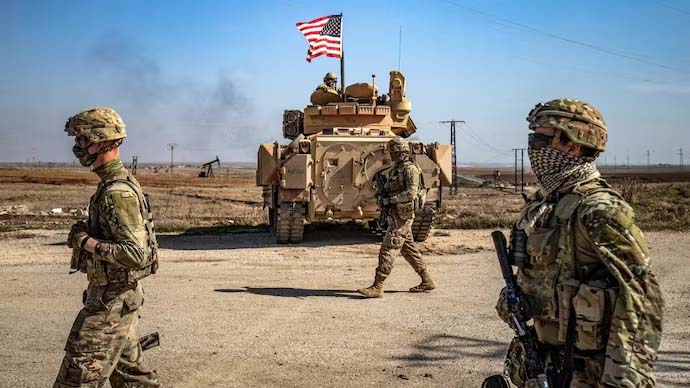
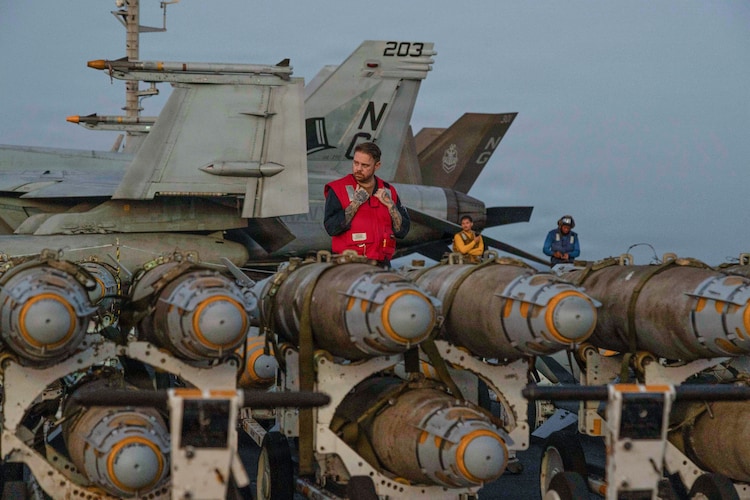
However, it has not stopped the US from moving thousands of additional Marines, paratroopers, and warships towards the Middle East.
Two Marine Expeditionary Units with around 4,500 troops, aboard two warships, are already en route to Iran from opposite sides of the Pacific. They are among the most lethal fighting forces. Not only are they trained in ground and aviation combat, but the Marines are capable of conducting raids, assaults and amphibious operations that require ship-to-shore movements.
The first batch of 2,200 Marines, aboard the USS Tripoli, an amphibious assault warship, is likely to reach the Middle East this week. The second batch, aboard the assault ship USS Boxer, is likely to arrive in the first week of April.
Additionally, about 2,000 soldiers from the US Army’s 82nd Airborne Division have started moving to the Middle East. These soldiers can be deployed anywhere in the world within 18 hours. They act like a forced-entry unit, and are trained to conduct parachute assaults and seize airfields before ground troops take control.
Thus, along with the two Marine groups, nearly 7,000 additional US troops are on their way to the region. It screams of a ground offensive.
However, experts have suggested that the US might go for a discreet, limited operation at best. Ruben Stewart, an expert on land warfare, told Al Jazeera that the US’s 2003 invasion of Iraq required around 1,60,000 troops. Iraq is a quarter the size of Iran.
“The force being deployed is consistent with time-limited operations, and not a sustained ground campaign. Both are rapid-response forces designed for raids, seizures of key terrain, and short-duration missions,” Stewart said.
Till the time of publishing this report, there had been no official order for a ground operation. There is also the possibility of US-Iran in-person talks being scheduled in Pakistan, which has emerged as the lead negotiator. However, the scale and composition of forces suggest a ground invasion is just a matter of time.