

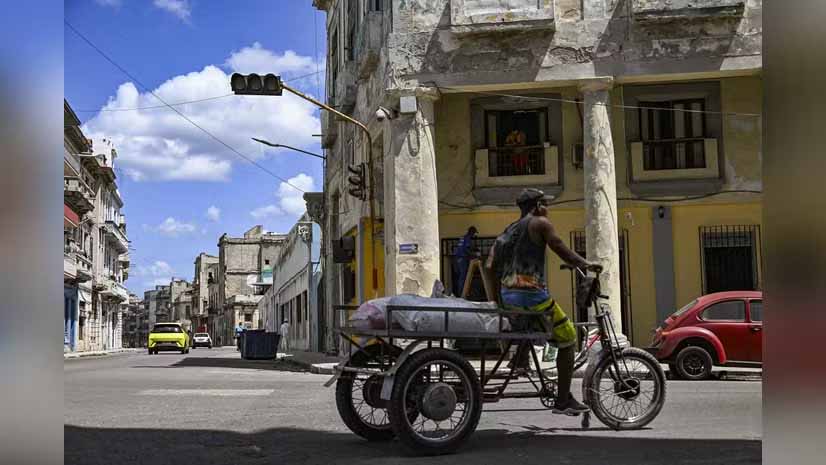
The Ministry of Energy and Mines is investigating the cause, but said that there was no damage to the power plants operating at the time of the failure
By Daniel Cancel and Jim Wyss
Cuba’s electric grid suffered a total collapse Monday as the nation struggles with crumbling infrastructure and a de facto US oil blockade that’s pushed the communist-run island to the brink.
The Ministry of Energy and Mines is investigating the cause, but said that there was no damage to the power plants operating at the time of the failure.
Cuba’s 10 million residents have been subject to rolling outages as the government struggles with a chronic lack of fuel. The country’s thermoelectric power plants require about 100,000 barrels of oil a day to meet demand and domestic production accounts for just two fifths of that.
Under pressure from Washington, the island hasn’t received a major fuel shipment in three months, President Miguel Díaz-Canel said last week. Donald Trump’s administration is trying to use economic pressure to make the country more financially dependent on the US in a bid to bring about political change after 67 years of one-party rule.
Even when fuel is flowing, the island’s aging power plants regularly fail. Earlier this month, about two-thirds of the country was left without electricity for hours after the island’s main power plant went off line. It suffered a half dozen nationwide blackouts in the span of a year before fuel shipments were cut off.
The power outages and lack of food and basic goods have led to rising protests, including one over the weekend in the city of Morón, where demonstrators threw rocks and set fire to the local communist party office.
The Cuban regime has come under increasing pressure to push through economic reforms after the leader of its main benefactor, Venezuela, was detained by the US earlier this year.
On Monday, Cuban officials said they would begin allowing more investment from Cubans living abroad as part of a larger effort to bolster the state-dominated economy.