

• About Us
  • Contact
  • Privacy Policy
  • Terms and Conditions
Saturday, September 5, 2026
  • Login
  • Register
Page3News Worldwide
  • Home
  • E-Paper
  • Subscriptions
  • Countries
    • USA
    • Canada
    • India
    • Balochistan
    • Thailand
    • UK
    • Australia
  • Language Wise News
    • Thai News
    • Punjabi News
    • Hindi News
  • Other News
    • World News
    • Latest Movie Reviews
    • Culture
    • Finance
    • Hollywood
    • Business
    • Entertainment
    • Sports
    • Lifestyle
    • Fashion
    • food
    • Health
    • Travel
    • Politics
    • Science
    • Tech
  • Multilingual Editorial
    • English Editorials
    • Thai Editorials
    • Hindi Editorials
    • Punjabi Editorials
    • Page3News Special
No Result
View All Result
  • Home
  • E-Paper
  • Subscriptions
  • Countries
    • USA
    • Canada
    • India
    • Balochistan
    • Thailand
    • UK
    • Australia
  • Language Wise News
    • Thai News
    • Punjabi News
    • Hindi News
  • Other News
    • World News
    • Latest Movie Reviews
    • Culture
    • Finance
    • Hollywood
    • Business
    • Entertainment
    • Sports
    • Lifestyle
    • Fashion
    • food
    • Health
    • Travel
    • Politics
    • Science
    • Tech
  • Multilingual Editorial
    • English Editorials
    • Thai Editorials
    • Hindi Editorials
    • Punjabi Editorials
    • Page3News Special
No Result
View All Result
Page3News Worldwide
No Result
View All Result
Home Breaking News

People more likely to ditch cars for e-bikes when they feel safe, confident

by Page 3 News International Desk
August 23, 2026
in Breaking News, World News
0
People more likely to ditch cars for e-bikes when they feel safe, confident
0
SHARES
2
VIEWS
Share on FacebookShare on TwitterShare on WhatsappShare on TelegramShare on LineShare on Email

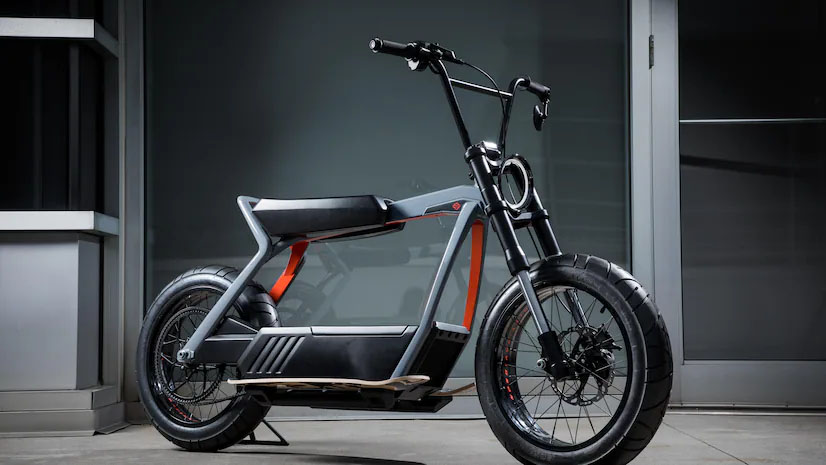
A Western Sydney trial found that training, guided rides and social support were crucial in helping participants build confidence and use e-bikes more often for daily travel

Finally, Australians are being encouraged to swap four wheels for two. Governments are investing in cycling infrastructure, and calls for e-bike subsidies are growing louder.

But our research suggests there’s a missing piece in this puzzle.

Giving people access to an e-bike is important. Building safer cycling infrastructure is fundamental. Yet neither is likely to change travel behaviour on its own. If we want people to leave their cars at home, they also need the skills, confidence and support to ride.

That was the clearest lesson from our study of 42 Western Sydney residents who took part in an eight-week supported e-bike program. The bike opened the door – but it was training, guided rides and social connection that gave people the confidence to walk through it.

Interested in cycling, but intimidated

Transport is Australia’s fastest-growing source of emissions, while car dependence places increasing financial pressure on households and contributes to congestion, inequity and poorer health outcomes.

RelatedPosts

US Diesel Prices Smash Previous Record, Surge to $5.82 a Gallon

India’s 17-Day Airspace Alert Sends Pakistan Into Security Overdrive

World food prices rise in August to their highest since late 2022: FAO

For many policymakers, e-bikes appear to offer a promising solution. Unlike conventional bicycles, e-bikes make longer distances, hills and hot weather much easier to manage. They can replace short car trips, connect people to public transport, improve health and reduce transport costs. Around the world, governments have responded with subsidy programs designed to make e-bikes more affordable.

But there is an assumption built into many of these programs: if people have access to an e-bike, they will automatically use it.

Our research suggests that’s not always the case.

Many Australians are interested in cycling but feel intimidated by riding in traffic. Others are uncertain about route planning, road rules or cycling infrastructure. In highly car-dependent places, cycling can feel unfamiliar, risky or at odds with car-related norms. Simply providing technology and infrastructure does not overcome this.

What if we combine e-bikes with support?

The Transformers Project, delivered in Western Sydney during 2025, tested a different approach.

Participants received subsidised access to an e-bike for eight weeks. But they also took part in guided rides around their local area and practical education sessions on bike-handling, storage and maintenance. In addition, they were given opportunities to connect with other riders online and face-to-face.

The results were striking.

Participants covered over 3,000 kilometres during the trial. They used e-bikes for commuting, shopping, recreation, volunteering and social activities.

Survey results showed:

  • 75% increased cycling for transport
  • 92% reported greater riding confidence
  • 71% said travel had become more enjoyable.

But the numbers only tell part of the story.

Through in-depth interviews, participants spoke in excited detail about increased independence, improved mental wellbeing, stronger community connections, and greater confidence in engaging with their local environment.

One participant, Florence, said:

The endorphins from riding[ … ]and seeing all these different places that I had either driven past and never really looked at or noticed it was so amazing[ … ]it’s brought me so much joy.

And with each story came a key reflection: although access to the bike and safe cycling infrastructure laid the foundations for change, it was the program’s support that made participants feel confident to sustain it.

Belonging and confidence matter

Participants consistently praised separated cycleways and safer cycling infrastructure. Many were surprised to discover just how much cycling infrastructure already existed in their local area.

Yet they also pointed out something transport planners often overlook.

Travel behaviour is shaped not only by roads, paths and parking facilities, but by beliefs about what feels normal, safe and socially acceptable.

In highly car-dependent places, cycling can feel like stepping outside the norm. Participants often described feeling out of place when they first began riding. Some worried about their skills, while others worried about how family members, motorists or strangers might view them.

Mai, for example, valued the independence the e-bike offered but only felt comfortable riding in a group. Shirley said her family worried about her cycling and were not particularly supportive.

Even confident riders sometimes felt self-conscious when combining cycling with public transport. Ryan told us:

Going on public transport is intimidating with the e-bike because you feel that people[…]will have an issue with it.

These stories highlight challenges rarely captured in transport models. People are not simply making rational decisions about time and cost. They are also responding to fears and cultural assumptions about who belongs on the road.

The program helped normalise cycling. Over time, cycling became less of a risk and more of a routine.

Cycling needs to be a social practice

Countries with high cycling rates did not achieve them through infrastructure alone.

Places such as the Netherlands and Denmark combine infrastructure investment with cycling education, social programs and training that begins in childhood. Cycling is supported as a social practice as much as a transport mode.

Australia’s investment in cycling infrastructure remains essential. We need safer bike lanes, secure parking and better integration with public transport. But our findings suggest governments should also view behaviour change programs as transport infrastructure. Education and mentoring are not optional extras.

The lesson from Western Sydney is simple.

Give people a bike and some may ride. Give them a bike, the skills to use it, the confidence to try and a community to support them, and many more will leave the car at home.


Get real time update about this post categories directly on your device, subscribe now.

Unsubscribe
Page 3 News International Desk

Page 3 News International Desk

The Page 3 News is a Multilingual Worldwide daily newspaper founded in 2021. It is published in Bangkok, Thailand by the Page 3 News Thai Limited Partnership. Page 3 News is available to the world in all the three formats i.e. e-Paper, digital and print. The Page 3 News is having offices in many countries like Thailand, India, Canada, USA, etc. and is currently published in English, Thai, Hindi and Punjabi languages.

Related Posts

US Diesel Prices Smash Previous Record, Surge to $5.82 a Gallon

US Diesel Prices Smash Previous Record, Surge to $5.82 a Gallon

by Page 3 News International Desk
September 5, 2026
0
3

New York: Diesel prices in the United States have surged to a fresh all-time high, fuelled by rising crude oil...

India’s 17-Day Airspace Alert Sends Pakistan Into Security Overdrive

India’s 17-Day Airspace Alert Sends Pakistan Into Security Overdrive

by Page 3 News International Desk
September 5, 2026
0
3

New Delhi: India’s 17-day airspace alert along the Pakistan border has reportedly set alarm bells ringing in Islamabad, with Pakistan...

World food prices rise in August to their highest since late 2022: FAO

World food prices rise in August to their highest since late 2022: FAO

by Page 3 News International Desk
September 5, 2026
0
2

The FAO's price benchmarks for cereals, vegetable oils, sugar, meat and dairy all rose in August World food prices rose...

US, UK, France and Germany push Iran referral to UN Security Council

US, UK, France and Germany push Iran referral to UN Security Council

by Page 3 News International Desk
September 5, 2026
0
5

The US, Britain, France and Germany have drafted a resolution to send Iran's nuclear case to the UN Security Council....

Over 10 killed, 58 injured after explosion at military base in Bolivia

Over 10 killed, 58 injured after explosion at military base in Bolivia

by Page 3 News International Desk
September 5, 2026
0
3

The majority of the injured were civilians, Bolivia's Defence Minister, Ernesto Justiniano, said. While the exact death toll was not...

UN votes to adopt new world map to reflect Africa’s true size

UN votes to adopt new world map to reflect Africa’s true size

by Page 3 News International Desk
September 5, 2026
0
2

The UN General Assembly has voted to replace the traditional world map with one that more accurately reflects the size...

Facebook Twitter Youtube Instagram Tumblr Pinterest

Page 3 News Multilingual Worldwide

The Page 3 News is a Multilingual Worldwide daily newspaper founded in 2021. It is published in Bangkok, Thailand by the Page 3 News Thai Limited Partnership. Page 3 News is available to the world in all the three formats i.e. e-Paper, digital and print.

The Page 3 News is having offices in many countries like Thailand, India, Canada, USA, etc. and is currently published in English, Thai, Hindi and Punjabi languages.

Category

Calanderwise News

September 2026
MTWTFSS
 123456
78910111213
14151617181920
21222324252627
282930 
« Aug    

© 2024 Page 3 News - First Multilingual Worldwide Newspaper based in Thailand.

Welcome Back!

Login to your account below

Forgotten Password? Sign Up

Create New Account!

Fill the forms below to register

*By registering into our website, you agree to the Terms & Conditions and Privacy Policy.
All fields are required. Log In

Retrieve your password

Please enter your username or email address to reset your password.

Log In

Add New Playlist

No Result
View All Result
  • Home
  • Subscriptions
  • E-Paper
  • World News
  • Balochistan
  • USA
  • India
  • Thailand
  • Canada
  • UK
  • Australia
  • About Us
  • Contact
  • Privacy Policy
  • Terms and Conditions
  • Disclaimer

© 2024 Page 3 News - First Multilingual Worldwide Newspaper based in Thailand.

This website uses cookies. By continuing to use this website you are giving consent to cookies being used. Visit our Privacy and Cookie Policy.