
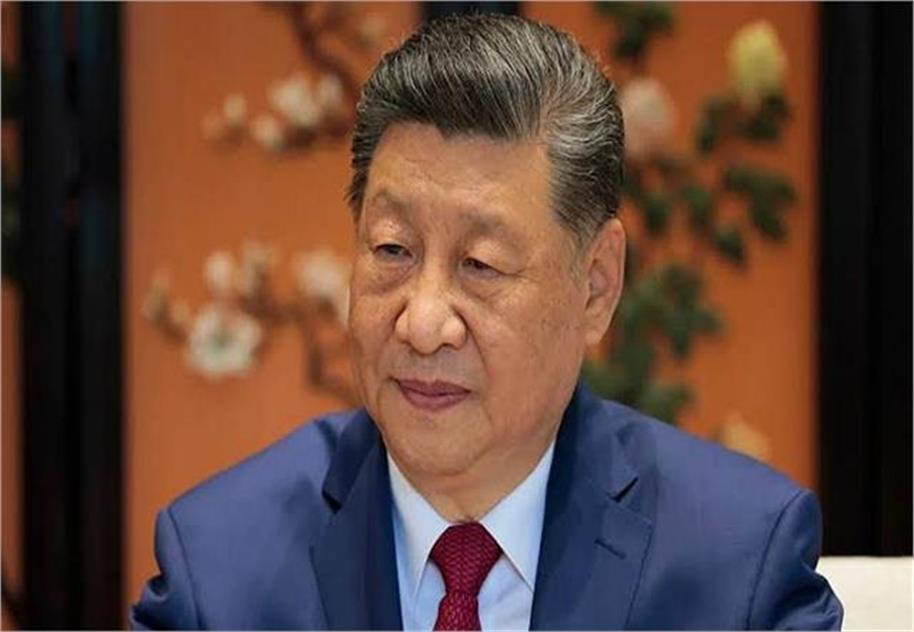
China, once regarded as an unstoppable economic powerhouse, is facing mounting political and economic challenges that could test the foundations of its rise. From an increasingly uncertain political succession to a struggling economy and declining government revenues, three major crises are converging under President Xi Jinping’s leadership. While China remains a formidable global power, growing structural weaknesses are raising questions about the sustainability of its economic model and its future position in the world.
The past two decades have been marked by extraordinary global upheaval. The world has witnessed wars, from Iraq in the 2000s to the ongoing conflicts involving Ukraine and Iran, alongside a global financial crisis, a devastating pandemic and major shifts in American foreign policy. Against this backdrop, another potential source of global instability is emerging: China’s growing economic and political vulnerabilities.
Xi Jinping’s Concentration of Power Raises Succession Concerns
On the political front, President Xi Jinping has consolidated power to an unprecedented degree, sidelining potential rivals and tightening his control over the Communist Party, government institutions, provincial administrations and the military.
However, this concentration of authority may carry significant long-term risks. Repeated purges of senior officials and military leaders could create resentment within the political establishment, even if the opaque nature of the Chinese Communist Party (CPC) makes it difficult to assess the true extent of internal opposition.
The question of succession is particularly important. With political authority increasingly centred on one individual, the eventual transfer of power could become complicated and unpredictable. Disgruntled former officials and sidelined political factions could potentially add to instability when a leadership transition eventually takes place.
Chinese history offers several examples of apparently stable political systems giving way to sudden and dramatic upheaval. Political philosopher Francis Fukuyama has discussed the dangers associated with the emergence of ‘bad emperors’. In modern Chinese history, Mao Zedong and Xi Jinping have both been associated with highly centralised systems of personal authority.
China’s Economic Growth Model Faces Structural Challenges
China’s economic outlook presents a more complicated picture. On one side, the country continues to demonstrate considerable strength in advanced technology, industrial production and manufacturing. Its ability to combine technological innovation with large-scale production has reinforced its position as a major global economic power.
On the other hand, several deep-rooted problems are threatening its long-term growth prospects.
These include:
- An ageing population and a shrinking workforce.
- A prolonged slowdown in the property market.
- Rising unemployment among young people.
- Increasing government intervention and hostility towards private businesses.
- Growing pressure on exports from changing trade policies in the United States and Europe.
Exports have traditionally been one of China’s most important economic engines. However, mounting trade tensions and growing concerns about China’s industrial dominance could make it increasingly difficult for the country to maintain its export-led growth strategy.
Perhaps an even greater concern is the government’s weakening ability to generate revenue. While public debt has attracted considerable attention globally, China’s fiscal challenges have a distinctive feature: its longstanding difficulty in collecting sufficient tax revenue from its own economy.
China’s Weak Tax System Exposes a Major Vulnerability
China has developed extensive mechanisms for monitoring its population and maintaining political control. Yet its ability to collect taxes presents a very different challenge.
Taxation is more than simply a source of government income. It represents an important part of the relationship between a state and its citizens. People generally accept taxation in return for public services, infrastructure, economic opportunities, improved living standards and social stability.
When governments lose their ability to collect revenue effectively, their capacity to maintain institutions, finance public services and sustain their political and military ambitions can also weaken. History provides several examples of this phenomenon, including the decline of the Ming and Qing dynasties.
Although modern China is very different from imperial China, the historical parallels offer an interesting perspective on its current fiscal difficulties.
An analysis of China’s taxation and government revenue from 1952 onwards reveals two particularly significant findings.
The first is that China has never relied primarily on direct taxation of its citizens to finance the state. Instead, it has historically generated substantial resources through alternative channels.
Until the late 1970s, almost half of the resources mobilised by the government came from the profits of state-owned enterprises. During the past two decades, land sales have accounted for approximately one-sixth of these resources.
This suggests that China has struggled to develop a strong system of personal income taxation, even during periods of exceptional economic expansion.
Over the past decade, personal income tax revenue has averaged just 1.2% of China’s GDP.
There is a striking contradiction here. A Communist state whose ideological foundations emphasise collective ownership of the means of production has become heavily dependent on selling land, one of its most valuable resources, to generate government revenue.
In other words, while the CPC has built an extensive system of political control, its ability to extract revenue directly from the incomes of its citizens remains relatively limited.
Government Tax Revenue Has Fallen Sharply
The second, and arguably more serious, finding is that China’s tax and government revenue collections have been declining for almost a decade.
Between 2012 and 2025, tax revenue reportedly fell by nearly six percentage points as a share of GDP, dropping from 18.4% to 12.6%.
Such figures suggest a growing disconnect between China’s ambitions as a global superpower and the fiscal resources available to support those ambitions.
The decline raises important questions about the underlying health of the Chinese economy. It is difficult to determine precisely how much is attributable to weaker economic growth than official figures suggest and how much reflects the government’s declining ability to enforce tax collection.
Nevertheless, the trend highlights the limitations of a development model that has relied heavily on non-tax sources of revenue.
For years, land sales and other alternative revenue streams helped finance government expenditure. However, as the property market weakened and these sources began to dry up, the government found itself facing increasingly difficult fiscal choices.
The central question now is whether Beijing can reform its revenue system and establish a more sustainable tax base without creating additional economic and political pressures.
Three Interconnected Crises Could Challenge Beijing
China’s leadership could face three major challenges simultaneously:
- Political succession: The concentration of power around Xi Jinping could make the eventual leadership transition uncertain and potentially destabilising.
- Economic weakness: An ageing population, property market difficulties, youth unemployment and pressure on private businesses could undermine long-term growth.
- Declining fiscal capacity: Falling tax revenues and shrinking alternative sources of government income could restrict Beijing’s ability to maintain domestic stability and project its influence internationally.
Together, these pressures could undermine China’s established development model and the implicit social contract between the state and its citizens.
For decades, the Chinese government has effectively offered economic prosperity and social stability in exchange for limited political freedoms and restricted public dissent. If economic growth slows, living standards come under pressure and public services deteriorate, that arrangement could become increasingly difficult to sustain.
Is China Heading Towards a Major Economic Collapse?
Despite these warning signs, it would be premature to conclude that China is on the verge of an imminent collapse. The CPC has demonstrated a considerable ability to maintain political control through extensive state institutions, surveillance and coercive measures.
A more plausible scenario may be a prolonged period of slower economic growth, increasing public dissatisfaction and declining quality of public services rather than a sudden political or economic breakdown.
Nevertheless, the consequences could extend far beyond China’s borders.
China is deeply integrated into global manufacturing, international trade, investment and supply chains. Any prolonged deterioration in its economic performance could have significant implications for businesses, financial markets and economies around the world.
Ultimately, China’s economic miracle may not end with a dramatic collapse. It could instead fade gradually through years of slower growth, mounting fiscal pressures and weakening economic confidence.
But even a quiet decline in one of the world’s most influential economies could trigger another major shock to the global order.