
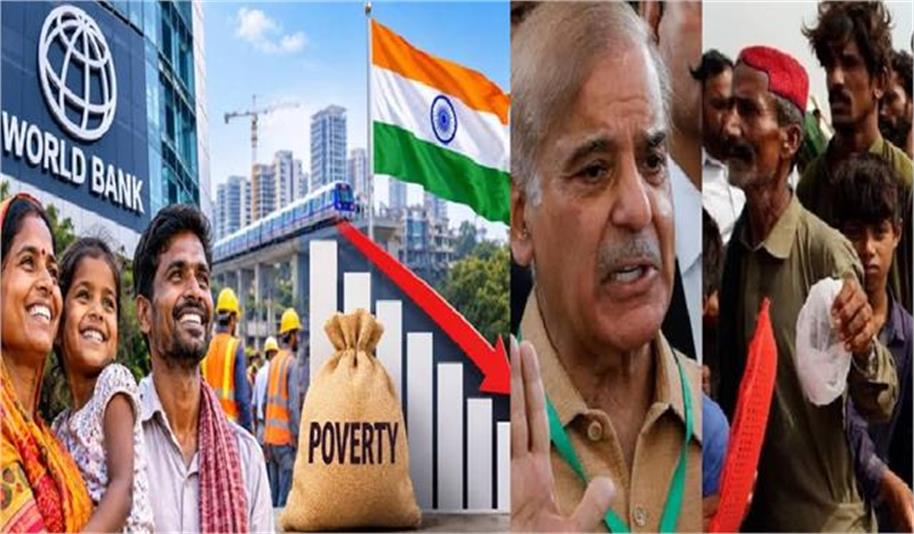
New Delhi: India has made significant progress in reducing extreme poverty over the past decade, while Pakistan has witnessed a deterioration in its poverty indicators, according to figures cited from the World Bank’s latest Poverty and Equity Report.
The data show that the proportion of India’s population living on less than US$3 a day declined from 27.1 per cent in 2011 to just 2.6 per cent in 2023. During this period, approximately 496 million people moved above the poverty threshold, highlighting the scale of the country’s progress in poverty reduction.
A report published by The European Times draws attention to the contrasting economic trends in India and Pakistan, linking the differences to their respective policy approaches, employment generation and social welfare initiatives.
India makes major strides in poverty reduction
India’s progress has been supported by expanding employment opportunities, greater participation of rural women in the workforce and wider coverage of social welfare programmes.
According to the cited figures, the country added approximately 134 million employment opportunities between 2017 and 2023. This was nearly twice the increase in its working-age population during the same period.
The expansion of food assistance programmes also helped extend support to millions of households. Meanwhile, the Aadhaar identification system and direct benefit transfers into bank accounts strengthened the delivery of government assistance.
The article further claims that these mechanisms helped prevent the misappropriation of an estimated Rs 3.48 trillion by 2024, improving the delivery and accountability of welfare benefits.
Pakistan faces growing poverty and inequality
While India recorded a substantial decline in extreme poverty, Pakistan experienced an increase in the proportion of its population living below the same international poverty threshold.
World Bank figures indicate that poverty in Pakistan rose from 16.5 per cent in 2018–19 to 23 per cent in 2024, an increase of 6.4 percentage points. This translates into approximately 58 million people living below the US$3-a-day threshold.
Data from Pakistan’s Ministry of Planning also point to a worsening economic situation. The country’s national poverty rate reportedly increased from 21.9 per cent to 28.9 per cent.
Income inequality has also widened, with the Gini coefficient rising from 28.4 to 32.7. The increase suggests a greater disparity in income distribution and mounting financial pressure on lower-income households.
Pakistan accounts for a significant share of regional extreme poverty
The World Bank report also highlights Pakistan’s growing share of extreme poverty in the Middle East, North Africa, Afghanistan and Pakistan (MENAAP) region.
According to the cited figures, approximately 48 per cent of people experiencing extreme poverty across this region live in Pakistan, despite the country accounting for less than one-third of its total population.
Pakistan’s poverty rate is also estimated to be around 1.6 times the regional average, underlining the scale of its economic challenges.
Contrasting economic trajectories
The figures cited by The European Times highlight the contrasting poverty trends in the two neighbouring countries. India’s progress has been associated with employment growth, expanded welfare coverage and improved delivery of public assistance, while Pakistan has faced rising poverty and income inequality.
The comparison nevertheless requires some caution, as the figures cover different reference periods and may involve differences in poverty measurement methodologies.
Despite these qualifications, the data point to a substantial divergence in poverty trends, with India recording a sharp reduction in extreme poverty while Pakistan continues to grapple with growing economic hardship.