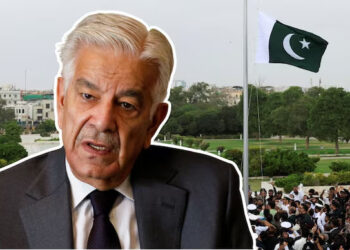

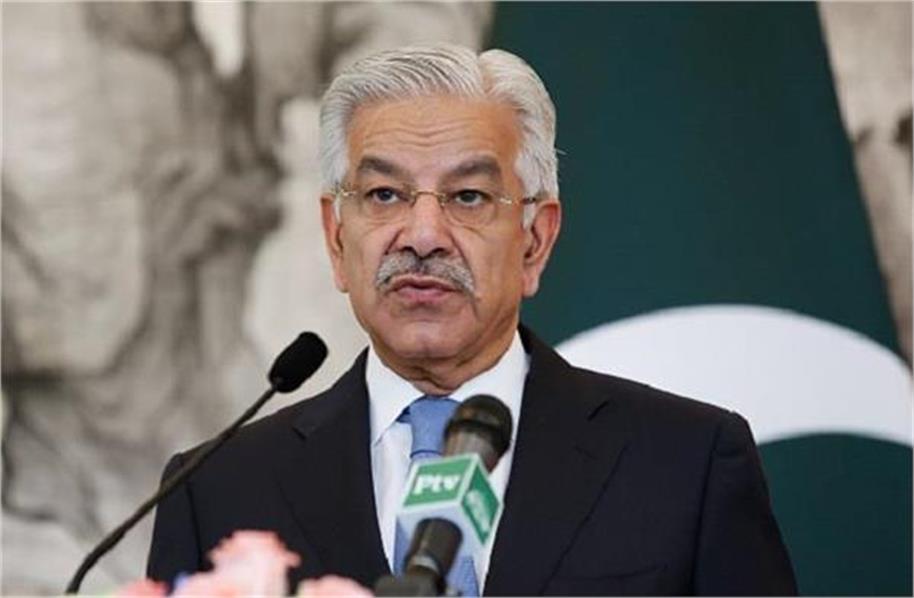
Islamabad: Pakistan has issued a strong warning to Iran-backed Houthi rebels, with Defence Minister Khawaja Muhammad Asif saying Islamabad will use “every available means” to defend Saudi Arabia under its new mutual defence arrangement with Riyadh and Türkiye.
Asif stopped short of confirming whether Pakistani forces have participated in air strikes against Houthi targets in Yemen. However, he said Pakistan’s military capabilities would be available to Saudi Arabia under the Makkah Mutual Defence Agreement.
Speaking to journalists during a visit to Rome, Asif was asked whether Pakistan had taken part in air strikes against Iranian military positions in Yemen.
“I don’t want to go into details,” he said, adding that Pakistan was “bound to defend Saudi Arabia” under the agreement and that whatever military means were available to Pakistan would also be available to Saudi Arabia.
His remarks did not amount to a direct confirmation of Pakistani involvement in recent air strikes. He also did not disclose whether Riyadh had formally requested military assistance following repeated Houthi attacks.
The comments came days after the military chiefs of Pakistan, Saudi Arabia and Türkiye met in Riyadh to discuss measures to counter Houthi attacks.
According to Asif, the Houthis have stepped up missile and drone attacks against Saudi Arabia and expanded their control along Yemen’s Red Sea coast. He described Pakistan’s commitment to Saudi Arabia as unequivocal.
“Any enemy of Saudi Arabia is an enemy of Pakistan. This should be absolutely clear,” he said.
Saudi Arabia, Pakistan and Türkiye signed the Makkah Mutual Defence Agreement on 7 August. Under the pact, an attack on one member is considered an attack on all three. The countries have described the agreement as defensive and said it is not directed against any specific country.
The confrontation between Saudi Arabia and the Houthis is now emerging as an early test of the arrangement. The full details of the agreement have not been made public, while its command and operational mechanisms are still being developed.
Asif said the three countries were establishing a joint secretariat and working on the alliance’s framework. He said several other countries had expressed an interest in joining, although there were currently no plans to expand the grouping.
Iran has for years provided the Houthis with weapons and other forms of support, while Tehran denies directing their military operations. Asif also suggested that the Houthis and some Iraqi militia groups may now be acting with considerable independence from Iran.
At the same time, Islamabad is stressing diplomacy alongside its security commitments. Asif said Pakistan continued to support dialogue aimed at ending the wider conflict involving Iran and backed efforts to restore a negotiated agreement concerning Tehran’s nuclear programme.
Earlier this year, Pakistan joined other regional countries in efforts to de-escalate the conflict and offered to play a mediating role.