
Thousands struggle with trauma as survivors grapple with loss, fear and uncertainty
Although the floodwaters in Nepal have receded, the psychological impact of the disaster is only beginning to emerge. Thousands of survivors are struggling with trauma, while children are waking from terrifying dreams and crying that the floods have returned. Adults, meanwhile, are experiencing persistent fear and anxiety.
The government has deployed mental health professionals to some of the worst-affected areas and expanded access to psychosocial support through dedicated helplines.
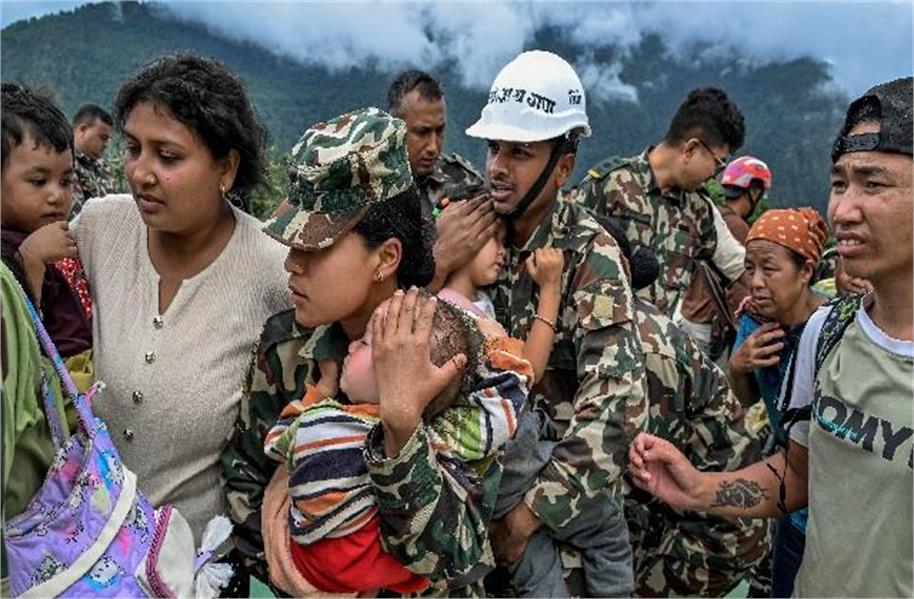
Kathmandu: The floodwaters may have gone down, but the fear and trauma left behind by the devastation remain deeply etched in the minds of survivors. Children are waking up frightened in the middle of the night, crying and saying that the floods have returned. Many adults are struggling with anxiety and persistent fear, while families separated from loved ones amid raging rivers and floodwaters continue their desperate search for those still missing.
The devastating floods have caused widespread destruction across Nepal while leaving behind a less visible but equally profound crisis: psychological trauma. Mental health specialists working with survivors are now witnessing early signs of the emotional toll of what has been described as the country’s worst flooding in a decade.
The death toll has surpassed 900, while around 4,000 people remain missing. For thousands of survivors, the loss of loved ones, displacement from their homes and uncertainty about the future are adding to an already overwhelming psychological burden.
Recognising the scale of the problem, the government has begun strengthening mental health services in the affected areas. The Kathmandu Post reported on Tuesday, citing officials, that around 50 psychiatrists, psychologists and psychosocial counsellors have been deployed in the worst-hit districts of Rasuwa and Nuwakot to help address the mental health consequences of the disaster.
A further 64 trained counsellors have been placed on standby across Bagmati Province to provide immediate assistance where required. Pomawati Thapa, a senior adviser and medical specialist at the Department of Health Services, said around 10 of the 50 mental health professionals deployed in Rasuwa and Nuwakot are directly involved in providing psychological first aid.
A four-member team has also been sent to Uttargaya, a remote part of Rasuwa that has been cut off from road access. Thapa said the department has prepared a plan to deploy mental health workers and is coordinating efforts to ensure services reach communities where they are most urgently needed.
The Nepal Red Cross Society, the Centre for Mental Health and Counselling Nepal and several other non-governmental organisations are also supporting the initiative.
The government has additionally expanded access to psychosocial support by telephone. Sameer Kumar Adhikari, deputy spokesperson for the Ministry of Health and Food Security, said the 1115 helpline provides general health advice and coordination services.
A dedicated psychosocial support service is available through 1166 and is operated from Patan Mental Hospital. According to Adhikari, calls from anywhere in the country are connected to the service before being referred to psychosocial counsellors. Seven counsellors are currently providing round-the-clock support in shifts. The ministry is also providing access to the 1098 child helpline.
In Bidur, Nuwakot, psychologist Gopal Bohara is working with a four-member psychosocial team from the Centre for Mental Health and Counselling Nepal. He said disaster survivors were showing clear signs of shock and psychological distress.
“Most of these people are still in shock and are unable even to put their difficulties into words,” Bohara said.
He said two children staying at a relief centre were repeatedly waking up frightened during the night. They were having nightmares about the floods and crying that the water had returned.
Bohara said many adults were also displaying symptoms of anxiety, persistent fear and an exaggerated startle response to sudden noises or movements.
For now, mental health workers are also spending much of their time helping reunite separated families, connecting survivors with essential services and ensuring they have access to shelter and medical care.
As Nepal begins to recover from the physical devastation, the psychological scars left by the floods are likely to remain long after the waters have receded.