
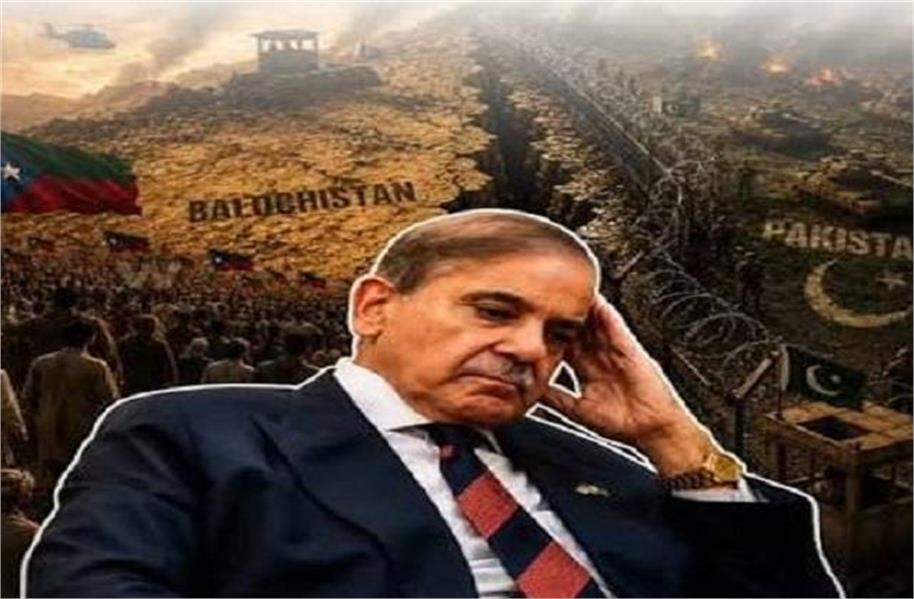
Pro-independence Baloch organisations have called on people to observe 11 August as Balochistan’s Independence Day, citing the former State of Kalat’s declaration of independence on that date in 1947. Although Kalat later acceded to Pakistan in 1948, the anniversary continues to hold symbolic significance for many Baloch nationalists.
Peshawar: Pakistan is once again facing renewed political tensions in Balochistan as pro-independence groups have urged Baloch communities, both within the region and overseas, to mark 11 August as Balochistan’s Independence Day. The groups have appealed for demonstrations of unity and solidarity through public events and the display of the Baloch flag.
Supporters of the Baloch independence movement argue that the former princely State of Kalat declared independence from British rule on 11 August 1947. They regard this event as the foundation of their claim that the date should be commemorated annually as Balochistan’s Independence Day.
Historical Background
The history of Kalat’s status remains the subject of differing interpretations. On 11 August 1947, the Khanate of Kalat declared itself an independent state. At the time, its constitutional relationship with the newly emerging state of Pakistan differed from that of many other princely states following the end of British rule.
Subsequent negotiations took place between Kalat and Pakistan over their future relationship. Historical records, including those cited in the British Parliament, note that Kalat declared independence on 11 August 1947, although its eventual accession to Pakistan remains a matter of historical and political debate.
Kalat’s Accession to Pakistan
Kalat’s period of independence was brief. Political disagreements over its future intensified in early 1948, and on 27 March 1948, the Khan of Kalat signed the Instrument of Accession, formally bringing the state into Pakistan.
Historical records held by the Library of the United States Congress also refer to Kalat’s declaration of independence in 1947 and its accession to Pakistan the following year. These events continue to serve as a central historical reference for the modern Baloch nationalist movement.
Plans for 11 August
In their latest appeal, pro-independence Baloch groups have encouraged supporters to mark 11 August by expressing unity and support for the Baloch cause. They have also called on Baloch communities abroad to organise events and raise the Baloch flag in recognition of the occasion.
Baloch nationalist organisations describe the anniversary as more than a symbolic date, saying it commemorates Kalat’s declaration of independence in 1947. They are also seeking to draw greater international attention to their demands, arguing that local communities have insufficient influence over decisions concerning Balochistan’s natural resources, development policies, and governance.
The groups have urged the international community to give greater consideration to the political rights of the Baloch people and their calls for self-determination.
Long-standing Unrest
Balochistan has witnessed decades of political unrest and armed insurgency against the Pakistani state. Over the years, various movements have called either for complete independence or for greater provincial autonomy.
The region’s historical status was also discussed during proceedings in the British Parliament in 2024, where references were made to Kalat’s brief period of independence in 1947, its subsequent accession to Pakistan, and the continuing Baloch nationalist movement.
Balochistan is Pakistan’s largest province by area and is rich in natural resources. However, it has long been affected by disputes over economic development, resource management, political representation, and regional autonomy.