

By Dr. Iqbal Singh Lalpura
For more than five centuries, Sikhism has stood as one of the world’s most remarkable faith traditions. Founded on the timeless principles of devotion to one God, equality of all humanity, justice, selfless service (seva), and courage, it has survived persecution, imperial rule, Partition, terrorism, and political upheaval. Yet today, many Sikhs believe that the greatest challenge facing the Panth is no longer external oppression alone, but internal fragmentation, political polarization, religious confusion, and the gradual weakening of the Sikh community’s relationship with the Shabad Guru.
Recent controversies involving Punjab Chief Minister Bhagwant Mann and Sikh religious institutions have once again demonstrated that political leaders, regardless of party affiliation, must exercise restraint and respect when commenting on matters of faith. At the same time, Sikh religious institutions also carry the responsibility of maintaining public confidence by acting fairly, transparently, and independently of partisan politics. Governments are temporary; the Guru is eternal. Sikh institutions should never become extensions of political parties, nor should politicians attempt to become interpreters of Sikh doctrine.
The defining theological principle of Sikhism is that Guru Gobind Singh Ji ended the line of human Gurus and bestowed eternal Guruship upon Sri Guru Granth Sahib Ji. The declarations “Guru Maneyo Granth” and “Guru Khalsa Maneyo Pargat Guran Ki Deh” are not merely historical events; they form the very foundation of Sikh theology. For mainstream Sikh belief, the Shabad is the Eternal Guru. This is why Sikhs reject the idea of any living individual claiming spiritual authority equal to, or succeeding, the Ten Gurus. This concern is not directed against the dignity or constitutional rights of individuals who follow different beliefs. Every citizen enjoys complete freedom of religion. Rather, it reflects the Sikh community’s commitment to preserving the integrity of its own faith as handed down by the Gurus.
History repeatedly demonstrates the dangers of personality-centered religious authority. Guru Gobind Singh Ji abolished the Masand system after it had become corrupt and directed the Khalsa to remain directly under the Guru. In the nineteenth and early twentieth centuries, the Mahant system controlling many historic gurdwaras ultimately led to the Gurdwara Reform Movement (1920–1925), which restored community control over Sikh institutions. Likewise, theological differences with organizations such as the Sant Nirankari Mission became major flashpoints in modern Sikh history. These experiences reinforce the conviction among Sikhs that preserving the exclusive authority of Sri Guru Granth Sahib Ji is essential for maintaining the distinct identity of the Panth.
Another issue that continues to generate debate is the relationship between Sikhism and the Rashtriya Swayamsevak Sangh (RSS). The reality is more complex than political slogans often suggest. On numerous occasions, leaders associated with the RSS have publicly expressed deep respect for the Sikh Gurus, Sikh sacrifices, and the immense contribution of Sikhs to India’s history and nation-building , including accepting Sikh as independent Religion. At the same time, many Sikhs have expressed concern over alleged statements and writings that appear to interpret Sikhism within a broader Hindu civilizational framework rather than recognizing it as an independent religion.
For Sikhs, the distinct identity of their faith is clearly reflected in Gurbani. Guru Arjan Dev Ji declared, “Na Hum Hindu Na Musalman” (Sri Guru Granth Sahib, Ang 1136), emphasizing a unique spiritual path. Sikhism is also recognized as a distinct religion under the Government of India Act, 1935, the Constitution of India (Article 25, with its well-known legal interpretation), and the National Commission for Minorities Act, 1992. Nevertheless, differing interpretations have contributed to decades of mistrust and recurring controversy.
This raises an important question. If the Shiromani Akali Dal and the Bharatiya Janata Party, along with its predecessor Jan Sangh, remained political allies for several decades—from 1967 until 2020—why was this ideological issue never conclusively addressed? If both parties valued the alliance for over five decades, why was there never a comprehensive public declaration affirming mutual respect for Sikhism as an independent religion while acknowledging its place within India’s shared national heritage? Political cooperation demonstrated that alliances were possible, yet theological and identity-related questions remained unresolved, allowing them to be repeatedly exploited for political purposes.
India is the birthplace of four major religions—Hinduism, Buddhism, Jainism, and Sikhism. There is no significant public dispute regarding the independent identity of Hinduism, Buddhism, or Jainism. Why, then, has the relationship between Hindu and Sikh identities remained a recurring subject of political controversy?
Perhaps the time has come for a permanent and principled solution. Such a solution need not require either side to abandon its convictions. Instead, it can rest upon mutual respect and constitutional values. Sikhism can be fully acknowledged as an independent religion with its own scripture, theology, institutions, traditions, and code of conduct, while the Sikh Gurus and Sikh history continue to be honoured as an integral part of India’s national heritage. Respect does not require theological assimilation, and distinct religious identity need not weaken national unity. A clear and lasting commitment by political and religious leaders to avoid unnecessary identity disputes could significantly reduce decades of mistrust.
No discussion of contemporary Sikh concerns can ignore the Dharam Yudh Morcha (1982–1984) and the tragic events that followed. The movement began with demand for release
of Bhai Amrik Singh etc coupled with constitutional, political, and federal demands, including greater state autonomy and implementation of aspects of the Anandpur Sahib Resolution. However, the period ultimately culminated in immense tragedy: Operation Blue Star, the assassination of Prime Minister Indira Gandhi, the horrific anti-Sikh massacres of 1984, years of militancy, counter-insurgency operations, and the loss of thousands of innocent lives. The failure to fully implement the Rajiv–Longowal Accord further deepened disappointment and mistrust.
More than four decades later, both the Sikh community and India must ask difficult but necessary questions. What lasting political gains emerged from the violence between 1978 and 1993? Which constitutional demands were fulfilled? Which remain unresolved? What was the human cost in terms of lives lost, broken families, damaged institutions, and fractured social harmony?
An honest assessment must reject simplistic narratives. Governments of the period committed serious mistakes that have been widely criticised. Militant violence also inflicted immense suffering upon civilians, public servants, and fellow Punjabis. The anti-Sikh massacres of 1984 remain among the darkest chapters in independent India’s history and continue to demand justice, accountability, and remembrance. Genuine reconciliation requires acknowledging the suffering of all victims while remaining firmly committed to truth, justice, and constitutional values.
Another challenge confronting Sikh society is the increasing influence of Christian missionary activity in certain parts of Punjab. Sikh historians trace this concern back to the conversions of Maharaja Duleep Singh and Raja Harnam Singh Ahluwalia during the colonial period. Today, many Sikhs worry about continuing religious conversions, while others observe that individuals often seek emotional support, education, healthcare, social acceptance, or relief from personal hardships.
Regardless of one’s perspective, confrontation alone cannot provide a lasting solution. If Sikh society wishes to strengthen its own faith, the more constructive response lies in transforming gurdwaras into vibrant centres of education, spiritual learning, youth engagement, counselling, community service, and social welfare. When individuals experience meaningful belonging within their own tradition, they are less likely to seek spiritual fulfilment elsewhere.
The Panth must also undertake sincere introspection. Many Sikh children today are unable to read Gurmukhi fluently. Religious education often ends in childhood. Social media influencers increasingly shape religious understanding, sometimes replacing careful study of Gurbani and Sikh history. Political debates frequently overshadow personal spiritual discipline and moral development. These internal weaknesses cannot simply be attributed to external forces.
Revitalising Sikh education should therefore become a community priority. Greater emphasis must be placed on direct engagement with Sri Guru Granth Sahib Ji, high-quality scholarship, ethical leadership, institutional transparency, and investment in young Sikh leaders capable of addressing the challenges of the twenty-first century.
Every Sikh child should understand the transformative vision of the Gurus. Guru Nanak Dev Ji declared:
“Balhari Gur Apne, Diuhari Sad Var; Jin Manas Te Devte Kiye, Karat Na Lagi Var.”
The Guru transforms ordinary human beings into divine personalities. Guru Gobind Singh Ji further proclaimed:
“Akal Purakh Ki Murat Eh; Pargatio Aap Khalsa Deh.”
The Khalsa is intended to embody the Divine Will in human society through righteousness, humility, courage, and service. The challenge before the Panth today is not merely preserving historical memory but reviving this spiritual ideal in everyday life.
The future of Sikhism will not be secured by political slogans alone. It will be strengthened through stronger families, better education, ethical leadership, honest scholarship, vibrant institutions, community service, economic opportunity, and an unwavering commitment to the eternal Guru. Political alliances will change. Governments will come and go. Public controversies will rise and fade. The Guru alone remains constant.
If the Sikh community remains united around Sri Guru Granth Sahib Ji while engaging confidently with modern India and the wider world, it has every reason to look to the future with confidence. Preserving Sikh identity does not require isolation, nor does national integration require surrendering distinct religious beliefs. Both are entirely compatible when dialogue replaces suspicion, constitutional values prevail over sectarian politics, and the eternal message of the Guru remains at the centre of Sikh life.
Sikh intelligentsia may think about a broader plan, to preach and protect religion, to initiate dialogue with all other stake holders and to join all Punjabi for promotion of Punjab, Punjabi and Punjabiat .
The greatest tribute today’s generation can offer to the Gurus is not endless argument over the past, but the creation of a future in which Sikh faith, scholarship, service, and institutions flourish with confidence. That is the true path to the preservation, growth, and continued relevance of the Panth.
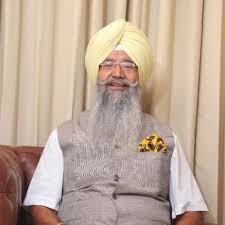
Dr. Iqbal Singh Lalpura
Former Chairman
National Commission for Minorities
Government of India
Iqbalsingh _73 @ yahoo.co.in