
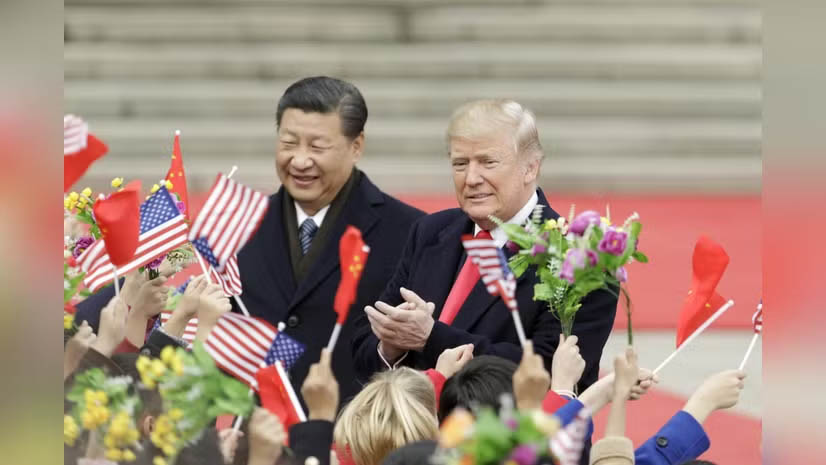
Trump and Xi Jinping are slated to meet May 14-15 after their summit was rescheduled once due to the war, which has triggered an energy crisis and restricted supplies to importers of West Asia crude
President Donald Trump is forging ahead with plans to hold a summit with counterpart Xi Jinping next week in Beijing, despite unease among Chinese officials about holding the high-stakes meeting before the war in Iran is resolved.
The leaders are slated to meet May 14-15. Their summit has already been rescheduled once due to the war, which has triggered a global energy crisis and restricted supplies to importers of Middle East crude, including China.
Xi’s government remains wary about proceeding with the visit before the US-Iran conflict is settled, people familiar with the matter said. But China has not publicly called for a delay. And there have been no scheduling changes, according to a White House official who requested anonymity to discuss plans for the trip. The official said Trump looks forward to meeting Xi but declined to elaborate on details of the visit.
“We’re going to have a meeting with President Xi. It’s going to be, I think, quite amazing,” Trump told reporters Thursday. “He’s been a friend of mine. I’ve gotten along with him very well over the years. We have had no problem. We’ve had no problem with China and Iran.”
The Iran conflict is stretching into its third month under a fragile ceasefire. On Thursday, American forces responded to Iranian attacks on Navy destroyers as they were sailing in the Strait of Hormuz, US Central Command said. It added that it “does not seek escalation but remains positioned and ready to protect American forces.”
Commercial ships have been hesitant to test their luck in the critical waterway, where they could face attacks or sea mines. The US blockade of Iranian ships outside the strait also continues, affecting Chinese fuel shipments, among others. The standoff risks prolonged fuel shortages if it continues much longer.
“China and the United States are maintaining communication regarding President Trump’s visit to China,” said Liu Pengyu, a spokesperson for the Chinese embassy in Washington, in a statement.
All public signals are that the preparations are underway on the ground in Beijing, including a congressional delegation visit designed to pave the way for Trump’s arrival.
Still, uncertainty has loomed over the planning. Chinese officials had told European counterparts that they wanted to see the blockade lifted by the time of the trip, some of the people said.
Chinese Foreign Minister Wang Yi called for the swift reopening of the strait this week as he hosted Iranian counterpart Abbas Araghchi for their first meeting since the war started.
Instead, Hormuz remains largely shut, though armed hostilities between the US and Iran have subsided during a one-month ceasefire. The Trump administration has insisted that its offensive military attacks have ended, for now.
“Operation Epic Fury is concluded,” US Secretary of State Marco Rubio said this week. “We achieved the objectives of that operation. I’m not going to, you know, we’re not cheering for an additional situation to occur. We would prefer the path of peace.”
Both European and Chinese officials see little chance of an agreement with Iran as long as the US blocks Iranian shipping, said the people. But Trump sees the blockade as essential leverage on Tehran to fully open up the strait.
Some of the people said they hoped that pressure from Beijing would lead to a shift in Trump’s belief that the blockade could push Tehran toward a deal. Whether that will play out is far from clear.
The ceasefire has been “tenuous at best” but takes some pressure off the meeting if it holds — given that China’s fuel pressures aren’t yet as acute as those in other regions, said Erin Murphy, managing director of Asia at Redpoint Advisors.
“I don’t think the Chinese are going to do anything to embarrass Trump,” she said. “It would just be more, you know, ‘we share views on stability. We’d like to see this conflict end right away.’”
Earlier this week, the US president temporarily paused a separate operation dubbed “Project Freedom” meant to help stranded ships exit the strait, saying he wanted to see if an agreement to end the war could be reached. Trump vowed to restart bombing Iran if it doesn’t free up the waterway.
“If they don’t agree, the bombing starts, and it will be, sadly, at a much higher level and intensity than it was before,” he posted on social media Wednesday.