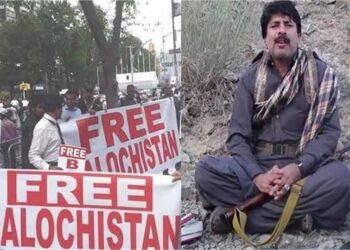

London — Fresh allegations of repression in Balochistan have intensified scrutiny of Pakistan, with activists and self-styled representatives of the “Republic of Balochistan” accusing Islamabad of systematically curbing access to education and literature.
The claims emerged in response to remarks by Pakistan’s Foreign Office spokesperson Tahir Andrabi concerning students at Jamia Millia Islamia. Baloch representatives rejected the criticism, contrasting India’s academic environment with what they describe as widespread restrictions imposed on students in Balochistan.
According to the statement, Pakistani authorities have allegedly banned books, prohibited Baloch literature in campuses and bookshops, and detained students for possessing or reading certain materials. Videos circulated online, purportedly featuring Pakistani journalists, appear to show enforcement actions against book stalls and academic institutions.
The accusations further allege that educational campuses in Balochistan have been heavily militarised, with security forces deployed inside institutions. Critics argue that this has transformed centres of learning into controlled zones, limiting intellectual freedom and open discourse.
In contrast, India is portrayed in the statement as a functioning democracy where students are free to study, research and express dissenting views without fear of reprisal.
The document also revisits a controversial 2019 incident at University of Balochistan, where hidden cameras were reportedly discovered in student washrooms. The episode triggered outrage at the time, with allegations that footage had been used for blackmail—claims that Pakistani authorities have previously faced pressure to investigate.
Beyond academic restrictions, the statement alleges a broader pattern of enforced disappearances, arbitrary detentions and custodial abuses targeting Baloch students and youth. It claims that thousands have been detained over the years, with some reportedly dying in custody—assertions that have been echoed by human rights groups but consistently denied by Islamabad.
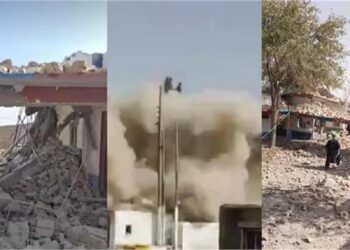
Adding to regional tensions, the statement also referenced recent reports of Pakistani air strikes in Afghanistan’s Kunar Province, including an alleged attack on Sayed Jamaluddin University. Pakistani officials have previously rejected similar claims as unfounded.
While these allegations remain difficult to independently verify, they contribute to growing international concern over human rights, academic freedom and the treatment of ethnic minorities within Pakistan. Islamabad has routinely dismissed such accusations as politically motivated or exaggerated, maintaining that its actions are aimed at ensuring security and stability in restive regions.