

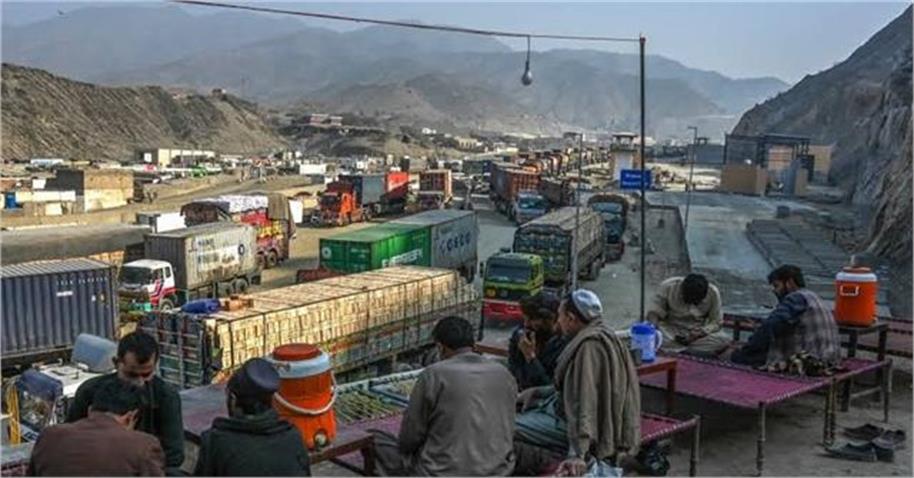
For decades, Pakistan served as Afghanistan’s primary trade gateway to international markets, providing access to seaports through its roads and transport networks. Pakistani exporters supplied Afghanistan with essential commodities, including food, medicines, construction materials, machinery and consumer goods. In return, Afghan traders exported agricultural produce and other commodities to Pakistan. The cross-border trade supported thousands of businesses, transport operators, customs agents and workers on both sides.
However, years of political tensions, security concerns and repeated border closures are changing this long-standing commercial relationship. Afghan traders are increasingly exploring alternative routes through Iran and Central Asia, raising concerns about Pakistan’s future role as a regional trade and transit hub.
Pakistan’s Trade Surplus with Afghanistan Highlighted the Importance of Bilateral Commerce
Afghanistan was an important export market for Pakistan, particularly because Pakistani exports consistently exceeded imports during several financial years.
According to Pakistan’s Ministry of Foreign Affairs, drawing on Federal Board of Revenue and State Bank of Pakistan data, Pakistan exported goods worth $1.02 billion to Afghanistan in 2020-21, while imports stood at $577.5 million. This generated a trade surplus of approximately $441 million.
The surplus declined to $66 million in 2021-22 and $61 million in 2022-23 before recovering to $526 million in 2023-24. During that year, Pakistani exports reached $1.06 billion, compared with imports worth $538.6 million.
The trend continued in 2024-25, when Pakistan’s exports to Afghanistan reportedly increased to approximately $1.34 billion, while recorded imports fell to $37.9 million. This resulted in a reported trade surplus exceeding $1.3 billion.
However, the sharp decline in recorded imports requires careful interpretation. Differences in customs classifications, valuation methods, informal trade and reporting periods can produce variations between Pakistani and Afghan trade statistics. Consequently, the figures indicate Pakistan’s export position but do not independently establish the overall economic gains generated by bilateral trade.
The two countries traded a broad range of products. Pakistan supplied Afghanistan with rice, fruit, vegetables, medicines, processed food, cement, plastics, motorcycles, tractors, sugar and rubber products. Afghan exports to Pakistan included grapes, apples, onions, tomatoes, dried fruit, pulses, coal, cotton and lead.
This trade created commercial opportunities for Pakistani manufacturers and agricultural producers while providing Afghan businesses with access to an important neighbouring market.
Repeated Border Closures Accelerate Afghanistan’s Search for Alternative Trade Routes
Political and security tensions have increasingly disrupted this commercial relationship. One of the most significant interruptions occurred in October 2025, when Pakistan and Afghanistan closed major border crossings following an escalation in security tensions.
The Pakistani government reported that hundreds of vehicles were stranded at Torkham and Chaman. These included export vehicles and transit cargo awaiting clearance. At Torkham, approximately 255 export vehicles were reportedly inside the terminal, while another 200 were stranded along the Jamrud-Landi Kotal road. Customs clearance was also suspended at Chaman.
For businesses, such closures create immediate financial pressures. Transport operators face additional fuel and parking costs, exporters experience delayed payments, and importers struggle to receive shipments on schedule.
The consequences are particularly serious for perishable commodities. Fruit and vegetables can lose significant market value if they remain stranded for several days. Customs agents, warehouse operators, freight companies, mechanics and fuel stations also suffer when cross-border commercial activity comes to a standstill.
However, Afghanistan’s efforts to diversify its trade routes began well before the latest border crisis. Afghan policymakers and businesses had already been looking to reduce their dependence on Pakistan by developing alternative transport connections.
Iran’s Chabahar Port has emerged as an important option for accessing international maritime trade. Meanwhile, road and rail connections through Uzbekistan, Turkmenistan and Tajikistan offer additional opportunities to reach Central Asian markets and destinations beyond the region.
The effectiveness of this strategy became increasingly evident in 2025.
According to Reuters, Afghanistan’s total trade reached approximately $13.9 billion during 2025 despite repeated disruptions along its Pakistani border. Imports exceeded $12.1 billion, while exports stood at around $1.8 billion. Alternative commercial routes through Iran and Central Asia helped maintain the movement of goods.
This development demonstrates that interruptions along Afghanistan’s traditional trade corridor have not necessarily brought its international commerce to a halt.
Pakistan’s Transit Trade Faces a Significant Decline
The changing trade landscape is particularly important for Pakistan because its economic interests extend beyond direct exports to Afghanistan.
Pakistan had also benefited from transit cargo moving through its territory, connecting Afghan businesses with international suppliers and markets.
Figures reported by Dawn indicate that before the Taliban returned to power in 2021, approximately 89,000 containers carrying transit cargo valued at around $5 billion passed through Pakistan.
By the 2025-26 financial year, the number had fallen to 11,592 containers, with a reported value of approximately $367 million.
This represents an estimated 87 per cent decline in container volumes and a reduction of more than 90 per cent in the total value of transit cargo.
Reverse transit trade also contracted sharply, falling from $454 million in 2024-25 to just $7 million in 2025-26.
Nevertheless, these figures need to be understood in their proper economic context. The $5 billion worth of transit cargo previously passing through Pakistan did not represent $5 billion in revenue for the Pakistani economy. Similarly, the decline to $367 million does not mean Pakistan has directly lost $4.6 billion.
The cargo belonged to businesses using Pakistan as a transit corridor. Pakistan generated revenue through associated services, including port operations, transportation, customs clearance, warehousing and cargo handling.
Therefore, the actual economic impact should be assessed through the revenue generated by these activities rather than the overall value of the goods transported.
Pakistani Exports to Afghanistan Fall Sharply
A more direct indicator of the changing commercial relationship is the decline in Pakistan’s exports to Afghanistan.
According to State Bank of Pakistan figures reported by Dawn, Pakistani exports to Afghanistan fell from $783.9 million in the 2024-25 financial year to approximately $243.7 million in 2025-26, representing a decline of around 69 per cent.
Imports from Afghanistan also decreased substantially, falling from $25.9 million to $6.5 million.
The export decline is significant for Pakistani businesses that had viewed Afghanistan as an expanding market. Pharmaceutical companies, food producers, cement manufacturers and other exporters have traditionally relied on Afghan demand for a portion of their business.
The disruption also affects Pakistan’s broader ambition to become a regional trade and connectivity hub.
Islamabad had sought to use Afghanistan as a land bridge connecting Pakistani ports with Central Asian markets, including Uzbekistan, Tajikistan, Turkmenistan, Kyrgyzstan and Kazakhstan.
However, instability along the Afghan corridor has complicated these plans.
According to Dawn, Pakistan’s exports to five Central Asian countries fell to approximately $148 million between July and April of the 2025-26 financial year, compared with $161.9 million during the corresponding period a year earlier.
Iran, China and Central Asia Offer Afghanistan More Commercial Options
Afghanistan’s growing interest in alternative trade routes presents a longer-term challenge for Pakistan.
Iran’s Chabahar Port provides Afghanistan with access to maritime trade without requiring transit through Pakistani territory. Northern transport corridors offer connections with Central Asian economies, while China and the United Arab Emirates remain important sources of Afghan imports.
India also continues to be an important destination for Afghan exports, particularly agricultural commodities.
As these alternative routes receive greater commercial use, businesses are likely to develop new transport arrangements, supplier relationships and logistical expertise around them.
This could gradually reduce Afghanistan’s dependence on traditional Pakistani trade corridors.
Pakistan still possesses important geographical and infrastructural advantages. Karachi and Port Qasim are relatively close to Afghanistan, while the country already has established roads, customs facilities and a substantial transport industry.
However, geographical proximity does not automatically guarantee that traders will continue using a particular route.
For importers and exporters, reliability is equally important. Businesses need predictable delivery schedules, manageable transportation costs and confidence that border crossings will remain operational.
A longer route that operates consistently may therefore become more attractive than a shorter corridor vulnerable to sudden closures.
Repeated disruptions increase uncertainty, raise inventory costs and encourage businesses to identify alternative suppliers. For perishable goods, even a short delay can affect product quality and profitability.
Supply Chain Diversification Could Make the Recovery of Trade More Difficult
Afghanistan’s efforts to diversify its supply chains could have lasting consequences for Pakistani exporters.
Consider a Pakistani rice exporter who loses an Afghan customer because border restrictions prevent deliveries for several weeks. Initially, the Afghan importer may wait for normal trade operations to resume.
However, if disruptions continue, the importer may turn to suppliers in another country.
Once an alternative supplier has been identified and a reliable transportation arrangement established, the former Pakistani exporter may find it difficult to recover the business relationship.
The same situation could affect pharmaceutical manufacturers, cement producers, food exporters and other Pakistani businesses that have traditionally supplied the Afghan market.
This means the long-term economic impact cannot be assessed solely by comparing annual export figures. Some lost business may return after border crossings reopen, while other customers may have already established permanent relationships with competitors.
The development of alternative trade corridors could therefore influence commercial decisions long after the immediate political and security tensions have eased.
Pakistan’s Regional Connectivity Ambitions Face New Challenges
Pakistan has long sought to strengthen its position as a regional connectivity hub by linking South Asia, Afghanistan and Central Asia.
Its geographical location provides access to the Arabian Sea, while its existing port and transport infrastructure could support trade between landlocked Central Asian economies and international markets.
Afghanistan is central to this ambition because its territory provides an important geographical connection between Pakistan and Central Asia.
However, repeated disruptions along the Afghan corridor make it more difficult to establish the predictable transport network required for regional trade.
For Pakistan, the challenge is not limited to losing direct exports to Afghanistan. It also concerns the possibility of losing transit business and opportunities to expand commercial connections with Central Asian economies.
Meanwhile, Afghanistan has a strong incentive to maintain access to several international trade routes rather than depend heavily on one neighbouring country.
Reliability Is Becoming More Important Than Geographical Proximity
For Afghanistan, trade diversification is a practical necessity. As a landlocked country, it needs multiple connections to international markets to reduce its vulnerability to political tensions and border disruptions.
Alternative routes may sometimes involve higher transportation costs, but they also provide greater flexibility and reduce dependence on a single transit corridor.
For Pakistan, the situation presents a different challenge. Its geographical advantages, established infrastructure and longstanding commercial relationships remain important, but these advantages may become less effective if businesses cannot rely on consistent border operations.
The central question is therefore not simply how much Pakistan has lost because of repeated border closures. It is whether the country is gradually losing the commercial position it spent decades establishing.
If political relations improve and border operations become stable, some trade could return to traditional routes. Pakistan still benefits from its proximity to Afghanistan, existing transport networks and established business connections.
However, if Afghan traders become accustomed to using alternative suppliers and transportation corridors, reopening the border alone may not restore previous trading patterns.
The economic consequences could extend beyond the value of stranded vehicles or declining annual export figures. They may also include lost customers, reduced transit activity and commercial relationships that have shifted towards competing routes.
Geography has not changed. Afghanistan remains landlocked, and Pakistani ports continue to offer relatively convenient access for large parts of the country.
What has changed is the way businesses assess transportation risks.
For traders, a longer route that offers predictability and continuity may ultimately be more attractive than a shorter route that cannot guarantee reliable access. This shift could shape the future of Pakistan-Afghanistan trade and the wider regional connectivity network for years to come.