
• About Us
  • Contact
  • Privacy Policy
  • Terms and Conditions
Sunday, July 5, 2026
  • Login
  • Register
Page3News Worldwide
  • Home
  • E-Paper
  • Subscriptions
  • Countries
    • USA
    • Canada
    • India
    • Balochistan
    • Thailand
    • UK
    • Australia
  • Language Wise News
    • Thai News
    • Punjabi News
    • Hindi News
  • Other News
    • World News
    • Latest Movie Reviews
    • Culture
    • Finance
    • Hollywood
    • Business
    • Entertainment
    • Sports
    • Lifestyle
    • Fashion
    • food
    • Health
    • Travel
    • Politics
    • Science
    • Tech
  • Multilingual Editorial
    • English Editorials
    • Thai Editorials
    • Hindi Editorials
    • Punjabi Editorials
    • Page3News Special
No Result
View All Result
  • Home
  • E-Paper
  • Subscriptions
  • Countries
    • USA
    • Canada
    • India
    • Balochistan
    • Thailand
    • UK
    • Australia
  • Language Wise News
    • Thai News
    • Punjabi News
    • Hindi News
  • Other News
    • World News
    • Latest Movie Reviews
    • Culture
    • Finance
    • Hollywood
    • Business
    • Entertainment
    • Sports
    • Lifestyle
    • Fashion
    • food
    • Health
    • Travel
    • Politics
    • Science
    • Tech
  • Multilingual Editorial
    • English Editorials
    • Thai Editorials
    • Hindi Editorials
    • Punjabi Editorials
    • Page3News Special
No Result
View All Result
Page3News Worldwide
No Result
View All Result
Home Breaking News

From Zia To ‘Holy War’, State Policy Built Pak’s Extremist Ecosystem

by Page 3 News International Desk
July 5, 2026
in Breaking News, World News
0
From Zia To ‘Holy War’, State Policy Built Pak’s Extremist Ecosystem
0
SHARES
0
VIEWS
Share on FacebookShare on TwitterShare on WhatsappShare on TelegramShare on LineShare on Email

Pakistan treats radicalisation as something that happened to Pakistan rather than something the state itself cultivated

New Delhi: Each July, the anniversary of the Lal Masjid confrontation returns to Pakistan’s public memory as a kind of aberration, a sudden eruption of armed clerics and stick-wielding seminary students in the heart of Islamabad, improbably defying the writ of a nuclear-armed state. That reading is comforting because it is exculpatory. 

It treats radicalisation as something that happened to Pakistan rather than something the state itself cultivated. The more uncomfortable truth is that the July 2007 siege, in which the army and Special Service Group commandos stormed the Red Mosque and the adjoining Jamia Hafsa seminary, was not a spontaneous outbreak. It was the terminus of a project begun three decades earlier: the deliberate construction of an extremist ecosystem as an instrument of state policy.

That project has an author and a date. When General Zia-ul-Haq seized power in 1977, he set about an Islamisation of Pakistan’s law and society that went well beyond rhetoric. The Hudood Ordinances, a Federal Shariat Court empowered to strike down laws deemed repugnant to Islam, state-administered zakat, and government-scripted Friday sermons fused the machinery of the state with a hardline clerical class. Most consequentially, Zia presided over an explosion of religious seminaries, many funded by Gulf money and teaching a rigid syllabus. The madrassa network multiplied from under 900 to roughly 2,800 institutions over the following years, and these schools would soon serve a purpose beyond piety.

That purpose was supplied by geography. The Soviet invasion of Afghanistan in December 1979 turned Pakistan into the frontline of a Cold War proxy conflict. It is worth stating plainly that Pakistan did not act alone: the arms and finance flowed substantially from the American CIA and Saudi backers, channelled through Pakistan’s Inter-Services Intelligence (ISI). But it was Islamabad that built and ran the pipeline. 
Latest and Breaking News on NDTV

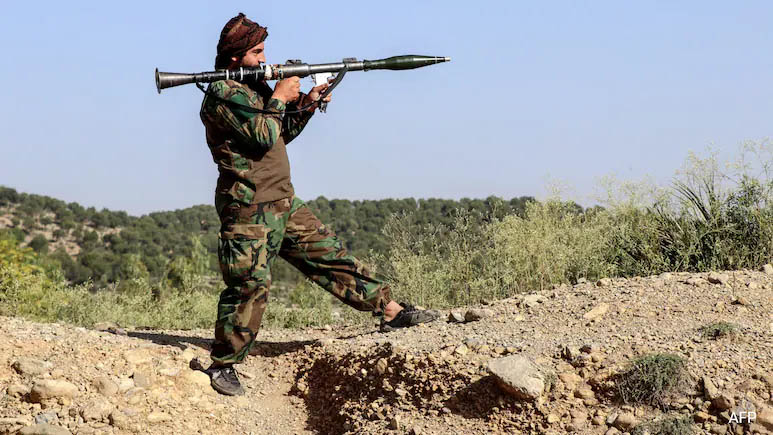
Zia cast the Afghan resistance as a religious obligation, and the seminaries became recruitment and indoctrination hubs, producing a generation steeped in a militarised reading of faith. What is sometimes called a “jihad culture” – training camps, weapons, ideologues, and a normalised culture of armed struggle – was not an accidental by-product of the war. It was infrastructure, and infrastructure outlives the contingency that builds it.

When the Soviets withdrew in 1989, that infrastructure was not dismantled. Much of it was redirected. The winding down of the Afghan war left a pool of battle-hardened, radicalised fighters, and elements of Pakistan’s security establishment turned some of them toward Jammu and Kashmir. Skills honed during the Afghan campaign were applied to the Kashmir insurgency, and new terror organisations emerged in that theatre through the 1990s, with violence in the valley escalating over the decade. This pattern is widely described by Pakistani and international analysts alike as proxy engagement conducted as policy rather than freelance terrorism the state merely failed to suppress.

It is against this backdrop that Lal Masjid must be read. The mosque was never peripheral to this history. Its founding cleric, Maulana Abdullah, was reported to be close to Zia and an open champion of the jihad against the Soviets. Under his sons, Abdul Aziz and Abdul Rashid Ghazi, the complex became a centre of confrontation with the state that had once patronised it. 

The decisive rupture came after 11 September 2001, when President Pervez Musharraf aligned Pakistan with the American-led Global War on Terror. To the terrorists nurtured for decades, this was a betrayal of the jihad they had been raised to wage. The very networks the state had built now turned against it, and the 2007 operation was, in the final analysis, a confrontation between the Pakistani state and elements of its own creation.
Latest and Breaking News on NDTV

The consequences followed the logic of blowback. The siege became a rallying cry, and within months the scattered terror factions of the tribal areas coalesced into the Tehreek-e-Taliban Pakistan (TTP) in December 2007. Instruments once directed outward were now turned on Pakistani soldiers, mosques, and markets.

RelatedPosts

Gwadar Explained: Why Pak’s Chinese-Backed Port Keeps Coming Under Attack

China’s New Ethnic Unity Law Raises Alarm Over Overseas Crackdown

Pakistan, Turkiye reaffirm ties and target USD 5 billion trade

Which makes Islamabad’s present posture so revealing. Pakistani officials have taken to branding the TTP, now officially designated “Fitna al-Khawarij,” along with other banned groups, as Indian-sponsored, an accusation advanced without public evidence even as these groups openly claim their own attacks. The historical record does not sustain the charge. By lineage and ideology, the TTP is substantially a product of choices made in Rawalpindi and Islamabad across three decades, not an import. India has rejected the allegations as baseless and has consistently urged Pakistan to look inward and dismantle the terror infrastructure embedded within its own security and ideological apparatus.

The Lal Masjid anniversary, then, is best marked not as the memory of an ambush by fanatics but as an occasion for reckoning. An ecosystem assembled by deliberate design cannot be credibly disowned onto a neighbour. Dismantling it begins with the harder task of acknowledging who built it, and why.

Get real time update about this post categories directly on your device, subscribe now.

Unsubscribe
Page 3 News International Desk

Page 3 News International Desk

The Page 3 News is a Multilingual Worldwide daily newspaper founded in 2021. It is published in Bangkok, Thailand by the Page 3 News Thai Limited Partnership. Page 3 News is available to the world in all the three formats i.e. e-Paper, digital and print. The Page 3 News is having offices in many countries like Thailand, India, Canada, USA, etc. and is currently published in English, Thai, Hindi and Punjabi languages.

Related Posts

Gwadar Explained: Why Pak’s Chinese-Backed Port Keeps Coming Under Attack

Gwadar Explained: Why Pak’s Chinese-Backed Port Keeps Coming Under Attack

by Page 3 News International Desk
July 5, 2026
0
0

For the people of Gwadar, stability isn't an abstract goal. It's the chance to send a child to school without...

China’s New Ethnic Unity Law Raises Alarm Over Overseas Crackdown

China’s New Ethnic Unity Law Raises Alarm Over Overseas Crackdown

by Page 3 News International Desk
July 5, 2026
0
0

The law legally consolidates President Xi Jinping's constant efforts to establish a national identity and promote the idea of a...

Pakistan, Turkiye reaffirm ties and target USD 5 billion trade

Pakistan, Turkiye reaffirm ties and target USD 5 billion trade

by Page 3 News International Desk
July 5, 2026
0
1

Shehbaz Sharif and Recep Tayyip Erdogan agreed in Istanbul to deepen trade, defence and investment ties. Their renewed push for...

Khamenei’s 3 sons pray beside his coffin, his heir Mojtaba remains out of sight

Khamenei’s 3 sons pray beside his coffin, his heir Mojtaba remains out of sight

by Page 3 News International Desk
July 5, 2026
0
0

Three of Ali Khamenei's sons prayed beside his coffin and four relatives' coffins in Tehran, while successor Mojtaba remained absent....

Decision to resign was intensely personal, says UK PM Keir Starmer

Decision to resign was intensely personal, says UK PM Keir Starmer

by Page 3 News International Desk
July 5, 2026
0
1

Starmer cautioned his successor that they would be faced with similar global challenges that he had been consumed by during...

Opec+ set for modest August oil output hike as Hormuz shipments resume

Opec+ set for modest August oil output hike as Hormuz shipments resume

by Page 3 News International Desk
July 5, 2026
0
0

If ratified at a video conference on Sunday, seven major nations led by Saudi Arabia and Russia will add 188,000...

Facebook Twitter Youtube Instagram Tumblr Pinterest

Page 3 News Multilingual Worldwide

The Page 3 News is a Multilingual Worldwide daily newspaper founded in 2021. It is published in Bangkok, Thailand by the Page 3 News Thai Limited Partnership. Page 3 News is available to the world in all the three formats i.e. e-Paper, digital and print.

The Page 3 News is having offices in many countries like Thailand, India, Canada, USA, etc. and is currently published in English, Thai, Hindi and Punjabi languages.

Category

Calanderwise News

July 2026
MTWTFSS
 12345
6789101112
13141516171819
20212223242526
2728293031 
« Jun    

© 2024 Page 3 News - First Multilingual Worldwide Newspaper based in Thailand.

Welcome Back!

Login to your account below

Forgotten Password? Sign Up

Create New Account!

Fill the forms below to register

*By registering into our website, you agree to the Terms & Conditions and Privacy Policy.
All fields are required. Log In

Retrieve your password

Please enter your username or email address to reset your password.

Log In

Add New Playlist

No Result
View All Result
  • Home
  • Subscriptions
  • E-Paper
  • World News
  • Balochistan
  • USA
  • India
  • Thailand
  • Canada
  • UK
  • Australia
  • About Us
  • Contact
  • Privacy Policy
  • Terms and Conditions
  • Disclaimer

© 2024 Page 3 News - First Multilingual Worldwide Newspaper based in Thailand.

This website uses cookies. By continuing to use this website you are giving consent to cookies being used. Visit our Privacy and Cookie Policy.