

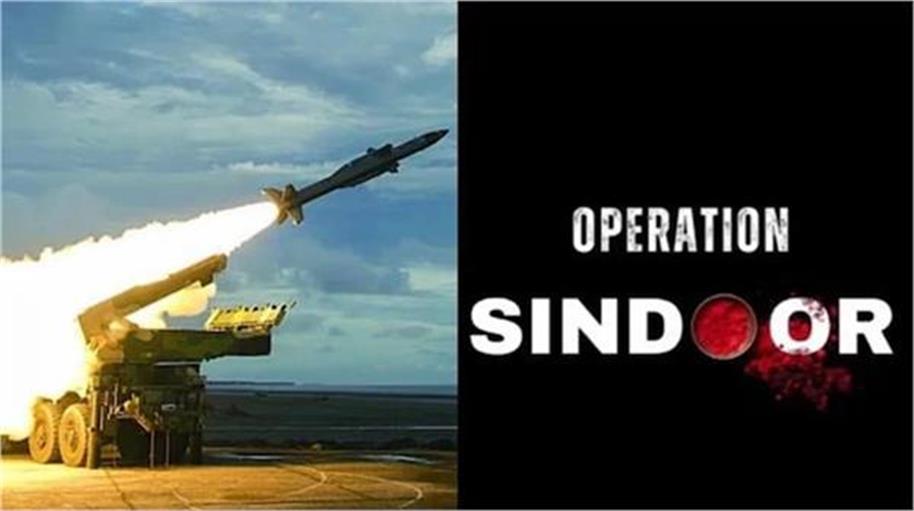
China provided support to Pakistan during India’s military response, Operation Sindoor, launched following the Pahalgam terror attack in May 2025, according to a significant annual report submitted to the US Congress.
New Delhi: The report alleges that Beijing’s backing of Islamabad was part of a broader strategic effort to counter India’s growing economic and military influence while easing pressure on its close regional ally, Pakistan.
The 2026 annual report of the US-China Economic and Security Review Commission (USCC) includes a dedicated chapter titled ‘China’s Second Front: India and the Future of US Strategy in the Indo-Pacific’. It examines China’s growing strategic involvement in South Asia and its implications for India and the wider Indo-Pacific region.
China Supplies 81% of Pakistan’s Arms Imports
The commission’s findings draw on a February 2026 hearing, a fact-finding visit to India, consultations with government officials and business representatives, and additional research.
According to the report, Beijing’s support for Pakistan has long been a key element of its strategy to maintain a balance of power with India, dating back to the 1962 India-China war.
China remains Pakistan’s largest defence supplier. Between 2020 and 2024, Chinese weapons accounted for 81 per cent of Pakistan’s total arms imports, highlighting the extent of their military partnership.
The report suggests that this close defence relationship has reinforced India’s concerns about the possibility of facing a two-front security challenge, with tensions involving both China and Pakistan.
It further assesses that during Operation Sindoor, Beijing sought to bolster Pakistan’s capabilities and provide strategic support without directly entering the conflict.
Cyber Attacks and Maritime Surveillance Also Featured in China’s Support
The report claims that Pakistan deployed advanced Chinese-made weapons during the military confrontation with India.
It also alleges that Chinese hackers attempted large-scale Distributed Denial-of-Service (DDoS) attacks targeting India’s central government IT infrastructure, telecommunications networks and digital services.
However, the commission acknowledged that it could not conclusively establish responsibility for the cyber attacks. It noted that some of the most sophisticated attacks targeting India’s critical infrastructure originated from Chinese territory.
Beyond cyber operations, China allegedly used maritime surveillance to gather information during the period of heightened tensions.
According to the report, Beijing deployed an advanced sensor-equipped survey vessel near India’s Exclusive Economic Zone (EEZ), along with another vessel in the Bay of Bengal.
The vessels reportedly monitored Indian military movements and activities, with the intelligence gathered allegedly being shared with Pakistan through maritime channels.
The findings highlight the growing strategic and military cooperation between China and Pakistan, as well as the broader security challenges India faces in the region.