
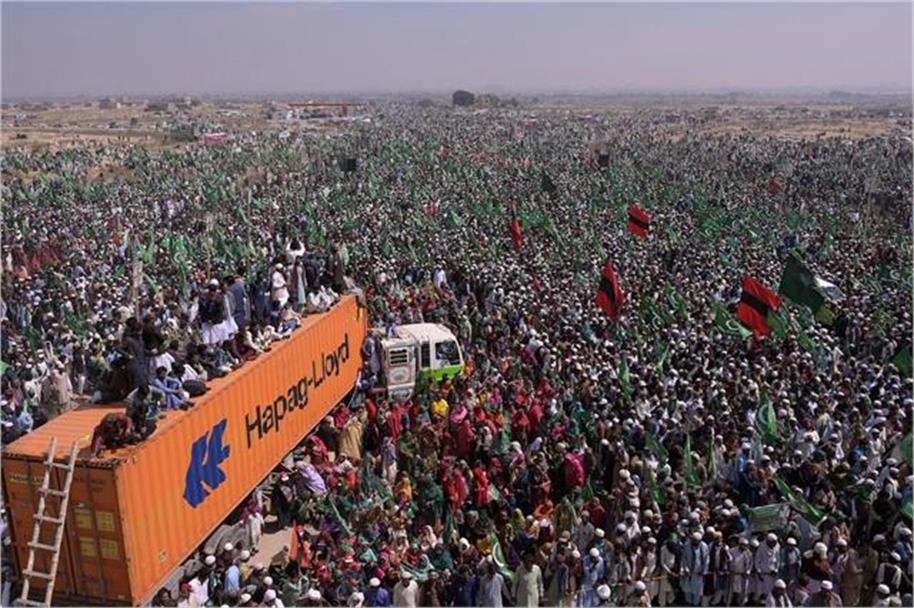
Seventy-nine years after its creation, Pakistan continues to grapple with the very crises that have haunted it since 1947. Despite decades of political upheaval, military interventions and constitutional experiments, the country remains burdened by deep contradictions over national identity, political representation, resource distribution and relations with its neighbours. Rather than evolving into a genuinely inclusive federation, Pakistan has increasingly become a state where power remains concentrated in the hands of a narrow military-backed elite.
The breakup of East Pakistan in 1971 should have served as a historic warning that suppressing ethnic, linguistic and regional aspirations carries enormous consequences. Instead of learning from that lesson, Pakistan’s ruling establishment doubled down on the same ideological narrative that prioritised a rigid state identity over the aspirations of diverse communities. As a result, alienation continues to grow in regions such as Balochistan, Khyber Pakhtunkhwa and other peripheral areas, where many believe their voices are ignored and their resources exploited.
Pakistan presents itself internationally as a powerful Muslim state, yet internally it faces persistent challenges from multiple ethnic, linguistic and religious groups who question the fairness of the existing political order. These tensions are not simply about identity; they are fundamentally about power, representation and access to resources.
Unlike successful multi-ethnic states that have developed workable power-sharing arrangements, Pakistan has struggled to build institutions that command broad public confidence. Representative bodies often appear weak, while unelected centres of power continue to dominate major national decisions. Critics argue that the country’s most resource-rich but politically marginalised regions contribute significantly to the national economy while receiving little in return in terms of development, autonomy or political influence.
At the heart of this crisis lies the overwhelming influence of the military establishment. For decades, Pakistan’s political system has been characterised by a cycle in which civilian governments rise and fall largely at the pleasure of powerful unelected actors. Political parties are cultivated, weakened or discarded depending on changing strategic calculations. This perpetual manipulation has prevented the emergence of stable democratic institutions and has deepened public distrust in the political system.
Meanwhile, ordinary Pakistanis continue to bear the cost of economic mismanagement. Mounting debt, chronic inflation, unemployment and a weak productive economy have left millions struggling to meet basic needs. While the establishment continues to justify its dominant role through security concerns and geopolitical considerations, many citizens see little improvement in their daily lives.
Pakistan’s dependence on foreign patrons and its long-standing reliance on strategic positioning have also encouraged a political culture that frequently blames external forces for domestic failures. India, Afghanistan and other perceived adversaries are routinely invoked to explain internal unrest. However, growing dissatisfaction across different regions suggests that many of Pakistan’s problems stem not from foreign conspiracies but from decades of centralised control, uneven development and political exclusion.
The state’s response has often been to tighten control rather than address underlying grievances. Voices demanding greater rights, representation and accountability are frequently dismissed, marginalised or suppressed. As a result, frustration continues to build, particularly among younger generations who face limited economic opportunities and shrinking political space.
After nearly eight decades, Pakistan finds itself confronting a difficult reality: a state cannot achieve long-term stability through coercion, propaganda and elite power-sharing alone. Unless meaningful reforms are undertaken, resources are distributed more equitably and genuine political participation is ensured for all communities, the gap between the ruling establishment and the people is likely to widen further.
The growing discontent visible across Pakistan today is not merely a temporary political problem. It is the consequence of decades of military dominance, democratic deficits, economic inequality and unresolved national questions. Until these structural issues are addressed, Pakistan’s promise of unity and prosperity will remain elusive for millions of its citizens.