
Russian attacks on cargo vessels have sharply disrupted shipping from Odesa, threatening to trap millions of tonnes of grain during Ukraine’s harvest season.
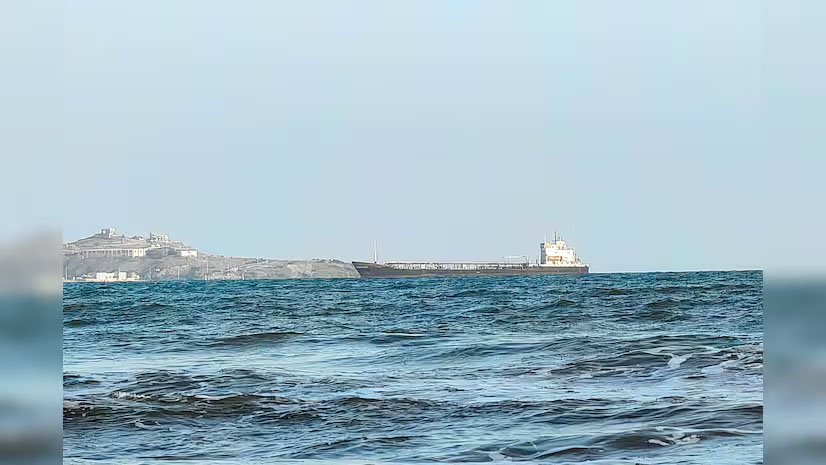
As families strolled in the Ukrainian port city of Odesa recently, a lone cargo ship sailed in the distance. Suddenly, a drone dropped out of the sky and slammed into the vessel.
The attack in late July was part of a Russian campaign targeting cargo vessels that has halted nearly all shipping in and out of Odesa, Ukraine’s most crucial link to the world economy. Coming at the harvest season, this could throw global food supply chains into turmoil. Dmytro Barinov, president of the Ukrainian Ports Association, said: “It’s a professional hunting for civilian vessels.”
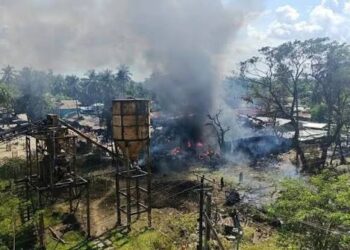
These strikes are the latest chapter in the battle over the Black Sea and Sea of Azov. New weapons that allow for precision targeting at great distances have made slow-moving cargo vessels easy targets. In June and July, Russian forces attacked at least 50 cargo ships, according to Ukrainian officials, killing more than 30 civilians.
Ukraine has also systematically targeted Russian-linked tankers and cargo vessels. Moscow’s maritime campaign appears to be a response to this decimation of its fleet of river-sea oil tankers in the Sea of Azov and the continued targeting of ships transporting Russian goods, which has left occupied Crimea starved for fuel.
Ukraine’s latest major assault took place before dawn on Wednesday, when its forces attacked the Russian port of Novorossiysk, on the Black Sea, with jet-powered drones, missiles and unmanned naval systems, President Volodymyr Zelenskyy said. Three people died, including an 8-year-old child, and about 60 residential buildings were damaged, Veniamin Kondratyev, the governor of the Krasnodar region, which includes Novorossiysk, said. Andrei Kravchenko, the mayor of the city, which is a critical hub for grain exports, declared a state of emergency. He said the city’s water supply had been suspended after two mains were damaged.
The escalating battle is a flashpoint in a larger phenomenon that threatens a foundational tenet of the international order: Freedom of navigation. That maritime system is under strain as state and nonstate actors increasingly use drones, anti-ship missiles and mines to disrupt routes, particularly in places like the Red Sea and the Strait of Hormuz.
At the port in Odesa and two others nearby, the Russian blockade could trap millions of tons of grain. The three ports account for about 60 per cent of Ukraine’s total monthly export revenue of $3.5 billion. The Ukrainian Agri Council, a trade group, has warned of a potential wave of bankruptcies and has pleaded for emergency loans and state guarantees.
As Russia has stepped up strikes in recent weeks, one of the ships hit was a bulk carrier called the Golden Leo. Blesson Sebastian, a 28-year-old second officer on the ship, had been to Ukraine many times over the past eight months, but when his vessel arrived last month, he said, the pace of Russian attacks was far more intense than anything he had experienced on previous trips. The crew avoided Odesa’s main port, docking at nearby Chornomorsk. It offered no sanctuary. On July 19, the ship was fully loaded with grain and departed. Once the boat was four miles out from the port, Sebastian said, an air alarm wailed.
Volodymyr Mykhailov, a Ukrainian who was onboard to pilot the boat out of the harbour, advised leaving the bridge because Russian drones typically target the navigation deck, Sebastian said. As Mykhailov and Sebastian made their way down the stairs, a Russian missile slammed into the hull.
Nine crew members and Mykhailov were killed in the strike. The boat sank a week later.
Elisabeth Braw, an expert on maritime threats who works at the think tank Atlantic Council, said that Russia was waging a systematic and indiscriminate campaign against merchant vessels carrying agricultural goods and other nonmilitary cargo in and out of Ukrainian ports. Such attacks violate treaties such as the UN Convention on the Law of the Sea, she said.