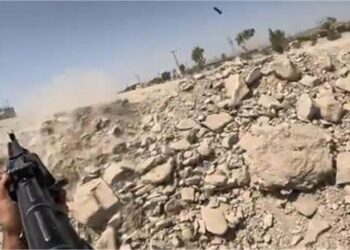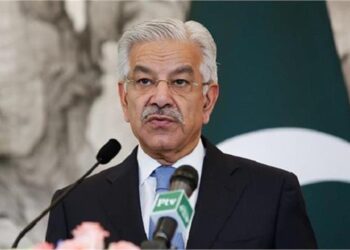

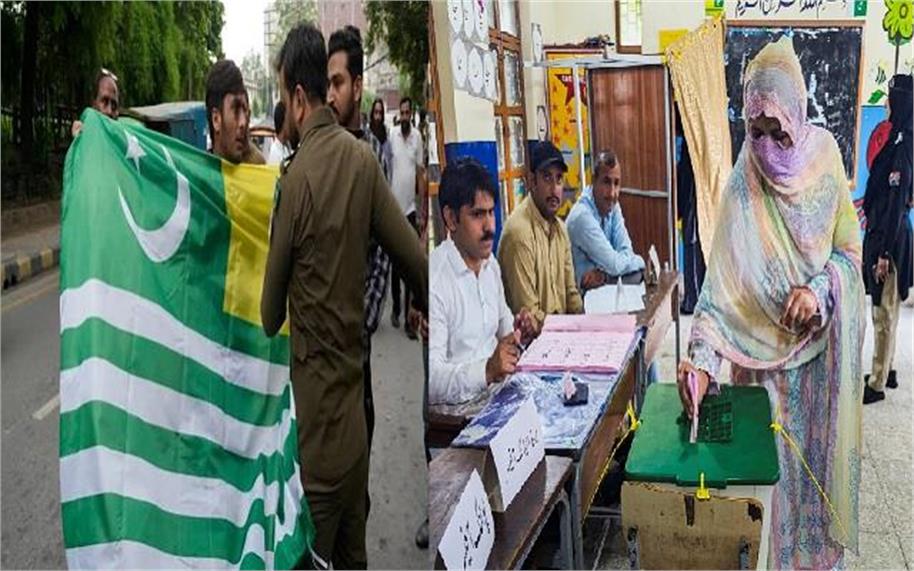
Polling in the third phase of elections in Pakistan-occupied Kashmir (PoK) has once again been overshadowed by violence, political clashes and allegations of electoral malpractice, raising fresh questions over the credibility of the process under Pakistan’s control.
Voting was held in just four constituencies on Monday, while polling in seven others was postponed indefinitely on security grounds. The disruption comes after earlier phases were also marred by violence and allegations of widespread irregularities, further deepening concerns over the conduct of elections in the disputed territory.
Peshawar: What was supposed to be another stage of the electoral process in Pakistan-occupied Kashmir instead unfolded amid reports of disorder, clashes and alleged interference at polling stations. Polling began at 8 am in four constituencies in the Bagh and Haveli districts of the Poonch Division, but the Election Commission had already classified most of the 803 polling stations in these constituencies as sensitive or highly sensitive.
The situation was serious enough for authorities to indefinitely postpone voting in seven other constituencies of the Poonch Division, citing law-and-order concerns.
The latest developments have intensified criticism of Pakistan’s handling of the electoral process in PoK, where political competition has repeatedly been accompanied by allegations of intimidation and manipulation.
Clashes were reported between workers of Pakistan Muslim League-Nawaz (PML-N) and Pakistan Peoples Party (PPP) in several areas. The PPP has accused the PML-N of attempting to manipulate the third phase of voting on a large scale.
In posts on X, the PPP alleged that roads leading to polling stations were blocked in some areas, preventing voters and political workers from reaching the booths. It further alleged that PML-N supporters were illegally stamping ballot papers at some polling stations.
The PPP also claimed that officials, voters, polling agents and party workers were prevented from accessing certain polling stations. At some centres, according to the party, polling staff arrived late, delaying the start of voting. The party further alleged that some of its polling agents were forcibly removed from polling stations.
The PPP also released a video that it said showed PML-N workers attacking a polling station in Bagh. The allegations and the video could not be independently verified.
The latest turmoil is hardly an isolated incident. The first phase of the PoK Assembly elections was held on 27 July and the second on 2 August. Both phases were accompanied by reports of violence, political clashes and allegations of widespread electoral malpractice.
With the third phase now facing similar controversy, the repeated disruptions are casting a shadow over the credibility of the entire electoral exercise.
The results announced so far have put the PML-N firmly ahead, with 24 seats, while the PPP has secured 10 seats. Elections are being held for all 45 seats of the PoK Assembly, with the PML-N now preparing to form the government.
The party has also announced that its leader and former Pakistani Prime Minister Nawaz Sharif will decide the candidate for the post of Prime Minister of PoK — underscoring the powerful role of Pakistan’s mainstream political leadership in determining the region’s political future.
Meanwhile, the PPP has continued to accuse the PML-N of interfering with the electoral process.
For critics, the latest unrest reinforces a troubling picture: an election in a territory already marked by political tensions, now repeatedly clouded by allegations of violence, intimidation and manipulation. Until these allegations are independently investigated and credible safeguards are put in place, questions over the legitimacy and transparency of the PoK electoral process are unlikely to disappear.