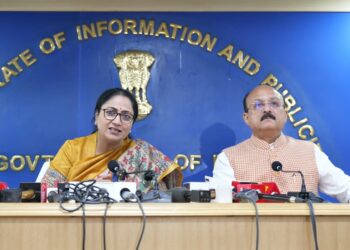

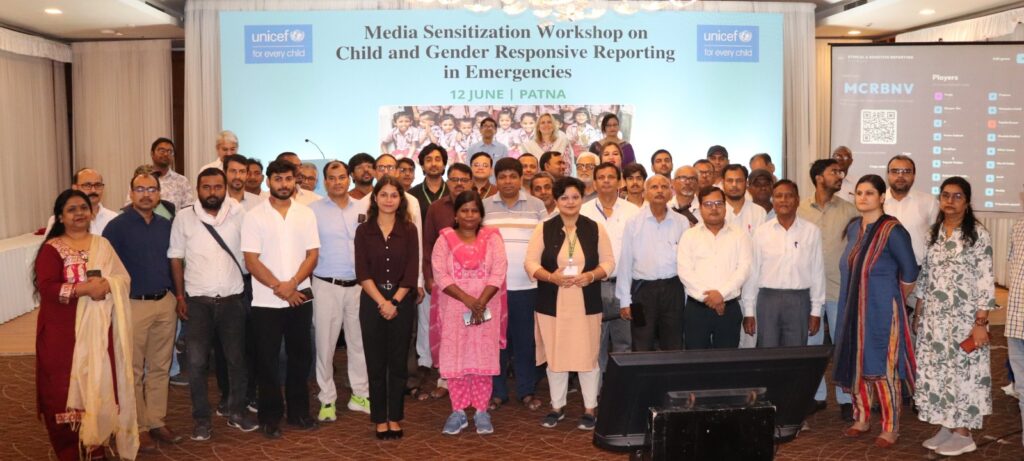
Patna: With climate-related disasters such as floods, droughts and heatwaves becoming increasingly frequent, UNICEF, in partnership with the Bihar Government, organised a media sensitisation workshop in Patna to promote child- and gender-responsive reporting during emergencies.
The workshop brought together journalists from print, television and digital media, social media influencers, representatives of the Information and Public Relations Department (IPRD), and public relations officers from various government departments to strengthen responsible communication during crises.
Speaking on Bihar’s disaster preparedness measures, Md Nadeemul Ghaffar Siddiqui, Joint Secretary, Disaster Management Department, said the state has enhanced early warning systems, preparedness planning and inter-departmental coordination to effectively tackle floods, heatwaves and other climate-related hazards. He urged media professionals to ensure fact-based reporting while highlighting the efforts of frontline rescue workers.
Dr Monika Nielsen, Chief of Field Office, UNICEF Bihar, emphasised the importance of placing children and women at the centre of climate and disaster narratives. She noted that vulnerable groups often face disproportionate challenges during emergencies, including disruptions in education, healthcare and nutrition services. Dr Nielsen also lauded the media’s role in amplifying issues related to child nutrition, immunisation, newborn survival and child protection across the state.
The workshop featured a technical session led by media and communication expert Minnati Chaklanavis, who discussed ethical crisis reporting practices, including informed consent, protection of children’s identities and avoiding sensationalism. She stressed that the dignity of affected individuals must remain paramount during emergency coverage.
UNICEF WASH Specialist Sudhakar Reddy highlighted the growing impact of climate change on children, women and marginalised communities, pointing to challenges such as contaminated water sources and interruptions in essential services.
The programme concluded with an interactive discussion on the evolving role of media in disaster communication, climate awareness and public accountability, reinforcing the need for responsible and inclusive reporting during emergencies.