
By Chandan Singh | Page 3 News Worldwide | New Delhi
New Delhi: In one of the most ambitious reforms of Delhi’s water sector in decades, the Delhi Government has unveiled a comprehensive plan to ensure equitable water distribution, modernise ageing infrastructure, curb water losses and promote large-scale reuse of treated water.
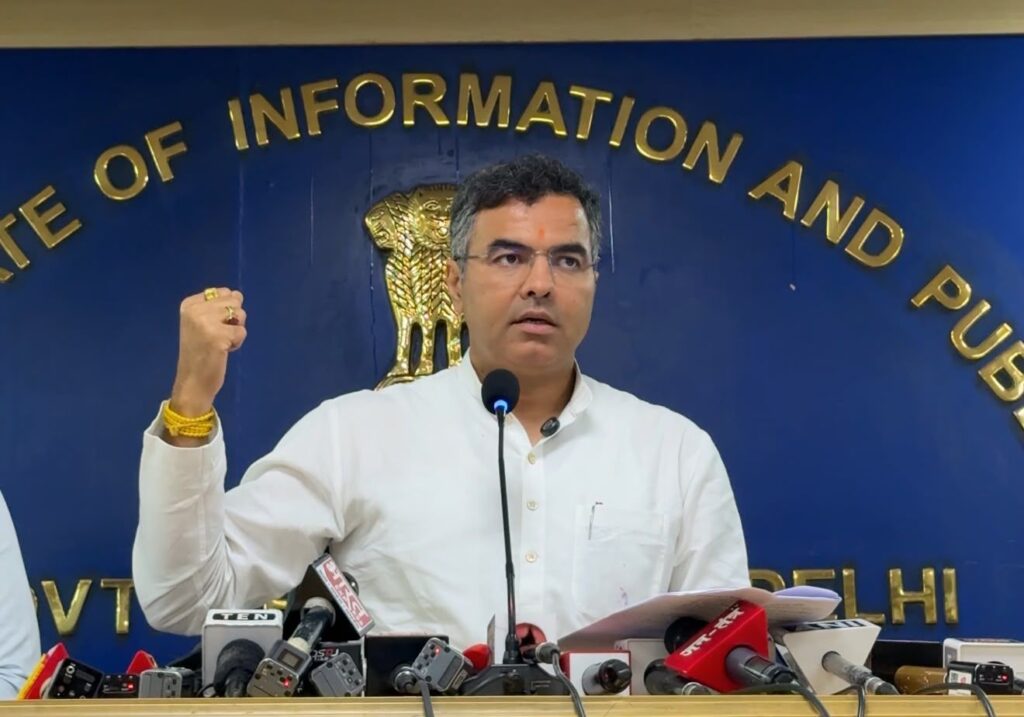
Announcing the measures on Tuesday, Water Minister Parvesh Sahib Singh said the city’s growing population and limited water resources require a fundamental shift in water management. Delhi’s demand peaks at nearly 1,250 MGD during summer, while a prolonged dry spell in the Yamuna has recently reduced water production by around 100 MGD, impacting supplies in several areas.
To address longstanding disparities in distribution, the government has launched a Water Rationalisation Project that will scientifically assess population density, demand patterns and infrastructure availability to ensure fairer allocation of water across the city. The move comes amid recurring complaints from 12–13 Assembly constituencies that face acute shortages every summer.
The government is also set to modernise Delhi’s ageing water network, with nearly 5,500 km of the city’s 16,634-km pipeline system now more than three decades old. Officials say replacing old pipelines will significantly reduce leakages, contamination risks and wastage of treated water.
In another major initiative, the Delhi Jal Board is working to reduce Non-Revenue Water (NRW) losses caused by leaks, theft and distribution inefficiencies. The government is also exploring the conversion of the open DSB Canal into a closed pipeline system after studies indicated that nearly 40–45 per cent of water is currently lost through the canal network.
The reform package also includes the introduction of a Dual Piping System, under which highly treated recycled water will be supplied separately for non-drinking purposes such as flushing, landscaping, construction and vehicle washing, while freshwater will be reserved for household consumption.
The system will initially be implemented in government buildings and public institutions before being extended to hotels, commercial establishments, housing societies and large residential complexes. Incentives for early adopters are also under consideration.
Calling water security a long-term challenge, Singh said the government is simultaneously pursuing pipeline replacement, water recycling, rainwater harvesting, groundwater recharge and scientific planning to create a resilient and sustainable water supply system.
“Our goal is simple — every household should receive clean water, every drop should be used efficiently and no area of Delhi should feel neglected,” the minister said.