

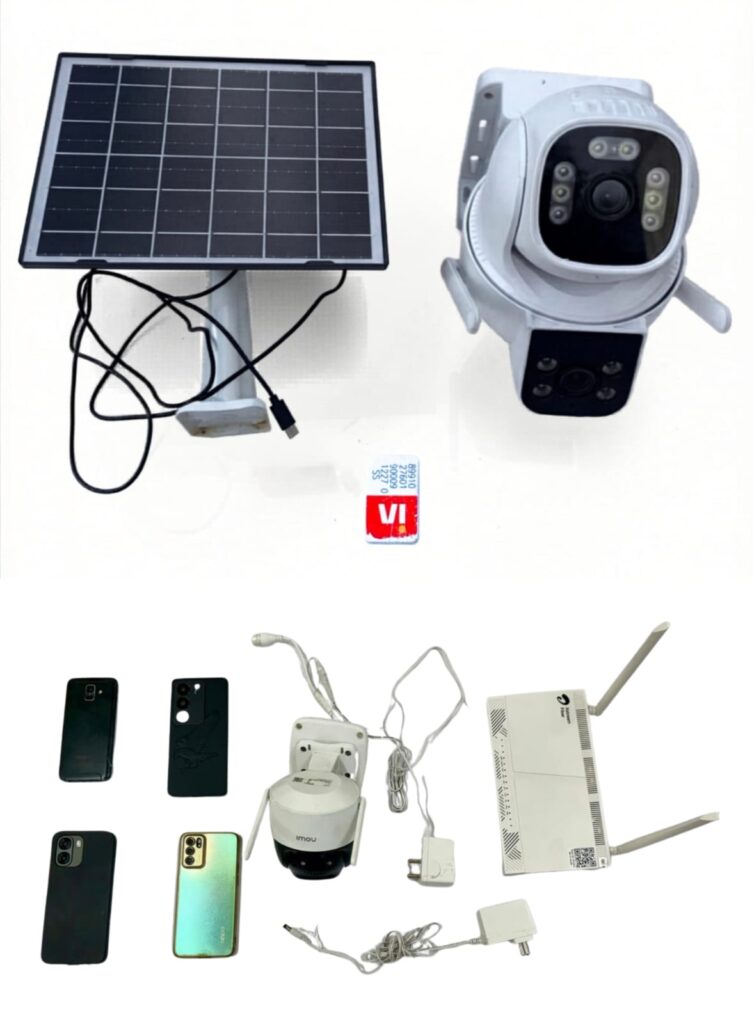
Chandigarh/Jalandhar: In a significant counter-espionage breakthrough, Punjab Police has dismantled two alleged ISI-backed surveillance modules that were using Chinese-made CCTV cameras to transmit real-time footage of sensitive locations to handlers in Pakistan. Three individuals have been arrested in connection with the operations.
According to Director General of Police (DGP) Gaurav Yadav, the modules were deploying high-tech, solar-powered CCTV cameras equipped with 4G connectivity to monitor sites linked to defence establishments. The live feeds were allegedly transmitted via mobile applications to Pakistan-based operatives.
One module was neutralised by Counter Intelligence in Jalandhar with the arrest of Sukhwinder Singh alias Sukha, a resident of Ferozepur. Police recovered a China-made CCTV camera along with a USB-connected solar panel and SIM card from his possession.
In a separate joint operation, Kapurthala Police, along with a central agency, arrested two more suspects—identified as Sona and Sandeep Singh alias Sonu, both from Ferozepur district. Authorities seized four mobile phones linked to foreign handlers, a SIM-based CCTV camera, and a Wi-Fi device.
Officials said the accused had been installing cameras at strategically chosen locations, including near military facilities, to capture and relay sensitive information. In one instance, a rented shop in Kapurthala’s Model Town area was allegedly used to install a camera on a nearby pole to track movement near an Army cantonment.
Investigators revealed that a Pakistan-based handler, identified as “Fauji”, had allegedly paid ₹35,000 for installing the surveillance equipment. Further inquiry also linked one of the accused, Sandeep Singh, to drug smuggling activities, with claims that he received ₹50,000 to distribute one kilogram of heroin delivered via drone.
Two FIRs have been registered under relevant sections of the Bharatiya Nyaya Sanhita and the Official Secrets Act at police stations in Kapurthala and Amritsar. Further investigations are underway to identify additional links and handlers involved in the cross-border espionage network.