

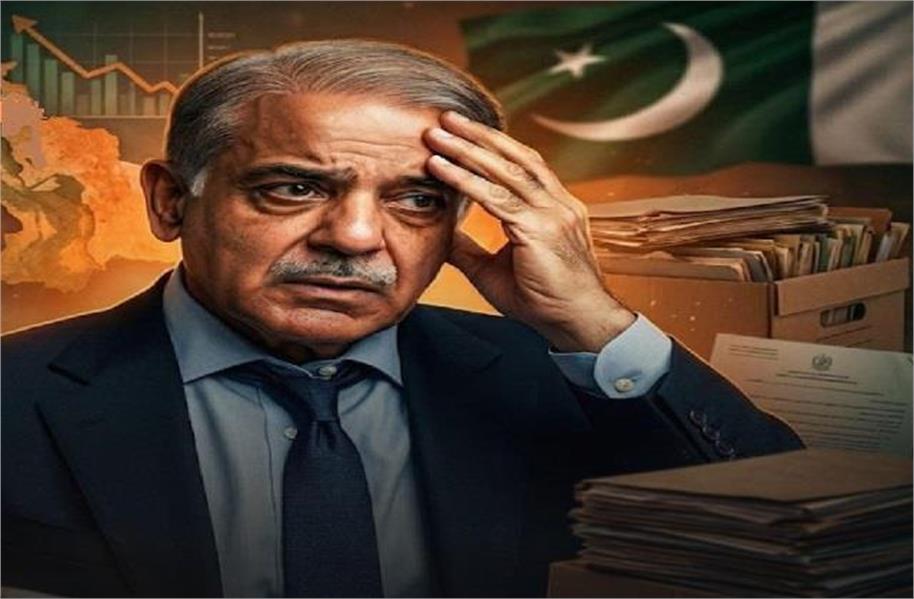
Pakistan’s economic crisis is spiralling out of control, with total debt breaching a staggering ₹80 trillion and swelling by an alarming ₹26 billion daily. The debt-to-GDP ratio has surged to 72%, exposing a dangerously overleveraged economy. The crushing burden is now choking vital sectors like education and healthcare, pushing the country closer to a full-blown financial meltdown.
International Desk: A damning report on Pakistan’s fragile economy has laid bare the scale of the crisis. In just one year, the country has piled on nearly ₹9 trillion in additional debt — a reckless surge with no clear recovery plan in sight. On a daily basis, Pakistan is borrowing ₹26 billion, translating to over ₹1 billion every hour and roughly ₹18 million every minute — a relentless debt spiral with no brakes.
The crisis has reached a point where nearly three-quarters (72%) of Pakistan’s entire economic output is effectively swallowed by debt. This leaves the government scrambling with barely any fiscal space to fund development or sustain public services. Instead, vast sums are being drained into loss-making state-owned enterprises and unchecked expenditures. Critical sectors — from power and gas to railways and the national airline — continue to haemorrhage money, with reforms either delayed or entirely absent.
Experts warn that if this unsustainable trajectory continues, essential sectors like education and healthcare will face even deeper neglect. A growing chunk of government revenues is likely to be consumed solely by debt servicing, leaving little for nation-building. In essence, Pakistan’s economy is being crushed under the weight of its own borrowing, with the spectre of a far more devastating financial crisis looming large.