

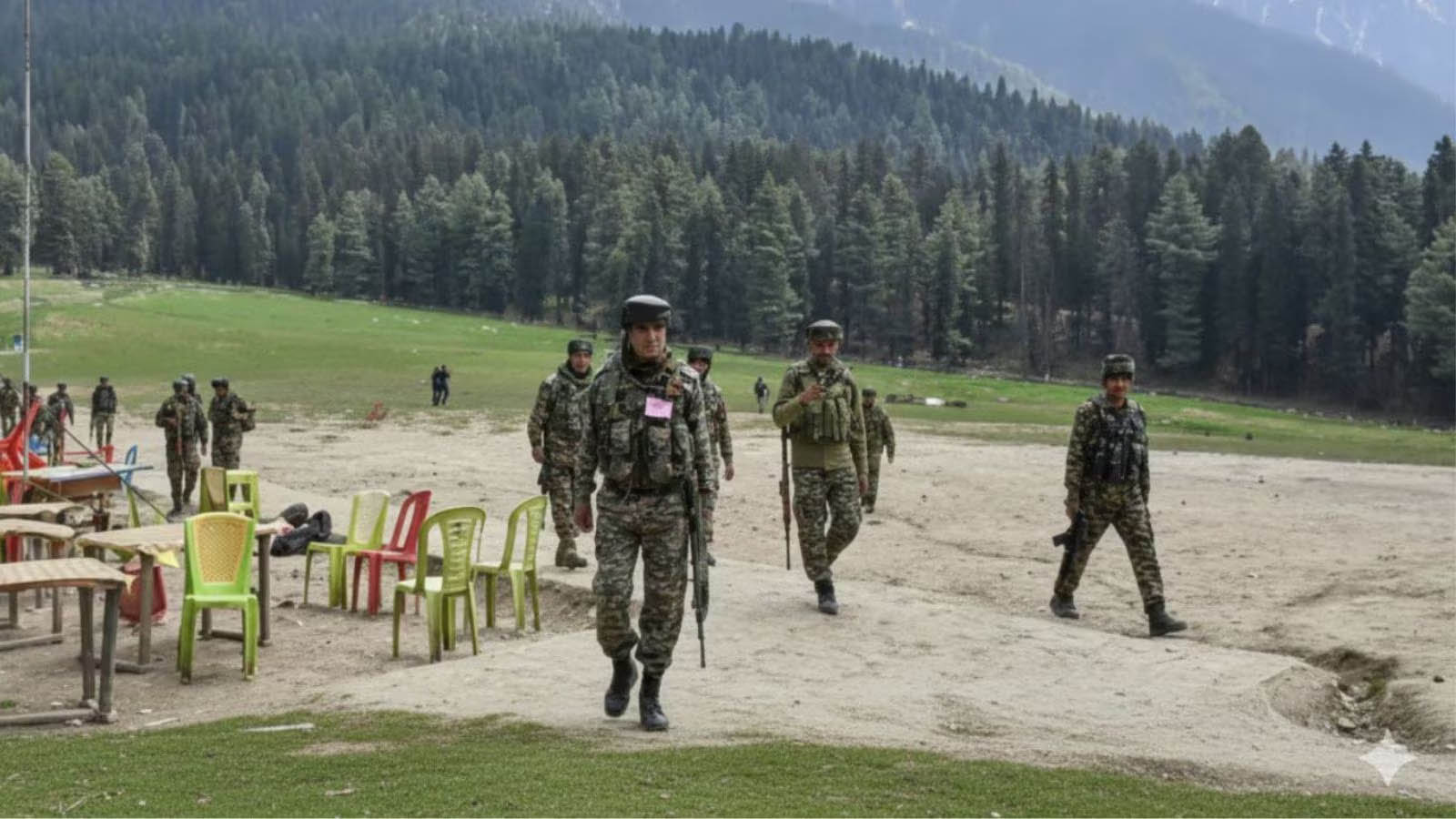
Pahalgam terror attack: Cellphones imported into Pakistan in 2021, 2023, not used until attack last year.
Investigations into the Pahalgam attack have traced one of the two cellphones used by the terrorists to a consignment imported into Pakistan in 2021, financed by a Karachi-based bank that has found itself in the crosshairs of terror probes in the past, The Indian Express has learnt.
The bank was earlier alleged to be associated with funds of proscribed terror outfit Lashkar-e-Taiba (LeT) and Lajnat-al-Dawa, a Kuwait-based foundation with alleged links to Al-Qaeda. Also, both the cellphones, though imported in 2021 and 2023, remained unused until the run-up to the Pahalgam attack on April 22, 2025, said sources.
According to investigations by the National Investigation Agency (NIA) and Jammu and Kashmir Police, the Pahalgam attackers carried two Xiaomi cellphones of the RedMi series — a 9T (orange) imported in 2021 and a Note 12 (black) in 2023. The phones were recovered from the three attackers — Faisal Jatt alias, Suleiman Shah, Habeeb Tahir alias Jibran, and Hamza Afghani — after they were killed in an encounter at Mulnar Mahadev, in Dachigam Forest, Jammu and Kashmir, on July 28, 2025.
Following an enquiry with Xiaomi Global, it was found that the RedMi 9T was part of a consignment that was imported by Pakistan-based company, Tech Sirat Pvt Ltd, which has its office on Clifton Road in Karachi, said sources. According to details provided by Xiaomi, the consignment was delivered in Pakistan on January 1, 2021. The logistics company listed for the consignment was “Faysal Bank” while the delivery address was recorded as “St/02, Faysal House, Main Branch, Shahrah-e-Faisal, Karachi, Pakistan”.
This is the official address of Faysal Bank Ltd, a leading Islamic bank in Pakistan. Sources said the bank appears to have provided the finance for the import by Tech Sirat — a normal business practice where banks provide letters of credit to importers of large consignments.
“The consignment must have been received by Tech Sirat, but documents show delivery to the bank since it has financed it. The phone used by the Pahalgam attackers appears to have been smuggled out of this consignment and found its way to the LeT. Notably, since the import in 2021, the phone was never switched on, until the Pahalgam attack. It appears that it was whisked away from the consignment for precisely the purpose of being handed over to a terrorist,” said an officer privy to the investigation details.
While there is no evidence of Faysal Bank’s direct links to the Pahalgam attack, the bank has been linked to terror investigations in the past. In 2007, a New York Times report stated that lawsuits brought into the courts following the 9/11 attacks “show that two extremist groups in Pakistan that have been designated by the United States for their support of terrorism, maintained deposit accounts at Faysal Bank Limited… One is Lashkar e-Tayyiba, an armed group fighting India… and another, Lajnat al-Dawa, is a Kuwait-based foundation that has links to Al-Qaeda, according to the US Treasury website”.
The report also stated that the lawyer of the bank’s holding company had denied any links with terror organisations and said “the accounts were frozen as soon as the clients had been either put on a designated list or banned in Pakistan”.
According to a 2002 report by Pakistani daily Dawn, referenced by South Asia Terrorism Portal (SATP) in its monthly security briefs of the time, in the wake of the 9/11 attacks, the Federal Investigation Agency of Pakistan had started gathering details of accounts maintained by the LeT, Sipah-e-Sahaba Pakistan (SSP), Harkat-ul-Mujahideen (HuM), Al-Rashid Trust (ART), Al-Badr, Saif-ul-Mujahideen, Tehreek-e-Jafferia Pakistan (TJP) and the Jaish-e-Mohammed (JeM). It said the sources indicated that each proscribed group had been maintaining several local and foreign currency accounts with different nationalised and commercial banks, including the Habib Bank, National Bank, Allied Bank, Muslim Commercial Bank and Faysal Bank.
The second phone, a RedMi Note 12, used by the Pahalgam attackers was imported by Air Link Communications Ltd, whose office is in New Garden Town, Lahore. This phone, too, was never switched on until the run-up to the Pahalgam attack, said sources.
According to sources, no communication data could be retrieved from these phones since the terrorists were using long range radio communication technology, which helps communicate securely over long distances without relying on cellular networks or the internet. Investigators have, however, retrieved a few photographs and maps, including of Baisaran Meadows in Pahalgam and the surrounding areas, from the two phones. One photograph is of a tent that the terrorists had set up on March 30, 2025, weeks ahead of the attack which killed 26. The tent, with a stove visible on the side, appears pitched at a height, putting the terrorists at an advantage vis-a-vis the movement of security forces.