
By Chandan Singh | Page 3 News Worldwide | New Delhi
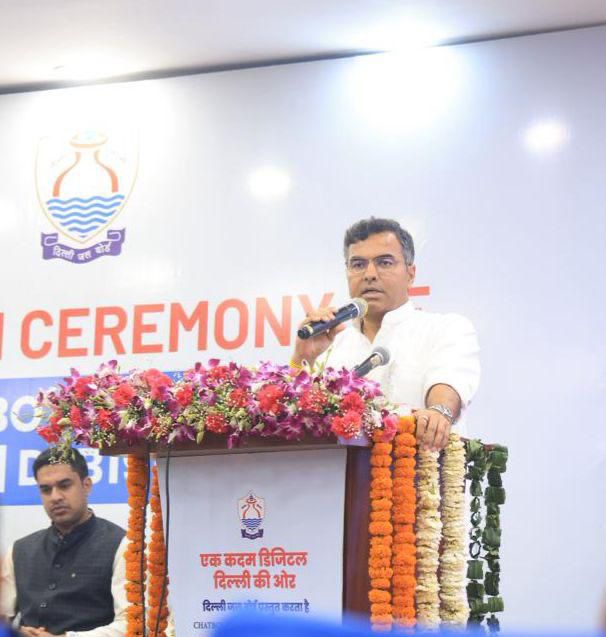
New Delhi: In a major effort to bolster the national capital’s water supply and sanitation systems ahead of peak summer, Delhi Minister Parvesh Sahib Singh on Monday unveiled the Summer Action Plan 2026–27, outlining a comprehensive roadmap for water management, sewer infrastructure and rejuvenation of the Yamuna River.
Launched at the Delhi Jal Board auditorium in Varunalaya, Jhandewalan, the plan combines infrastructure upgrades with digital governance tools aimed at improving transparency, accountability and citizen participation.
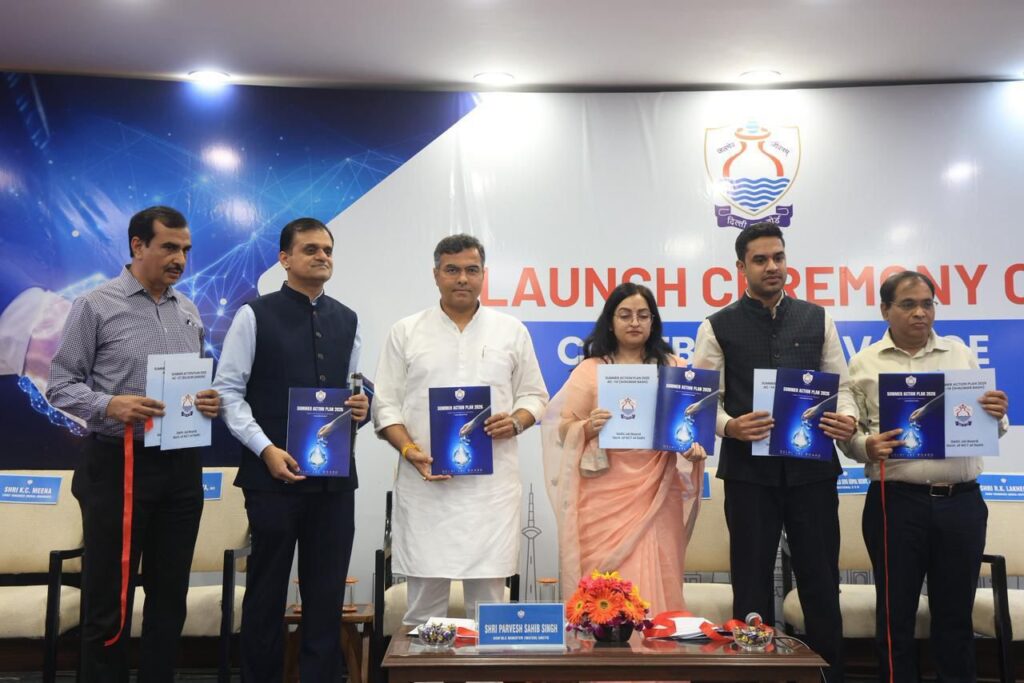
Addressing officials and stakeholders, Singh stressed that ensuring clean water supply and restoring the Yamuna was both a duty and a shared responsibility. He said every level of the administration must prioritise efficient service delivery to meet the city’s growing demand.
Water Supply Boost for Summer
The government aims to maintain peak water production of around 1,002 million gallons per day (MGD) during summer 2026. All major water treatment plants — including Chandrawal, Wazirabad, Haiderpur, Nangloi, Okhla, Dwarka, Bawana and Sonia Vihar — are fully operational, with continuous monitoring of raw water quality to prevent disruptions.
The plan also includes upgrading ageing pumps, motors and electro-mechanical systems to enhance efficiency.
Expansion of Tube-Well Network
To address shortages in water-deficient areas, the number of functional tube-wells will be increased from 5,854 to nearly 6,290, with 436 new units to be commissioned before summer.
Leak Detection and Distribution Improvement
Authorities have completed annual flushing of reservoirs and ensured preventive maintenance of storage systems. Intensive leak detection and repair drives are underway, alongside full operational readiness of booster pumping stations.
Transparent Tanker Supply System
To meet peak demand, around 1,221 water tankers will be deployed monthly, covering 13,000 fixed supply points through 202 hydrants. Reforms include GPS tracking, geo-tagging and real-time monitoring dashboards to curb misuse.
The minister noted that while tankers are not a permanent solution, the system is being made more transparent until pipeline infrastructure is strengthened.
Water Quality Monitoring
Eight laboratories are operational across treatment plants, conducting daily testing of 1,600–1,700 samples in compliance with BIS standards. The share of unsatisfactory samples is being kept within the permissible 3–5% range, with expanded surveillance planned.
Coverage of Unauthorised Colonies
Out of 1,799 unauthorised colonies, pipelines have already been laid in 1,646, with the remaining areas to be covered in phases to ensure equitable access.
Sewer Management and Yamuna Protection
The plan emphasises replacement of ageing sewer lines, desilting of drains and deployment of advanced machinery to tackle blockages. A key focus is preventing untreated sewage from entering the Yamuna.
Digital Governance Push
In a bid to modernise service delivery, the government launched an advanced CRM system, an AI-powered chatbot, WhatsApp-based complaint interface, and the DJB 1916 mobile app. These tools will enable real-time complaint tracking, escalation and citizen monitoring.
A 24×7 call centre (1916/1800117118) will support grievance redressal with automatic escalation mechanisms to ensure time-bound resolution.
Long-Term Vision
The government also outlined a 50-year water master plan targeting an increase in treatment capacity to 1,500 MGD, decentralised sewage treatment, zero discharge colonies and expanded rainwater harvesting.
Plans are underway to support infrastructure for nearly 20 lakh new housing units, alongside measures such as installation of 500 water ATMs and curbs on water wastage.
Inter-State Coordination
Talks are ongoing with Haryana for an additional 51 cusecs of water, while desilting work at Wazirabad is expected to enhance storage capacity for up to three days.
Concluding, Singh acknowledged inherited challenges such as ageing infrastructure and inefficiencies, but said reforms had begun in earnest. He stressed that clean water, efficient sewer systems and a rejuvenated Yamuna are essential for Delhi’s future.