
The Centre for Jain Studies and the Global Relevance of India’s Ancient Knowledge Systems
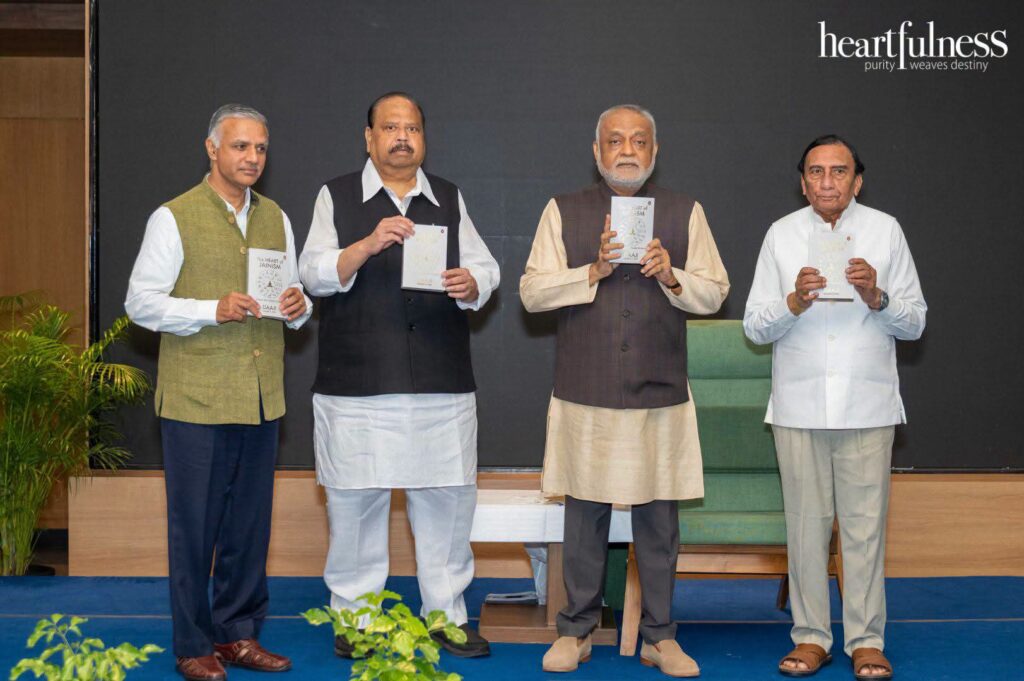
Hon’ble Vice Chancellor Professor Sachin Chaturvedi delivered a special address in the gracious presence of Revered Daaji, highlighting the enduring relevance of Jain philosophy, Indian knowledge traditions,
By Rahul Laxman Patil
Track-II Diplomacy Strategist | Regional Researcher | Advocate for Civilisational Dialogue & BIMSTEC Regional Cooperation
The announcement by Vice-Chancellor Prof. Sachin Chaturvedi to establish a Centre for Jain Studies at Nalanda University marks a historic milestone in India’s higher education, cultural diplomacy, and international engagement. More than an academic initiative, it reflects a visionary effort to position India as a global leader in knowledge diplomacy, reconnecting the world with its ancient civilisational wisdom while addressing the challenges of the twenty-first century.
At a time when the international community faces geopolitical instability, climate change, violent conflicts, social fragmentation, and the ethical implications of technological transformation, there is an urgent need for ideas that promote peace, sustainability, dialogue, and responsible leadership. The proposed Centre for Jain Studies offers precisely such an opportunity by bringing one of India’s oldest philosophical traditions into contemporary global discourse.
Nalanda University: India’s International Academic Institution
Nalanda University occupies a unique place among India’s institutions of higher learning. Revived through the Nalanda University Act, 2010, under the aegis of the Ministry of External Affairs, Government of India, following the decisions of the East Asia Summit, the University was envisioned as an international institution dedicated to education, research, civilisational dialogue, and regional cooperation.
Unlike conventional universities, Nalanda was created with a broader diplomatic and academic mandate. It serves as a bridge connecting India with Asia and the wider world through scholarship, research, and people-to-people engagement. The University complements India’s Act East Policy, Neighbourhood First Policy, Indo-Pacific vision, and its commitment to strengthening regional partnerships through education and cultural understanding.
The revival of Nalanda is not merely the reconstruction of an ancient institution—it is the restoration of one of humanity’s greatest centres of learning, where knowledge once transcended political boundaries and connected civilizations across Asia.
The Visionary Leadership of Vice-Chancellor Prof. Sachin Chaturvedi
Under the leadership of Vice-Chancellor Prof. Sachin Chaturvedi, Nalanda University has strengthened its international profile while remaining firmly rooted in India’s civilisational heritage. His vision is to transform Nalanda into a modern global university where ancient wisdom informs contemporary scholarship and international cooperation.
The announcement of the Centre for Jain Studies, made during the international conclave “The Heart of a Jain” at Kanha Shanti Vanam, Hyderabad, reflects this larger vision. Prof. Chaturvedi highlighted the enduring relevance of Lord Mahavira’s teachings—Ahimsa (non-violence), Anekantavada (pluralism), Aparigraha (non-possessiveness), compassion, ethical leadership, and harmony with nature—as guiding principles for addressing today’s global challenges.
His engagement with institutions such as the Heartfulness Institute further demonstrates his commitment to interdisciplinary collaboration in Indian Knowledge Systems, environmental sustainability, biodiversity conservation, peace studies, and human welfare.
National Importance
For India, the establishment of the Centre for Jain Studies represents a significant national achievement.
It will strengthen research on one of India’s oldest philosophical traditions while preserving an invaluable part of the country’s intellectual and cultural heritage. The Centre will promote interdisciplinary scholarship connecting philosophy with governance, ethics, public policy, environmental studies, conflict resolution, sustainability, and leadership.
The initiative also supports the objectives of the National Education Policy (NEP) 2020, encouraging Indian Knowledge Systems, international collaboration, multidisciplinary research, and academic innovation.
It has the potential to inspire a new generation of scholars dedicated to studying India’s civilisational traditions within a globally relevant academic framework.
International Importance
The international significance of the Centre extends well beyond India.
Jain philosophy offers universal values that transcend religious and geographical boundaries.
Ahimsa (Non-violence) promotes peaceful coexistence and conflict resolution.
Anekantavada (Pluralism) encourages dialogue, tolerance, and respect for multiple perspectives.
Aparigraha (Non-possessiveness) advocates sustainable lifestyles and responsible consumption.
Compassion and ethical conduct provide foundations for inclusive societies and responsible leadership.
These principles closely align with global priorities, including the United Nations Sustainable Development Goals, climate action, environmental protection, peacebuilding, and intercultural understanding.
The Centre has the potential to become an international destination for scholars, diplomats, policymakers, researchers, and students seeking to explore ethics, sustainability, comparative philosophy, and Indian civilisation.
Nalanda University and Track-II Diplomacy
In today’s interconnected world, universities increasingly contribute to Track-II Diplomacy, where academic institutions, think tanks, scholars, and civil society organisations complement official diplomacy by building trust and fostering long-term cooperation.
Nalanda University possesses a unique historical legitimacy in this field.
For centuries, scholars from China, Korea, Japan, Tibet, Sri Lanka, Southeast Asia, and Central Asia travelled to Nalanda, making it one of the earliest centres of international education.
The proposed Centre for Jain Studies can strengthen this legacy by promoting:
International research partnerships
Academic exchanges
Joint conferences
Faculty and student mobility
Heritage conservation projects
Translation and preservation of classical texts
Policy dialogue on ethics, sustainability, and peace
People-to-people engagement across Asia and beyond
These initiatives reinforce international relations through knowledge, culture, and education rather than political negotiations alone.
India’s Knowledge Diplomacy
India’s greatest contribution to the world has historically been its ideas.
From Nalanda and Takshashila to Yoga, Ayurveda, Buddhism, and Jain philosophy, India’s influence spread through knowledge, ethics, and cultural exchange rather than conquest.
The establishment of the Centre for Jain Studies continues this civilisational tradition by transforming India’s philosophical heritage into a source of practical solutions for contemporary global challenges.
It represents the evolution of India’s soft power into Knowledge Diplomacy—where universities become platforms for international cooperation, innovation, and shared learning.
A Vision for the Future
If developed with academic excellence and strong international partnerships, the Centre for Jain Studies can emerge as one of the world’s foremost institutions dedicated to research on ethics, non-violence, environmental responsibility, Indian Knowledge Systems, peace studies, and civilisational dialogue.
Under the visionary leadership of Vice-Chancellor Prof. Sachin Chaturvedi, Nalanda University—established under the Nalanda University Act, 2010, under the aegis of the Ministry of External Affairs, Government of India, following the decisions of the East Asia Summit—is reaffirming its historic role as a bridge between civilizations and a global centre for scholarship, diplomacy, and intercultural understanding.
This initiative is not merely about preserving the past; it is about shaping the future.
The Centre for Jain Studies represents an opportunity to strengthen India’s academic leadership, deepen international cooperation, and promote universal values of peace, sustainability, ethical leadership, and mutual respect.
In the twenty-first century, the true strength of nations will increasingly be measured not only by economic or strategic power but also by their ability to inspire humanity through knowledge, values, and ideas.
Through the vision of Vice-Chancellor Prof. Sachin Chaturvedi, Nalanda University is once again emerging as a beacon of learning, dialogue, and civilisational partnership. The establishment of the Centre for Jain Studies is therefore not merely a milestone for Nalanda University—it is an important contribution to India’s global vision of “Vasudhaiva Kutumbakam – One Earth, One Family, One Future.”
As the world’s first great international university reclaims its historic mission, Nalanda once again stands ready to illuminate the world—not through power, but through knowledge; not through conflict, but through dialogue; and not through domination, but through the timeless ideals of peace, compassion, and shared human progress.
Rahul Laxman Patil
Track-II Diplomacy Strategist | Regional Researcher | Advocate for Civilisational Dialogue & BIMSTEC Regional Cooperation