
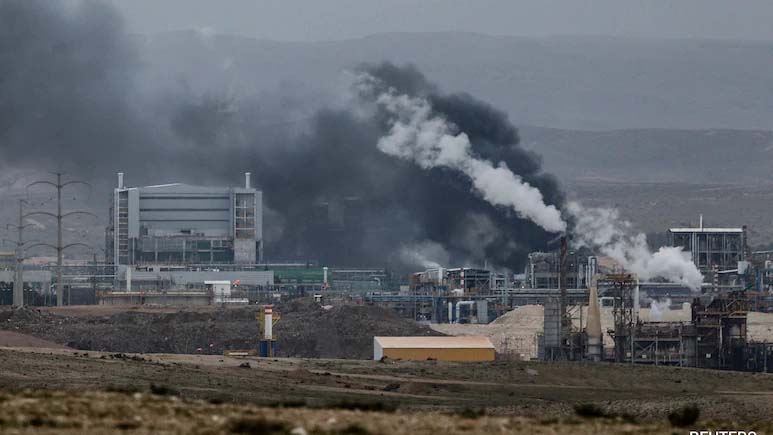
Before the US and Israel launched airstrikes on Iran in June last year, the Islamic Republic was believed to have more than 400 kilograms of 60 per cent highly enriched uranium and nearly 200 kilograms of 20 per cent fissile material.
Washington: US President Donald Trump is reportedly considering a ground operation in Iran to extract nearly 970 pounds (around 400 kilograms) of enriched uranium that Tehran could potentially use to build nuclear weapons, even as regional talks aimed to de-escalate the conflict in the Middle East are underway. Trump has also encouraged his advisers to press Tehran to agree to surrender the material as a condition for ending the war, The Wall Street Journal reported, citing a source familiar with the US leader’s thinking.
According to the report, Trump has clearly indicated to US political allies that Tehran can’t keep the nuclear material, and he has discussed “seizing it by force” if Iran does not give it up at the negotiating table.
Despite the threat, Trump noted that indirect talks between the United States and Iran via Pakistani “emissaries” were making progress. “A deal could be made fairly quickly,” he said.
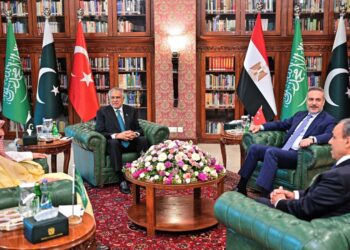
Pakistan, Egypt and Turkey have acted as mediators between the US and Iran. But so far, Washington and Tehran haven’t engaged in direct negotiations to end the war.
Trump’s Sifting Focus
Trump has offered shifting reasons for launching the war on Iran, but he has been consistent in articulating that a primary objective in joining Israel in the military action was ensuring that Iran would “never have a nuclear weapon.” However, he has been more circumspect about how far he’s willing to go to follow through on his pledge to destroy Iran’s weapons programme once and for all, including seizing or destroying the near-bomb-grade nuclear material that Iran possesses.
US Boots On The Ground
The Pentagon is reportedly planning to deploy up to 10,000 additional ground troops to the Gulf, with the US Central Command announcing last week that over 3,500 troops, including 2,500 Marines, had arrived in the Middle East.
On Sunday night, Trump threatened war escalation, saying Iran must do what the US demands or “they’re not going to have a country.” Referring to Iran’s uranium, Trump said, “They’re going to give us the nuclear dust.”
Iran’s Nuke Programme
Before the US and Israel launched airstrikes on Iran in June last year, the Islamic Republic was believed to have more than 400 kilograms of 60 per cent highly enriched uranium and nearly 200 kilograms of 20 per cent fissile material, which is easily converted into 90 per cent weapons-grade uranium.
But now much of it is believed to be buried under the rubble of a mountain facility pummelled in US bombings that Trump ordered at the time, which he had claimed “obliterated” Tehran’s nuclear programme.
But, per International Atomic Energy Agency Director General Rafael Grossi, Iran’s nuclear material is mainly stored at two of the three sites that the US attacked– an underground tunnel at the nuclear complex in Isfahan and a cache at Natanz.
Reports have claimed that the Iranians have centrifuges to enrich uranium and the capability to set up a new underground enrichment site.
Trump’s Plan
According to the WSJ report, Trump and some of his allies have claimed that it would be possible to seize the material in a targeted operation that wouldn’t extend the timeline of the war significantly and still enable the US to be done with the conflict by mid-April
Sources told the publication that the US commander-in-chief has told associates that he doesn’t want a “protracted war” as some of his top aides want his focus on other matters, including the coming midterm elections, where polls suggest Republicans could face significant losses.
Risks Of Trump’s Plan
It’s a risky, complicated project that many nuclear experts believe cannot be done without a sizeable deployment of US troops into Iran, a dangerous and politically fraught operation for the Republican president, who has pledged not to entangle America in any extended and bloody Middle East.
Any move to seize the uranium by force would be complex and dangerous, the WSJ reported, quoting former US military officers and experts. The potential operation would likely trigger retaliation from Iran and could also lengthen the war well beyond the 4-6 week time frame that Trump’s team has publicly outlined.
Moreover, experts said that for such an operation, teams of US forces would need to enter the Iranian sites, likely under fire from Tehran’s surface-to-air missiles and drones. Once on site, the US troops would first have to secure perimeters so that engineers, with excavating equipment, could search through debris to eliminate mines and booby traps.
After finding the nuclear material, an elite special operations team would be needed for its extraction. According to the report, the highly enriched uranium is likely contained in 40 to 50 special cylinders that resemble scuba tanks.
The trained personnel would be required to put the transportation casks on cylinders to protect against accidents. The move could take up a lot of space and fill several trucks, said Richard Nephew, a senior research scholar at Columbia University and a former nuclear negotiator with Iran.
To further transport the material out of Iran, an airfield will be needed. If one is not available, a makeshift airfield would need to be set up to bring equipment in and take the nuclear material out. The entire operation would take days or even a week to complete, experts said.
Not All Agree With Trump’s Plan
Trump has hinted at differences among his top aides on their approach to Iran, saying that his intelligence chief Tulsi Gabbard was “softer” than him on curbing Tehran’s nuclear ambitions. Trump, who also suggested that a deal could be near to contain Tehran’s nuclear ambitions, said “yeah, sure,” when asked by a reporter whether he retained confidence in Gabbard, the US director of national intelligence.
“She’s a little bit different in her thought process than me,” Trump said aboard Air Force One as he returned to Washington after a weekend at his Mar-a-Lago residence in Florida. “But that doesn’t make somebody not available to serve. I would say that I’m very strong on the fact that I don’t want Iran to have a nuclear weapon because if they had a nuclear weapon, they’d use it immediately. I think she’s probably a little bit softer on that issue, but that’s okay.”
Trump seldom acknowledges debate among top officials over the joint US-Israeli campaign against Iran, which is entering its second month.
Vice President JD Vance has staked out a cautious approach on conflict, and some other top Republicans have privately worried about the conflict’s domestic economic and political costs.