

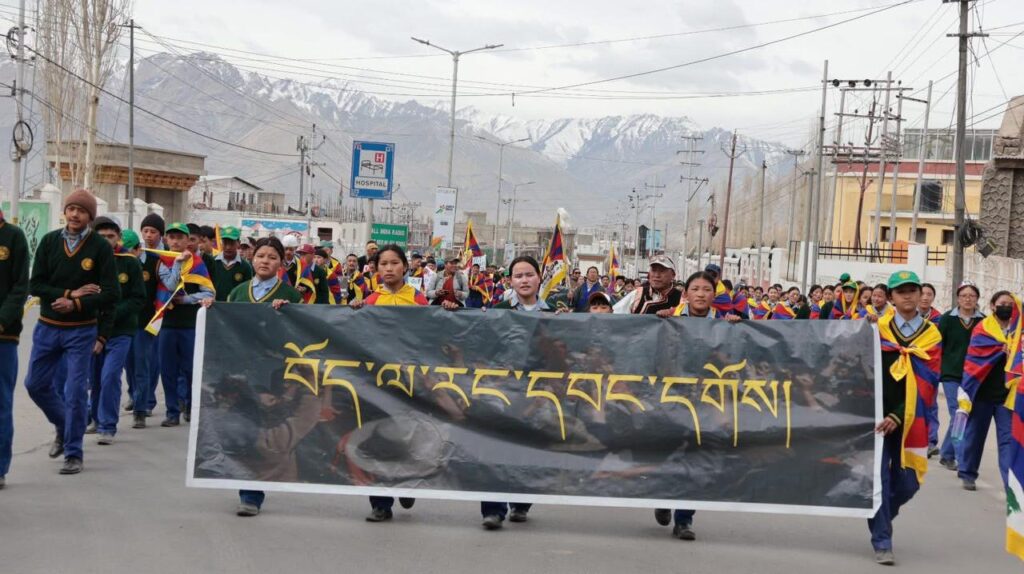
Dharamshala: In early March 1959, a series of events heightened anxieties among Tibetans in Lhasa. Suspicion arose over an alleged plot by Chinese Political Commissar T’an Kuan-san to kidnap the young Dalai Lama, reportedly orchestrated through an invitation for His Holiness to attend a theatrical performance at the Chinese military headquarters. The invitation stipulated that His Holiness should come without his customary retinue of officials or the escort of the Kusung Regiment, further fuelling Tibetan suspicions. This concern eventually mobilised the broader Tibetan populace—including residents of Lhasa, as well as Tibetans from the Kham and Amdo regions who had fled the harsh consequences of the so-called “democratic reforms” targeting spiritual leaders, religious institutions, and places of worship. Many voluntarily posted themselves as guards around the Norbulingkha Palace on 10 March and organised demonstrations in protest.
Feared by the resentment and continuous demonstrations over the following days, the Chinese PLA regiment stationed in Lhasa began bombarding Norbulingkha Palace. Concerned for His Holiness’ safety, the Cabinets, along with the prophecies of Tibetan state oracles, persuaded him to leave Lhasa. March 1959 has since become one of the most painful and dramatic periods in millennia of Tibetan history—a history that had witnessed the highs and lows of empires and kingdoms, but never the abject loss of independence to an outside power. In that tragic month, His Holiness began his perilous journey into exile, and at the same time, the Tibetan people endured widespread violence following the 10 March demonstrations.
To honour the martyrs and commemorate the day, Tibetans have observed 10 March as a solemn reminder of that tragic period and as a call for renewed determination to seek justice. In the decades following the complete takeover of Tibet and the forcible expulsion or dissolution of the Tibetan government in Lhasa, Tibetans have witnessed successive efforts to dismantle traditional institutions and systems. These actions have also impacted Tibet’s natural resources and wildlife. More recently, the destruction and cultural suppression have intensified, with the Chinese government implementing a Han-centric policy aimed at sinicizing ethnic minorities through state-run boarding schools that uproot younger generations from their heritage, under the pretext of safeguarding stability—threatening the survival of centuries-old Tibetan civilisation.