
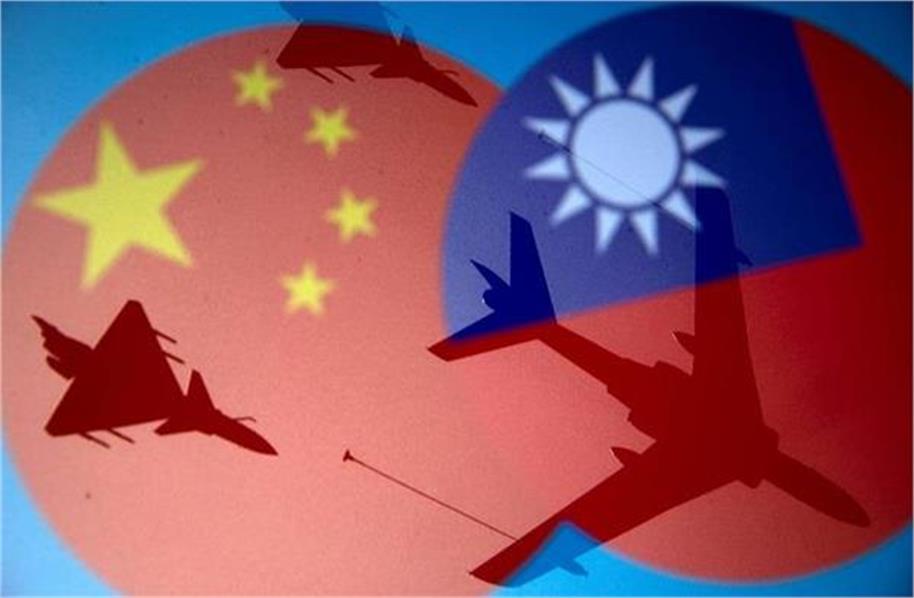
A senior Taiwanese security official has warned that China is increasingly employing “hybrid warfare” and grey-zone tactics to advance its strategic objectives and exert pressure on Taiwan without resorting to direct military confrontation.
Speaking on the evolving security environment in the region, Ho Cheng-hui, Deputy Secretary-General of Taiwan’s National Security Institute, said Beijing is relying on a combination of coastguard deployments, scientific research vessels, legal claims, and information campaigns to strengthen its influence while remaining below the threshold of open conflict.
According to Ho, China’s approach reflects a growing preference for coercive measures that stop short of war but are designed to gradually alter the strategic balance in its favour.
China’s Expanding Grey-Zone Strategy
Ho identified several key elements of Beijing’s strategy, including:
- Increased deployment of coastguard vessels;
- Expanded activities by scientific research ships;
- Sovereignty assertions over disputed maritime areas;
- Propaganda and disinformation campaigns; and
- The use of legal and international law interpretations to reinforce Chinese claims.
He noted that these measures are not solely directed at Taiwan but also affect regional stakeholders, particularly Japan and the Philippines, which face similar challenges in contested maritime areas.
Areas of Potential Escalation
The Taiwanese official cautioned that Chinese activities could intensify in several strategically sensitive locations, including Taiwan’s Exclusive Economic Zone (EEZ), the median line of the Taiwan Strait, waters surrounding Kinmen, and areas near the Matsu Islands.
He emphasised that China’s coastguard has emerged as a central instrument of its grey-zone strategy, with operations increasingly concentrated near disputed maritime boundaries.
Learning from the Philippines’ Transparency Approach
Ho suggested that Taiwan could adopt elements of the Philippines’ “full transparency” policy in responding to Chinese maritime activities. He pointed to Manila’s practice of publicly documenting and disclosing incidents involving Chinese vessels, arguing that such transparency has helped counter disinformation and challenge Beijing’s narrative.
As part of a similar approach, he proposed that Taiwan consider live-streaming coastguard patrols around its outlying islands to provide real-time information and swiftly rebut misleading claims.
Strengthening Regional Cooperation
Highlighting the need for greater regional coordination, Ho called for deeper cooperation among Taiwan, Japan and the Philippines in addressing common maritime security challenges.
He advocated for enhanced intelligence-sharing mechanisms, joint maritime law-enforcement operations, and stronger diplomatic coordination on fisheries management and resource-related disputes.
According to Ho, closer collaboration among regional partners will be essential in responding effectively to the growing use of grey-zone tactics in the Indo-Pacific.