
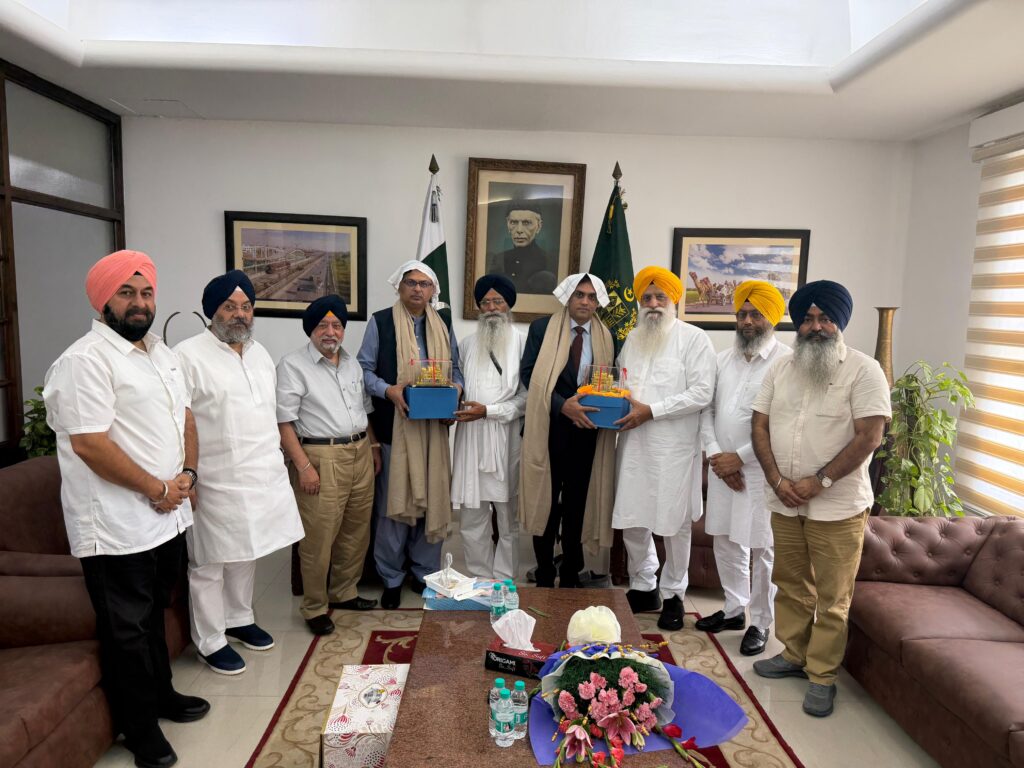
New Delhi/Amritsar: Questions have been raised over Shiromani Gurdwara Parbandhak Committee (SGPC) president Advocate Harjinder Singh Dhami’s recent visit to the Pakistan High Commission in New Delhi, where he reportedly met Pakistani officials as part of an SGPC delegation.
The visit has attracted attention because it comes amid heightened India-Pakistan tensions following Operation Sindoor. While the SGPC routinely coordinates matters concerning Sikh pilgrims travelling to Pakistan, questions have been raised over the purpose and timing of the meeting and whether the discussions were limited to pilgrimage-related issues.
The SGPC is the apex religious body responsible for managing historic gurdwaras in Punjab and several other places. It also plays a key role in facilitating Sikh pilgrimages to major shrines in Pakistan, including Nankana Sahib, Kartarpur Sahib, Panja Sahib and Dera Sahib.
Under the 1974 Protocol on Visits to Religious Shrines, pilgrims from India and Pakistan are permitted to visit designated religious sites in both countries. Indian Sikh pilgrims travel to Pakistan every year for occasions including Baisakhi, Guru Nanak Dev’s birth anniversary and the death anniversary of Maharaja Ranjit Singh.
Visa arrangements, security, accommodation and other facilities are generally coordinated through established official channels.
Against this backdrop, observers have sought clarification on why the SGPC president personally visited the Pakistan High Commission with a delegation at the present juncture. Questions have also been raised over whether the meeting was scheduled in advance and whether the Ministry of External Affairs or other concerned authorities were informed.
The SGPC could also face calls to disclose the meeting’s agenda, the Pakistani officials who attended and the issues discussed. It remains unclear whether the talks centred on pilgrim visas, security arrangements, facilities at Pakistani gurdwaras or the management of religious properties.
It is also not known whether any assurances or commitments were made during the meeting.
Sikh community representatives have repeatedly sought simpler visa procedures and better facilities for pilgrims travelling to Pakistan, citing delays in visa issuance, restrictions on pilgrim numbers, inadequate accommodation and difficulties in accessing religious sites.
Any discussions aimed at resolving such issues would fall within the SGPC’s responsibility to safeguard the interests of Sikh devotees.
However, given the prevailing diplomatic and security sensitivities between India and Pakistan, critics have stressed the need for transparency and adherence to appropriate institutional channels. They have called on the SGPC to issue a detailed statement explaining the purpose and outcome of the visit.
The episode has consequently triggered a wider debate over institutional accountability, beyond the immediate issue of pilgrimage arrangements. The SGPC’s clarification is expected to establish whether the visit was a routine engagement concerning Sikh pilgrims or involved broader issues affecting Sikh religious institutions.
Until an official explanation is issued, questions over the timing, agenda and outcome of the Pakistan High Commission meeting are likely to remain.