

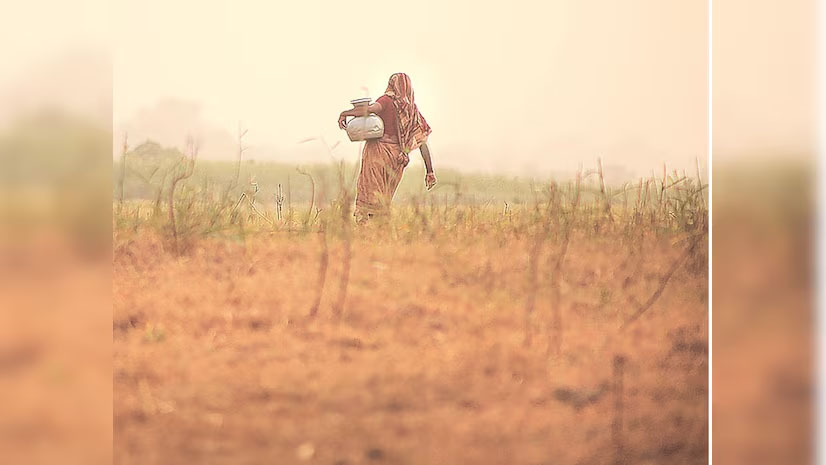
Climate change could push 141 million more women and girls into extreme poverty by 2050, while widening gender gaps in income, food security and employment, UN Women warned.
Climate change could push up to 141 million additional women and girls into extreme poverty by 2050 under a worst-case scenario, while a 1 degree Celsius rise in average temperatures is associated with women losing 34 per cent more of their total income than men, according to a UN Women fact sheet.
The report, titled Gender Equality in the Age of Climate Crisis, said at least 1.5 billion women and girls already live in climate hotspots, where high exposure to extreme weather events intersects with precarious livelihoods and deep gender inequalities.
The report said climate change was also expected to widen the gender gap in food insecurity, potentially affecting an additional 185 million women and girls by 2050, compared with 147 million men and boys, under a worst-case scenario.

The report highlighted how women’s disproportionate share of unpaid care work, informal employment and limited access to land and decision-making increased their vulnerability to climate shocks. Women and girls spend 2.5 times as many hours as men on unpaid domestic and care work, while 55 per cent of women are in informal employment, leaving many without social protection and adequate working conditions.

UN Women said a low-carbon transition without gender-responsive policies could leave women with less than 2 per cent of net new jobs. However, investments in care services, social protection and skills training could raise women’s share of net new jobs to 66 per cent, or 68 million jobs by 2035.