
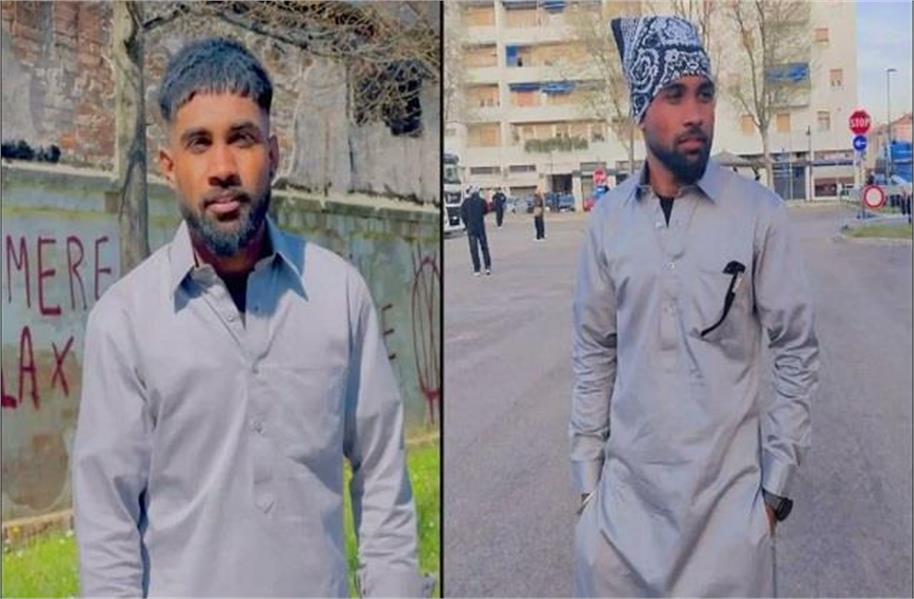
The death of a 23-year-old Punjabi man in police custody in Italy has prompted calls for an independent investigation, with his family disputing allegations of sexual misconduct and questioning the circumstances surrounding his death.
International Desk: Sukhwinder Singh, popularly known as Sonu, a resident of Miani village in Punjab’s Hoshiarpur district, died in police custody in Italy on 23 June, just days after his arrest. His family has demanded a fair and transparent investigation, insisting the allegations against him were false and that the circumstances leading to his death remain unexplained.
Italian authorities have ordered a post-mortem examination and launched a judicial inquiry into the case.
According to family members, Sukhwinder had been living in Italy for nearly five years, working as an agricultural labourer near Brescia. He was in the process of regularising his immigration status and had also applied for political asylum, with a decision on his application still pending.
The incident began on 21 June when three underage girls at a water park accused Sukhwinder of alleged sexual harassment and inappropriate conduct. Police arrested him following the complaint and presented him before a court, which remanded him to judicial custody pending further proceedings. Italian authorities have stated that he had no previous criminal record.
His younger sister, Amandeep Kaur, has strongly rejected the allegations. She said her brother had telephoned the family before his arrest, explaining that the girls had been taking selfies when, while walking past, he accidentally brushed against one of them, leading to an argument and the involvement of police.
According to the family, Sukhwinder repeatedly maintained his innocence and said he had apologised if anyone had been unintentionally offended. They insist he never admitted to any wrongdoing and continued to deny the allegations after being taken into custody.
The family further alleges that Sukhwinder complained of ill health after being lodged in prison. He was reportedly transferred to another cell, but died on 23 June, his third day in custody.
His relatives received official notification of his death on 24 June in Italian. Unable to understand the language, they relied on an artificial intelligence (AI)-based translation prepared by a fellow villager before learning of the tragedy.
While some media reports have speculated that Sukhwinder may have died by suicide, the family says Italian authorities have not released any official evidence, post-mortem findings or investigative conclusions to substantiate such claims.
Amandeep Kaur said the family has not yet been allowed to view Sukhwinder’s body and has urged authorities to ensure a thorough, impartial and transparent investigation into the cause of his death.
As the death occurred while he was in police custody, the Brescia Public Prosecutor’s Office has ordered a post-mortem examination, and a special investigation has been initiated to determine the circumstances surrounding the incident.
Sukhwinder had travelled to Italy approximately five years ago in search of better employment opportunities. According to the family, his mother mortgaged her jewellery and borrowed nearly ₹1.5 million to fund his journey abroad. She passed away two years ago, but immigration and documentation issues prevented him from returning to India to attend her funeral.
Family members said Sukhwinder was their only son and the principal source of financial support and hope for the household.
Relatives and residents of his village described him as a deeply religious and soft-spoken young man. Before leaving for Italy, he served as a pathi (scripture reader) at the local gurdwara and regularly recited Gurbani. They said he was committed to improving his family’s financial circumstances through honest work abroad.
The precise cause of Sukhwinder Singh’s death has not yet been established. Whether it resulted from suicide, a medical condition or any other factor remains under investigation. Italian authorities are expected to determine the cause only after completion of the post-mortem examination and judicial inquiry.