
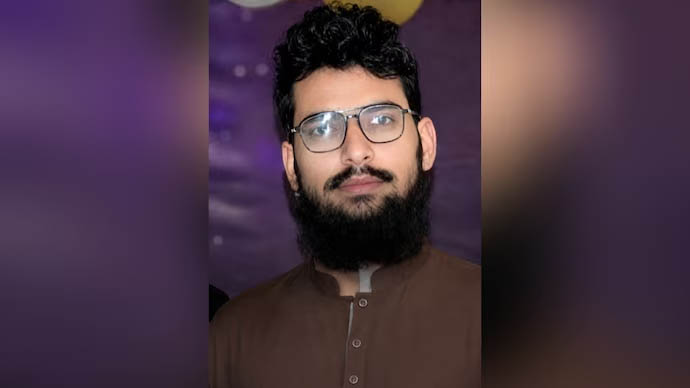
Hamza Burhan alias “Doctor”, one of the key masterminds behind the 2019 Pulwama terror attack that killed 40 CRPF personnel, has been gunned down by unidentified assailants in Pakistan-occupied Kashmir (POK). The terrorist operative reportedly suffered multiple bullet injuries during the attack in Muzaffarabad.
Burhan, originally identified as Arjumand Gulzar Dar from Pulwama in Jammu & Kashmir, was designated a terrorist by the Union Home Ministry in 2022. Once a radical face of terror recruitment in South Kashmir, he had escaped to Pakistan in 2017 under the pretext of pursuing higher education before joining the banned terror outfit Al-Badr, where he later rose to the rank of commander.
After returning to Kashmir, Burhan played a major role in radicalising local youth and expanding terror networks across Pulwama and Shopian. Security agencies linked him directly to the February 14, 2019 Pulwama suicide bombing orchestrated by Jaish-e-Mohammad (JeM), in which an explosives-laden vehicle rammed into a CRPF convoy at Lethpora, triggering one of the deadliest terror attacks on Indian forces.
Investigators had accused Burhan of arranging explosives, grenades and logistical support for the attackers. He was also wanted in multiple grenade attacks on CRPF personnel before fleeing back to POK, where he had been operating under Pakistan-backed terror protection.
His killing is the latest in a growing series of mysterious eliminations of high-profile terrorists inside Pakistan and POK. Over the past few years, several Lashkar-e-Taiba (LeT), JeM and Hizbul Mujahideen operatives have been assassinated by “unknown gunmen” under unexplained circumstances.
Last month, LeT founder-member Amir Hamza was reportedly shot dead in Lahore by bike-borne attackers, while JeM chief Masood Azhar’s brother Muhammad Tahir Anwar died under suspicious circumstances earlier this year. In 2024, top Lashkar commander Abu Qatal — linked to the Reasi terror attack and a close aide of Hafiz Saeed — was also eliminated in Pakistan.
The string of killings has sent shockwaves through Pakistan-based terror circles, with many once-protected operatives now finding themselves increasingly vulnerable even inside their own strongholds.