
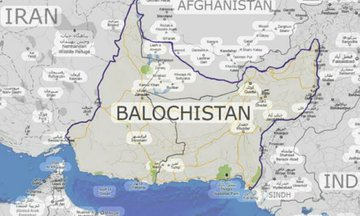
International Desk: Prominent Baloch leader Hyrbyair Marri has issued a strongly worded statement criticising the United States and Israel for what he described as a failure to provide meaningful support to nations “under Persian occupation”, including the Baloch, Kurds, Ahwazi Arabs and Azeris.
In a statement reposted on X on 6 May, Marri argued that oppressed ethnic groups inside Iran have endured “decades of displacement, persecution, torture and mass hangings”, and therefore cannot be expected to rise up against Tehran without international backing.
https://twitter.com/hyrbyair_marri/status/2051913555364946042/photo/3
He claimed that the ongoing regional conflict has exposed the strategic importance of the Strait of Hormuz, accusing Iran of using the vital shipping corridor as a geopolitical pressure point. Marri asserted that the strait “mostly lies along land belonging to the Baloch and Al Ahwaz”, while rejecting Iranian claims of sovereign ownership over the waterway.
The Baloch leader warned that any future peace agreement reached under present conditions would effectively amount to “an agreement made on Persian terms, not American terms”. He further alleged that Iran’s regional network — including Iraqi militias, Houthi fighters and Lebanese allies — could intensify efforts to maintain Tehran’s influence across the Middle East.
Marri also claimed that thousands of Shia volunteers from groups such as Iraq’s Popular Mobilisation Forces, Afghanistan’s Fatemiyoun Brigade and Pakistan-linked Zainabiyoun units had been mobilised to strengthen Iranian control in Baloch, Kurdish and Ahwazi regions.
According to Marri, Washington and Tel Aviv made a “serious miscalculation” by not offering tangible support to ethnic groups opposed to Tehran. He asserted that stronger backing for the Baloch, Kurds, Ahwazi Arabs and Azeris could have resulted in the collapse of the Iranian regime.
The remarks come amid heightened geopolitical tensions in the Gulf region and growing international concern over maritime security, regional militancy and Iran’s expanding strategic influence.