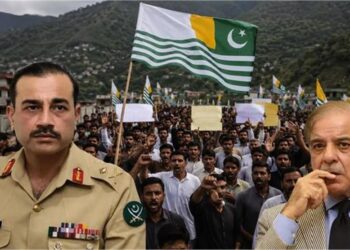

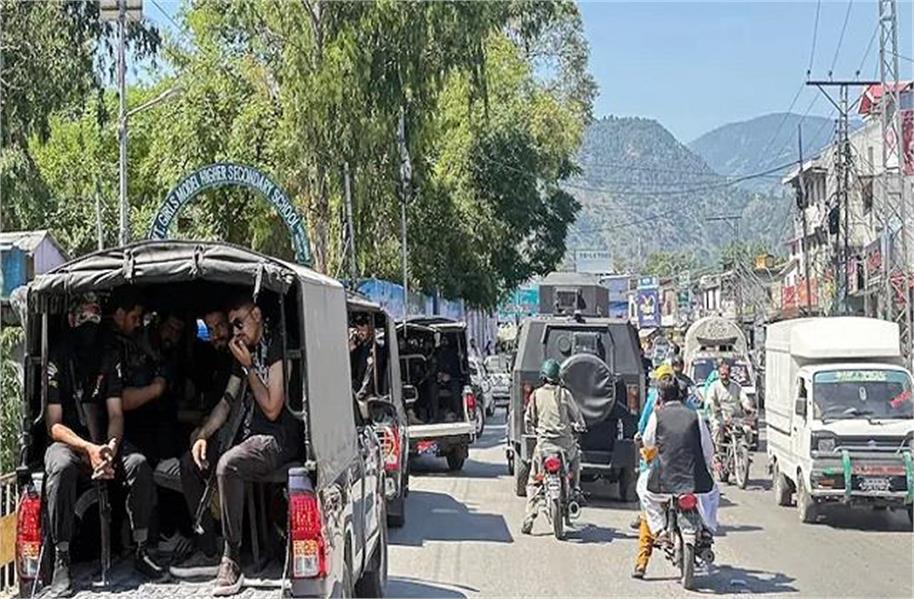
Pakistan-occupied Kashmir (PoK) is witnessing one of its most significant anti-Islamabad uprisings in recent years, with thousands of residents openly challenging Pakistan’s authority and accusing its military of decades of repression. What began as protests two weeks ago has now transformed into a mass movement, with women and even schoolchildren joining calls for freedom, basic rights and an end to military domination.
Children Lead Defiant Protests Against Pakistani Army
In Rawalakot, more than 70,000 protesters have maintained a sit-in at Eidgah Ground for nearly two weeks. Images emerging from the demonstrations show children as young as 10 carrying placards reading, “Pakistan Army Go Back”, “Pakistan Army is Killing Kashmiris”, and “We Want Basic Rights”.
The growing unrest highlights deep public anger against what protesters describe as Pakistan’s heavy-handed rule in the region. Violent confrontations between demonstrators and security forces have reportedly claimed 58 lives, further intensifying resentment against Islamabad.
23 June Ultimatum: Protesters Threaten March on Muzaffarabad
The Awami Action Committee (AAC), spearheading the agitation, has issued a 38-point charter of demands and given Pakistani authorities until 23 June to respond.
Senior leader Sardar Aman Khan warned that failure to meet the demands would trigger a massive march of more than 100,000 people towards Muzaffarabad. Protest leaders say they intend to challenge the existing political structure and establish what they describe as genuine public representation.
Drawing parallels with popular uprisings in Nepal and Bangladesh, Khan declared that the people of PoK were prepared to take control of their own future if Islamabad continued to ignore their demands.
Internet Blackout and Food Shortages Fuel Public Fury
Protesters accuse Pakistani authorities of imposing collective punishment on the population. Internet services have reportedly remained suspended since 5 June, cutting off communications across large parts of the region.
At the same time, restrictions on trucks carrying essential supplies have allegedly created severe shortages of food and basic necessities. Residents say the measures have worsened an already fragile humanitarian situation and pushed public frustration to breaking point.
‘If Kashmiris Cannot Live Here, Neither Can the Army’
Addressing a massive gathering in Rawalakot, Sardar Aman Khan delivered a direct challenge to Pakistan’s military establishment.
Referring to Pakistan’s treatment of Bengalis, Baloch and Pashtuns, Khan accused the state of relying on force rather than consent. He warned that continued repression would only strengthen resistance across PoK.
“If Kashmiris cannot live in PoK, then Pakistan’s Army will not be able to remain here either,” Khan told cheering crowds.
Protest Movement Expands Across PoK
The anti-Pakistan agitation is no longer confined to Rawalakot. Demonstrations have spread to towns including Sudhanoti and Mandhol, where women have taken to the streets accusing the Pakistani Army of acting as an occupying force.
With the 23 June deadline approaching and tensions continuing to rise, Pakistan faces mounting pressure in a region it has long claimed enjoys public support. Instead, the growing wave of protests is exposing deep discontent and presenting Islamabad with one of its most serious challenges in PoK in years.