

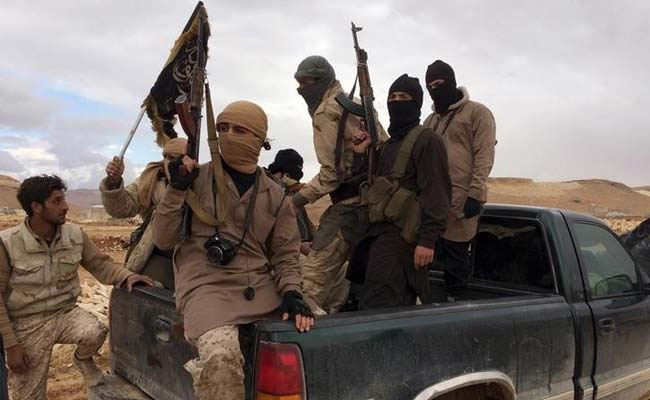
Since 2023, Islamic State supporters and affiliates have produced a growing stream of AI-generated content.
Artificial intelligence may not create a new kind of terrorism, but it makes existing tactics cheaper, faster and easier. That is the central argument of a July 2026 report from the US-based think tank Centre for Strategic and International Studies.
It is a convincing argument, but it leaves one question unanswered: Are different terrorist groups thinking about the technology in the same way?
As a terrorism expert who studies how terror groups think and adapt, I have analysed propaganda, guides and strategic writings from the two most influential jihadi movements of the 21st century – al-Qaida and the Islamic State group – to observe how they interpret and adopt new technologies, such as AI. I also examined documented uses of AI by their affiliates, media outlets and supporters.
I found that affiliates, media outlets and supporters across both movements use AI for propaganda, recruitment, security and planning. But al-Qaida and Islamic State-linked networks approach AI in ways that reflect how each movement fights. Al-Qaida is more deliberate and thinks in decades. The Islamic State moves quickly and seeks immediate effect.
In short, each group’s approach reflects its organisational culture and reveals a different view of time and war. The Islamic State built its project around a caliphate to hold and display now – and that urgency rewards whoever produces a visible effect today. Al-Qaida built its project around a generational war of attrition, betting that will and endurance could outlast a technologically superior enemy.
The Islamic State AI approach
The Islamic State has long been the more aggressive media innovator of the two movements. At the height of its self-declared caliphate in Syria and Iraq, it built a sophisticated media apparatus prioritising speed, spectacle and professional production. That instinct has carried into the AI era, aided by younger, digitally immersed supporters and recruits who readily experiment with new tools.
Since 2023, Islamic State supporters and affiliates have produced a growing stream of AI-generated content. After the March 2024 Moscow concert hall attack that killed more than 130 people, supporters circulated a bulletin celebrating the killings. It featured a fake, AI-generated Arabic-speaking anchor who framed the attack as part of the group’s wider war against its enemies.
Islamic State-linked networks have also used AI to generate images, speed up translation and produce multilingual propaganda.
In June 2025, the Islamic State group’s Afghanistan affiliate, Islamic State Khorasan (ISIS-K), published an issue of its English-language magazine, Voice of Khorasan. Released by al-Azaim Foundation, it framed AI literacy as an individual religious duty for every Muslim. This placed AI literacy in the same legal category that jihadi ideologues often apply to defensive jihad – a duty to fight when Muslims, their faith or their territory come under attack.
The article casts AI as a force already shaping war, business and identity. It also warns about deepfakes, surveillance and data collection, offering practical guidance on protecting oneself.
The foundation later withdrew the religious label, reportedly after ridicule from other jihadi groups, but left the guidance in place. This suggests a pattern of rapid adoption followed by doctrinal correction.
Taken with wider Islamic State-linked experimentation, the episode points to a logic of mobilisation, whereby followers are taught that ignorance leaves them vulnerable to adversaries already using the technology.
In the material I reviewed, the central question is not whether AI changes the nature of war, but how to use it, guard against it and avoid being left behind.
Al-Qaida Is Experimenting, Too
Al-Qaida’s affiliates and supporters are also experimenting with the emerging technology.
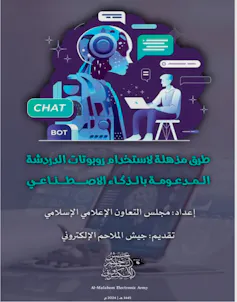
Pro-al-Qaida outlets were circulating likely AI-generated imagery as early as 2023, and its networks have promoted chatbot workshops and guides. In 2024, the al-Qaida-linked Al-Malahem Electronic Army released a guide titled “Amazing Ways to Use AI-Powered Chatbots,” offering supporters advice on using the technology.
In July 2025, the United Nations reported that al-Shabaab, al-Qaida’s Somali affiliate, used AI tools to translate its messaging into several languages.
In May 2026, India’s National Investigation Agency filed charges over a November 2025 car bombing in Delhi that killed 11 people. Investigators alleged that the cell responsible was associated with al-Qaida in the Indian subcontinent and employed an engineer who used YouTube and ChatGPT to research explosives.
Separately, some analysts have suggested that the recent drone adaptations by al-Qaida’s West African affiliate may involve open-source AI tools, although the evidence remains indirect.
Al-Qaida-linked groups have warned that deepfakes could infiltrate or manipulate their online discussions. Al-Qaida-linked social media channels have also debated using AI for religious research. Some posts argued that relying on it showed ignorance and weak religious knowledge.
Changing The Nature Of War
Both movements therefore teach supporters how to use these tools and guard against them. But parts of the pro-al-Qaida media ecosystem ask a different question. Does the technology change the nature of war itself?
The clearest example is the pro-al-Qaida Anaziat Foundation. Across six consecutive instalments of its Fiqh al-Harb, or “Jurisprudence of War,” series in 2025, the foundation published Arabic translations of Western strategic writing on AI, cyberwar and technological change.
One text examines AI and the future of war. Another asks whether strategists should take the philosophy of AI seriously. Two more debate whether AI could change the nature of war. The series then critiques cyberwar and the assumption that technological superiority can overcome the enduring realities of conflict.
Read together, the texts stage a revealing debate that repeatedly returns to human agency, consciousness, political purpose, endurance and will. The series does not reach an anti-AI verdict. Rather, its significance lies in the questions it chooses to ask and the assumptions it repeatedly tests.
Different Organisational Cultures
These approaches reflect different organisational instincts. Al-Qaida has historically been more patient and deliberate, framing its struggle as a long war and vetting its messaging carefully. Its strategy rests on a wager that political will and endurance can overcome technological superiority. The movement survived the rise of drones, mass surveillance and precision strikes by dispersing, absorbing losses, adapting and waiting.
Anaziat’s editorial choices stand out because they echo these assumptions. Its series turns to Western scholars who ask whether machines and AI can replace human judgment and overcome war’s uncertainty, and whether superior weapons can replace endurance, political purpose and human will.
The series uses Western military writing to test al-Qaida’s long-war strategy and repeatedly returns to the same proposition: Technology may change how wars are fought without deciding who ultimately endures or wins.
Al-Qaida believes endurance, political will and human agency favour it. Military or technological superiority, in its view, does not guarantee victory.
Both movements use AI for many of the same practical purposes. The difference lies in how they understand the technology and the questions they ask beyond immediate use. Islamic State-linked discourse treats AI mainly as a tool to master now. Parts of the pro-al-Qaida ecosystem do too, but also place it within a longer debate about war, endurance and strategic victory. Those organisational cultures may shape not just which AI tools each movement picks up next, but what it uses them for – and how.
Sara Harmouch, Research Fellow in Counterterrorism, George Washington University. Sara Harmouch does not work for, consult, own shares in or receive funding from any company or organisation that would benefit from this article, and has disclosed no relevant affiliations beyond their academic appointment.
This article is republished from The Conversation under a Creative Commons license.