
By: Mehr Jan Gidaan TV
Balochism is the national consciousness that connects the Baloch to its origin, which gives it the political, cultural and historical foundations on the earth. The Baloch, like every nation, have the potential for both freedom and slavery. Now it depends on the maturity of his consciousness that in which way he maintains his political existence / political non-existence by making this historical journey. If they are ready for the ability to achieve freedom in a dialectical way without being completely dependent on the circumstances, then Balochism grows in the historical journey and emerges in the form of independence in concrete form, and plays an important role in the formation of the concept of freedom in the history of the world. In fact, it is Balochism that is on its way by giving Baloch a lead in the historical journey. According to Baba Marri, “The change of times always completes its journey in the national and cultural sphere.” Therefore, the path of true nationalism is the only path where this journey is possible “and not in the realm of external interference and coercion.” But in the colonial state, the colonizer attacks this consciousness externally and from many fronts through coercion and domination.
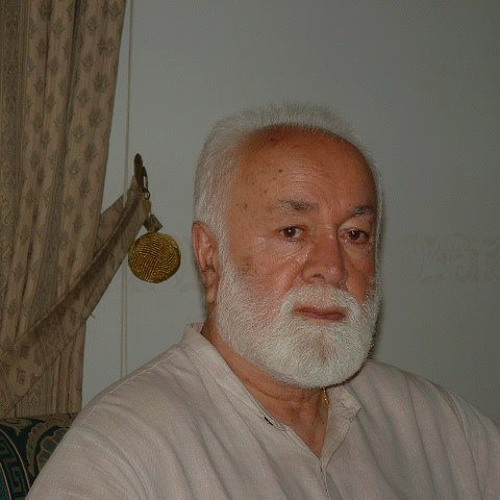
One of these dangerous fronts is that of those who take the names of Baloch and Balochism, on which Baba Marri had a special political and philosophical view: “We have to see if the Baloch are not being distanced from the Baloch in the name of Balochism.” On this front, nationalism is specially propagated, rallies and processions are organized in the name of nationalism, political programs, personality cults, colonial diseases like heroism dominate more than political institutions. In the name of Balochism, hollow slogans such as democracy, supremacy of constitution and law and human rights within the scope of the judiciary are propagated in collaboration with the state institutions of the colonizer. Fanon speaks very closely to the fact in The Wretched of the Earth that “the people of the colonies who once put their violence to the great task of destroying the colonial system. Very soon they surrender themselves to a barren and static slogan”. From parliament to the press clubs, a series of speeches continue, leaving the main issue behind. In this clamor there are echoes of demonstrative slogans such as the supremacy of law, judiciary and democracy.
To control the frequency of shouting, the hollow state uses all means of bullying, including death squads, state forces, police, levies, paramilitary, besides greed and intimidation. And sometimes they are given some space
in the houses of power in the form of ministers, advisers and senators: limited sources of funds and development work are opened, but there comes a time when they are removed from power in the same way as hair is removed from butter. All these policies are part of the “deep state” policy of who to bring, who to expel, in what frequency to keep this voice of screaming.
Hence, Baba Marri considered it a “a bond of slave and powerful’ rather than a federation. In this relationship between the slave and the powerful, all such acts of the subjugated are actually acting, consciously or unconsciously, as a safety valve for the state. When the pressure increases in the sphere of politics, it is released via this safety valve. Just as in history, when the incident of Nawab Bugti took place, the funeral prayer was offered in absentia without receiving the body, Baba Marri did not participate in it by comparing it with a safety valve and showing off. According to Baba Marri, “Balochism also demands that the funeral prayer should not be offered until the body is received. The pressure was actually released by offering the funeral prayer in absentia.”
Today, state law, judiciary, parliament and democracy are the best examples of this, where pressure continues to decrease in the form of ministries, posts and speeches and development funds. And in this way, the state considers itself completely safe from total national resistance; the civil society of the state also participates as a sympathizer in releasing this pressure because it is not ready to compromise on Pakistaniness under any circumstances. According to Gramsci, “Whenever the state is shaky, a strong structure of civil society emerges.” Therefore, when Baba Marri once adopted the principled position of independence, which is called the “stance of war”, he never faltered again. While he remained steadfast in his slavery like the slaves of Rome who used the titles of constitution, law, judiciary and democracy.
“I have ruled like slaves of Rome” are the words of a chief minister who was given the reins of government in Balochistan on contract basis for two and a half years and after two and a half years of full loyalty, he was caught
by the ear and removed from power.
How this politician, who used the slogans of Balochism and the middle class, had to run from pillar to post to come to power is a different story. In any case, according to Baba Marri, where and in which country of the world has middle-class politics led? However, here in Balochistan, opposition to the sardar possessing a national consciousness has been the center of middle-class politics. And they have been opposed only on the basis, as per Baba Marri, “Yes, he is a sardar or the son of a sardar.” Such sentences have no relevance in serious and academic circles, but they hoodwink the gullible people using the same repeated sentence. They have no argument in this regard, nor do they have room for dialogue and discussion. However, the slave of Rome was able to give the impression to the ruling circles (power centers) with his cleverness that a circle of resistance had been under his political discipleship, so after coming to power, he would be able to bring the insurgents to the negotiating table, otherwise he would be ready to go to any extent to defeat the resistance.
Set aside bringing the insurgents to the negotiating table, but on whose shoulders he ascended the throne left by shouldering their funerals. In spite of exceeding the limits of loyalty, his time, according to him, was not more than the slaves of Rome. Due to the blessings of Baloch writers, he kept his real face hidden from the Baloch people to some extent, as soon as he took charge as the chief minister, he kept the short-sighted Baloch writers happy by showering them with grants, awards, advertisements, promises and private gatherings because he knew the art of keeping every Baloch writer in his fist. But a camel cannot be stolen by putting it in the pocket, sooner or later his real face was exposed. It was revealed that in the name of Balochism and middle-class politics, how ugly his face was.
Whether it is the politics of the middle class or the pro-state sardar who does politics in the name of Balochism, their worth is nothing more than that of slaves in front of the ruling circles. They not only keep themselves slaves for power, but they also sell off their future generations, coasts and resources in the name of democracy, constitution and law. In fact, they have understood the fact that the politics of real nationalism is so arduous, because the politics of real nationalism is not limited to an administrative unit, but the real politics of the Baloch homeland is Baloch nationalism. Therefore, their politics has been confined to roads and gutters instead of nationalism. According to Nawab Bugti, it has revolved around “vested interests”.
They proudly use the names of their elders and martyrs of the nation in the parliament, but give a damn about following their path. According to Sardar Ataullah Mengal, they are not so lucky, now they have adopted a middle path where they belong to nowhere. There came a time to reach the door of power, when Hamid Mir, a journalist known as anti-establishment, or advocating for missing persons in the world of Pakistani journalism, wrote a column calling him “Mohsin-e-Pakistan” only on the fact that Sardar Sahib knocked on the doors of the judiciary instead of meeting the UN delegation regarding missing persons. And to this day, he is standing at the same door and giving proof of being Moshsin-e-Pakistan. In fact, this journalist known as anti-establishment was playing the role of a bridge between the sardar and the establishment in those days, but the time was such that the politics of the middle class cunningly swept this bridge and set the stage for the ruling circles themselves to reign like slaves of Rome.
And today Balochistan has become a laboratory for the colonial state, where new experiments are being made by giving power to mafias and death squads while removing them from the corridors of power without touching them like untouchables in order to block the path of true nationalism.
Is this whole facade being created for democracy or is it going on under a two-way necessity? How relevant Baba Marri’s question here is, “Do they believe in democracy or do they need democracy?” Or, in other words, is
the democracy of an oppressed nation a real democracy or a sign of defeat? In the current situation, on the one hand, the usurpation is going on with full intensity, on the other hand, the siege on the coast and resources is not only narrowing, but international guarantees and loans are being taken on the basis of these coast and resources. That is, even those in the name of democracy, seeing their own needs and wants, have become pawns in the democratic establishment. They have nothing to do with democracy and democratic attitudes. They are only propagating Baloch nationalism by pushing their interests and nationality. As per Baba Marri, they are giving the Baloch nation “a lesson of subjugation”.
In the beginning, while using the name of Baloch nationalism, the echo of the right to self-determination was also heard, but now they lack the spine that the echo of this word is not heard any more. Talking about a province, or shares, as Baba Marrii puts it, is like asking for a wage. The wage is also such that someone gives leftover food to the poor. All those who are doing politics in the name of nationalism, in the words of Baba Marri, their party policy and strategy are confused. Nawab Marri stresses that it needs to be seen what their party policy is. According to Baba Marri, the nationalist party should be associated with the motherland and not to any administrative unit, while there is no such thing here, there is a cry everywhere, so he did not give more importance to their rallies and speeches but shrugging them off as mere circus of entertainment.
Baba Marri puts a question before the nation” Will we get rights from these speeches, tall claims and circus of entertainment? According to him, “We have to analyze deeply that time passes and superficial politics will not lead to any desired outcome, but there is a strong possibility of incurring losses.
(continues)