
By: Mehr Jan Gidaan TV
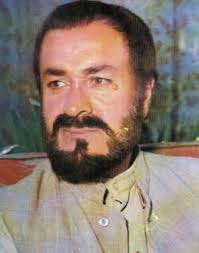
Attaining power is not a matter of chance or coincidence; it is the culmination of a long, arduous journey marked by patience, diligence, and determination. This journey is deeply rooted in a ‘historical continuum’, which plays a vital and indispensable role. Baba Marri would often recount stories about the guerrilla camps on the battlefields of the 1970s. He’d remark that despite their limited numbers, these camps would come alive with light as soon as night began to fall. These lamps were never allowed to be extinguished.
The light from these lamps not only illuminated the darkness within the camps but also pierced through the darkness of dreams. These lamps were, in fact, symbols of sacrifice, struggle, hope, and above all, continuity. It was an era when people had a similar perception about these rebels, just like they did about Fidel Castro and his guerrillas. It was sarcastically said that ‘they are just a handful of supporters of the rebellion hiding in the mountains, mere imaginary figures, what revolution can they possibly bring about?’
Baloch history is a witness to the fact that these elements openly opposed (the movement), saying that these decisions are unrealistic and will drive the Baloch towards destruction. Though ridiculed as mere fantasists, dwelling in the mountains, these individuals persevered, undeterred by the scorn. Their detractors tried to dissuade them, but they remained resolute, weathering every tempest; and ultimately, today, the faint glow of light that is emerging as a symbol of strength and power is a testament to the endurance of those lamps that used to flicker in the camps as evening fell.
Today, every pen that stirs in pursuit of empowerment, every gunshot that shatters the air, raining down upon the oppressor, owes its strength and inspiration to the radiant legacy of those lamps. They not only kept the flame of hope and courage burning bright but also laid the robust foundations for the generations to come. As Regis Debray aptly puts it, ‘Dialectics is the oxygen of history.’ To disregard it is to sever oneself from the very essence of historical understanding. Baba Marri’s initiation of the armed struggle bears a profound connection to the political philosophy of Regis Debray. This ideology was subjected to shallow criticisms, including allegations that it confined the national
movement to the Marri tribe alone, or that the decisions taken on the battlefield were guided more by Baloch customs and traditions than by the principles of warfare. According to critics,
Baba Marri is deliberately avoiding the formation of a systematic ideological organization, which they believe is limiting the scope of the national movement. However, the critics were unaware of this historical fact and were also unfamiliar with Baba Marri’s political vision. In the words of Regis Debray, ‘Importing organizational formulas is dangerous, no matter how well-known the theory they are based on may be.’ In his view, it is essential to formulate a strategy for the struggle while taking into account the ground realities and local conditions. Regis Debray, who had a deep understanding of the practical and theoretical aspects of revolutionary movements, believed that at a certain moment in history, national liberation cannot be achieved through party structures and formal democratic institutions, but rather the battlefield is seen as a political strategy.
Baba Marri’s stance on guerrilla warfare has also been that it is not merely a military strategy, but a central part of the political struggle. He did not see war and politics as separate entities, but rather as harmonious and interconnected. Since the structure of state power is spread across various forms, from ideology to military, in such situations, there is no need for formal democratic structures, organizations, council sessions, rallies, or parliaments. Instead, in rural areas, through guerrilla warfare, a dynamic strategic force can be formed at properly elected locations, which can serve as a people’s army and lay the foundation for a future independent state.
At this point in history, small armed groups can wage a war of national liberation by launching direct and unexpected attacks on the state’s power structures through unconventional means, thereby politically awakening minds. This not only awakens national consciousness but also allows the national movement to gradually take root and establish itself firmly on the ground. In the beginning, guerrilla warfare starts with small groups launching operations in different areas, and carrying out unexpected attacks on the state’s structures. While small groups of four to five individuals engage in propaganda and promotion for national resistance, there is no need for a formal structured organization. Instead, guerrilla warfare is viewed as a political school from where political awareness is spread. At this particular moment in history, Baba Marri went a step further and gave war a political shape, rather than just a single form, so that as time passed, the war would not become isolated from politics.
Baba Marris approach to struggle was not just a military strategy, but also an intellectual movement for national consciousness. It awakened the people’s longing for freedom, introduced them to the power of armed struggle, and presented this path as a sacred and ideological way. This style of politics laid the foundation for a revolutionary tradition that viewed armed struggle not only as a resistance force, but also as a means of elevating national awareness and consciousness. Thus, Baba Marri’s movement had a unique blend of philosophy and action that gave it a distinct revolutionary status.
A glimpse of this mindset can be seen in Lenin’s revolutionary philosophy and the ideas presented in ‘Lessons of the Moscow Uprising’. Lenin’s statement that ‘we should not have taken up arms. On the contrary, we should have taken up arms in a more aggressive, full-bodied, and mature way. We should have made the people understand that it is impossible to confine matters to a peaceful strike and that a fearless and ruthless armed struggle is necessary. And now we must finally acknowledge openly and publicly that political strikes are insufficient. We should launch the widest possible movement in favor of armed uprising among the people. And we should not try to confuse or obscure this issue with talk of ‘initial stages’ or in any other way. If we hide the truth from the people that a dangerous and bloody war is necessary as an immediate revolutionary action, we will deceive both ourselves and the people.
(continues)