

By: Mehr Jan Gidaan TV
Balochistan is essentially the land of the future, where numerous events are yet to unfold, and it is here that the freedom of the Baloch people’s dreams and aspirations will be fulfilled. For a thinker with a philosophical bent, seeking to grasp the intricate bond between geography and power, Balochistan’s land and geography offers a unique landscape that can enrich their perspective and shed new light on their comprehension. On one hand, colonial powers fragmented Baloch geography, confining Balochs within artificial boundaries. On the other hand, historical and cultural formations, rooted in land and resistance, continually weave them into a unified whole, propelling them toward self-determination as a force in history.
History clearly illustrates this dialectical dynamic: colonial forces have exploited geography to sustain their power, while geography has concurrently provided a refuge for insurgents and real sons of the soil. This strong bond between land and resistance holds the power to bury colonial forces in the pages of history.
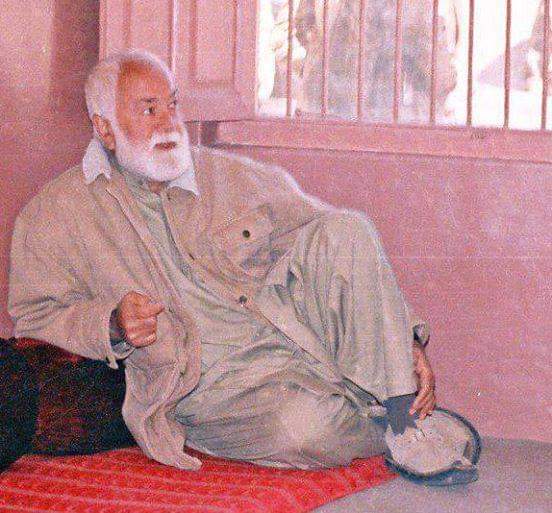
To overcome colonial domination, we must first grasp the historical circumstances that led to the loss of our homeland. While acknowledging the impact of foreign colonial policies, it’s crucial to introspect on our national psyche’s internal dynamics, questioning how cohesive or aligned we are in resistance against the oppressor. As Baba Marri said, “The English came from 5,000 miles away to occupy us because we were entangled in the dispute between Marri and Bugti.’’ It’s a painful truth in our history that our internal conflicts have consistently given leverage to our adversaries. Had we been vigilant in 1970, our struggle for independence would have unfolded differently today. Baba Marri said: “I’d rather be ruled by the British or Punjabi than be dominated by Bugti; my standing is equal to Bugti’s, yet these weaknesses persist.” Are these words not still a reflection of our thinking today, from politics (non-parliamentary) to the battlefield?” This question, lost in today’s hustle and bustle, will echo through the annals of history, transcending our time and becoming a question for future generations as well.
The concept of unity is like a fundamental pillar in the complexities of resistance. According to Baba Marri, “The standard and requirements of nationalism can only be met through the instruments of nationality and nationalism, which are attainable under the umbrella of ‘national unity’ and ‘national awareness’.” Just as a tree’s roots spread out in the earth, united in purpose: sustaining life, yielding fruit, and providing shade. The struggle for nationhood shares the same character. Diverse perspectives, different backgrounds, but the pursuit of national liberty is the shared destination for all. Unity, or at least consensus, is indispensable for achieving this shared goal. Just as a tree’s roots deepen with time and circumstance, the process of unity and consensus also proves effective through a historical process.
If unity is unattainable at a particular historical juncture, agreement on crucial issues, alliances, and collaborative efforts become vital to project a united front and national solidarity against adversarial forces. Internal disputes not only benefit the enemy but also allow external powers to pursue their foreign policy agendas, thereby increasing the risks of proxy influence and foreign interference in the national freedom struggle. The sequence descends from a unified national vision to a rivalry-driven dynamic. Where everyone remains anxious to accelerate their own pace. Alternatively, when united, strength and progress gain unprecedented momentum. Just as multiple engines are required to pull a train, and sometimes two engines are used simultaneously for steep climbs, similarly, various forces come together to achieve a common goal. They also pull along weaker bogies to ensure none are left behind.
For this entire scenario to work, a well-organized system is necessary to determine when, which train should pass at what speed, where to slow down, where to accelerate, where to take alternative routes, and where to switch tracks to minimize collision risks. Despite precautions, accidental collisions may still happen due to time and situational factors.
The ongoing Baloch resistance provides multiple instances. Nonetheless, this clash underscores a vital insight: acknowledging and honoring divergences is imperative throughout this entire historical trajectory. At this juncture, mistakes serve as valuable learning experiences, paving the way for novel strategic approaches after every incident. For this entire mechanism to function effectively, a robust political vision, astute political acumen, and intellectual depth are required. This involves transcending superficial and personal thinking to operate within the broader political framework, prioritizing collective interests and promoting the greater good. “Baba Marri says, ‘We once thought incorrectly, we committed numerous errors, but must we persist in repeating those mistakes?’ When political awareness becomes robust, individuals become capable of transcending personal interests to work towards the betterment of the nation. It is as clear as daylight that renouncing one’s ego is far more difficult and challenging than sacrificing one’s life. In the annals of national resistance, numerous individuals lay down their lives, but those who sacrifice their ego for the cause as leaders are scarce. This is a daunting task, particularly for individuals who revel in their sacrifices. They consider resistance not just a duty, but a favor to the nation, or consciously/unconsciously fall prey to heroism.
Consequently, this attitude creates a barrier to their political understanding and the collective movement. Indeed, sacrificing personal interests for the attainment of collective benefits is the hallmark of true political wisdom. This process can only bear fruit when we set aside our ego and strive for shared accomplishments. This demands not just political acumen, but a profound human perspective that enables us to collectively confront the intricacies of resistance with courage and mental fortitude.
The journey from internal contradictions to unity and consensus is not a result of sudden change, but rather a continuous historical process that evolves and strengthens over time. History unfolds with its own trajectory, tempo, and principles, and our lack of understanding may cause us to lag behind its rapid flow. Despite history being viewed as a teacher, where Hegel’s wisdom suggests its pupils never learn, the truth remains that we must continually reiterate the importance of grasping historical laws, as they shape the trajectory of nations’ futures.The most critical responsibility of national leadership is to identify those historical factors on which an effective strategy can be formulated, where unity and consensus are not just nominal but profoundly transform the thought process and guiding philosophy. They should emerge from their shells and narcissistic tendencies to gaze upon the historical journey, realizing that the zenith they’re climbing is not solely due to one individual’s efforts, but the sacrifices of generations. For this kind of leadership, what’s required is not just political action, but also a profound philosophical inquiry and historical
understanding, akin to Baba Marri’s persona, to recognize how differences that have evolved through historical processes manifest as expressions of national consciousness.
This quest requires delving into the depths of history to comprehend inner contradictions, pondering how we lost our land? So that a comprehensive and effective strategy can be formulated, aligned with the nation’s territorial, cultural, and historical realities. Here, leadership’s role is not just reflecting the current circumstances, but also defining the future direction.
(Continues)