
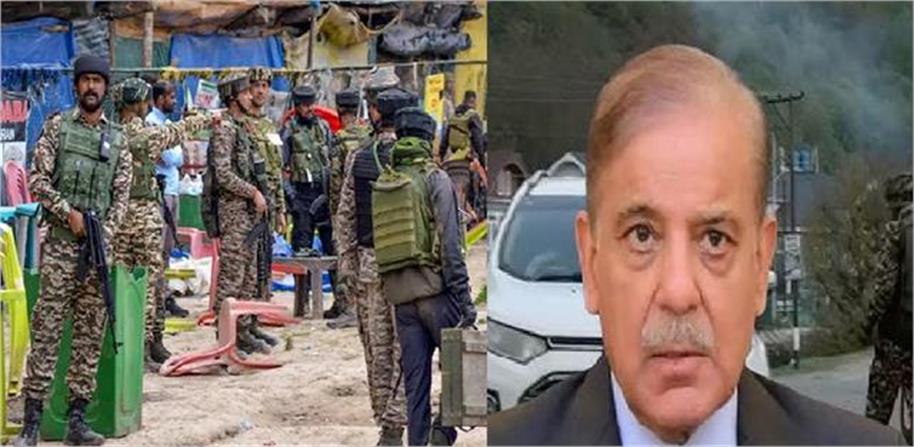
One year after the brutal Pahalgam massacre, a damning report has reignited grave accusations that Pakistan continues to function as a breeding ground for terrorism, with extremist groups not only surviving but expanding through fresh recruitment, sophisticated funding channels and growing international reach.
International Desk: On 22 April 2025, the world witnessed yet another brutal reminder of the terror menace linked to Pakistan-backed networks when four terrorists massacred 26 Hindu tourists in the Baisaran area near Pahalgam in Jammu and Kashmir. Victims were reportedly asked to disclose their religious identity before being executed in cold blood — a chilling act widely condemned as a targeted jihadist massacre.
Responsibility for the attack was claimed by The Resistance Front (TRF), widely seen as a proxy of Pakistan-based Lashkar-e-Taiba, operating under a new label but driven by the same violent ideology. Investigations traced the conspiracy to networks linked to Pakistan-occupied Kashmir, reinforcing long-standing allegations that terror infrastructure across the border remains intact and operational. In a significant international rebuke, the United States designated TRF as a Foreign Terrorist Organisation on 17 July 2025, underscoring its role in the global jihadist ecosystem.
The report alleges that Pakistan’s terror machinery has not retreated despite international scrutiny. It points to the continued activity of Jaish-e-Mohammad, which India targeted during Operation Sindoor in May 2025. While several terror launchpads were reportedly hit, the report warns that the deeper infrastructure survived. Far from being dismantled, extremist groups appear to be mutating. In a disturbing development, Jaish-e-Mohammad reportedly launched a women’s radicalisation wing, Jamaat-ul-Mominat, in Bahawalpur in October 2025, drawing thousands into online indoctrination programmes and reportedly laying the groundwork for wider recruitment cells.
Equally alarming are claims that Lashkar-e-Taiba has developed a maritime strike unit called Water Force, allegedly training for sea-borne attacks modelled on the 26/11 Mumbai carnage. The report says training camps continue to operate in multiple parts of Pakistan, raising fresh questions over Islamabad’s repeated denials regarding the presence of terror sanctuaries on its soil.
The financing architecture behind these groups is also evolving. According to the report, terror outfits are increasingly bypassing conventional banking and exploiting digital tools such as mobile wallets including Easypaisa and JazzCash, micro-donations, and cryptocurrencies like Bitcoin and Tether. The shift has made terror financing more opaque and harder for international watchdogs to track.
The threat, the report warns, is no longer confined to South Asia. Pakistani nationals have reportedly surfaced in terror-linked plots in the United States, while operatives tied to Lashkar-e-Taiba have faced action in South Korea. Indicators of a wider transnational network have emerged across multiple jurisdictions.
Adding to the indictment, the 2026 Global Terrorism Index reportedly ranks Pakistan as the world’s most terrorism-affected country, with more than 1,100 terror incidents and widespread fatalities recorded in 2025. For critics, the findings reinforce what they call an uncomfortable reality: the issue is no longer whether Pakistan harbours terror networks, but why those networks continue to regenerate, adapt and spread.
With mounting concern over what the report describes as a persistent terror ecosystem, pressure is intensifying on bodies such as the FATF and the United Nations to move beyond warnings and impose meaningful consequences. One year after Pahalgam, the report argues, the terror infrastructure behind the massacre is not buried — it is evolving.
The Page 3 News is sharing a video purportedly showing terror leaders in Pakistan threatening another attack on India, a development that warrants strong global condemnation.