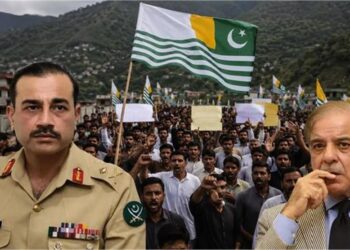

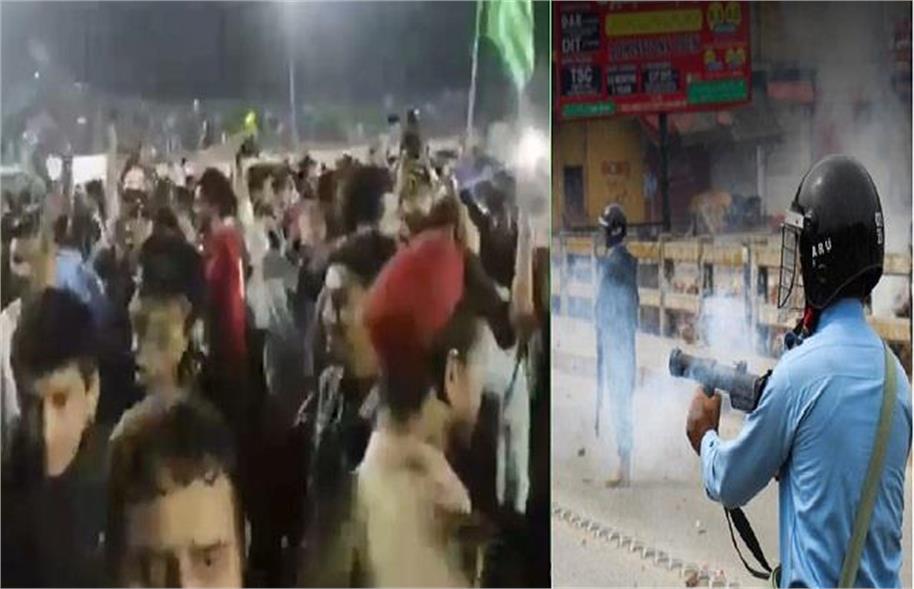
What began as a dispute over reserved assembly seats in Pakistan-occupied Kashmir (PoK) has spiralled into one of the most serious challenges to Islamabad’s authority in the region in recent years. Reports claim that 46 protesters have been killed and more than 1,000 people arrested during a sweeping crackdown by Pakistani authorities, although these figures remain independently unverified.
As public outrage grows, Pakistan’s response has drawn sharp criticism from activists and opposition groups, who accuse the government of choosing force and intimidation over dialogue.
Streets Fall Silent as Crackdown Intensifies
For four consecutive days, demonstrations have rocked major cities across PoK. Markets remain shut, schools and colleges are closed, and daily life has been severely disrupted in Muzaffarabad, Mirpur and several other urban centres.
Instead of addressing the concerns of protesters, authorities have suspended internet services across large parts of the region, effectively isolating communities and restricting the flow of information. Critics argue that such measures reflect a familiar pattern of suppressing dissent rather than engaging with legitimate public grievances.
Residents are reportedly facing shortages of medicines, food supplies and other essentials as the crisis deepens.
The Spark: Controversial Reserved Seats
The unrest centres on 12 reserved seats in the PoK Legislative Assembly allocated to refugees from Jammu and Kashmir who settled elsewhere in Pakistan.
For years, local groups have argued that the arrangement weakens the political voice of PoK residents and allows Islamabad to maintain disproportionate influence over the region’s political structure.
Tensions exploded after the PoK Supreme Court rejected petitions seeking the abolition of these seats on 7 June, ruling that the arrangement was protected under the existing constitutional framework.
The verdict triggered a fresh wave of demonstrations led by the Jammu and Kashmir Joint Awami Action Committee (JAAC), which intensified its campaign against what it describes as an unfair political system.
Pakistan Targets Protest Movement
JAAC, formed in 2023 during protests against property taxes, has become one of the most prominent voices challenging government policies in PoK.
According to reports, the Pakistani government banned the organisation in June 2026 and launched legal action against several of its leaders. Protest organisers claim that authorities are using security agencies, paramilitary forces and criminal prosecutions to silence opposition.
The government’s actions have fuelled accusations that democratic rights and political freedoms in PoK are being systematically curtailed whenever public dissatisfaction reaches a critical level.
International Attention Grows
The controversy is no longer confined to PoK. Demonstrations have been reported in London, New York and other cities with large Kashmiri diaspora populations.
Participants have raised concerns over alleged human rights abuses, mass arrests and restrictions on freedom of expression. The growing international spotlight threatens to increase pressure on Pakistan as questions mount over its handling of the crisis.
Srinagar Voices Concern
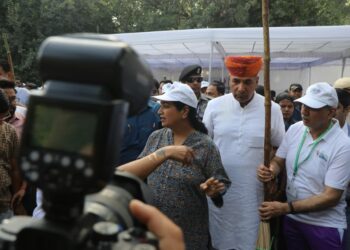
The unrest has also sparked reactions in Srinagar, where protesters condemned Pakistan’s policies in PoK and expressed concern over reports of repression.
Human rights campaigners have warned that ordinary civilians are bearing the brunt of the confrontation. Calls for international scrutiny have also intensified, with demands for an independent investigation into the situation.
Political Fallout Ahead of Elections
The crisis comes at a particularly sensitive moment, with PoK assembly elections scheduled for July.
Political observers believe the unrest could significantly reshape the electoral landscape and expose deep public frustration with Pakistan’s governance of the region. The controversy has placed major political parties—including PTI, PML-N and PPP—under growing pressure to respond to escalating public anger.
A Crisis Bigger Than Reserved Seats
What started as a dispute over representation has evolved into a wider challenge to Pakistan’s administration of PoK. The movement now reflects broader concerns over political rights, governance, accountability and public participation.
With allegations of deaths, mass arrests, communication blackouts and shortages of essential supplies, the crisis has become a test of Islamabad’s willingness to address dissent through democratic means rather than coercive measures.
As tensions continue to rise, the events unfolding in PoK are increasingly being viewed not merely as a local political dispute, but as a significant expression of public discontent against Pakistan’s handling of the region.