
By Chandan Singh | Page 3 News Worldwide | New Delhi
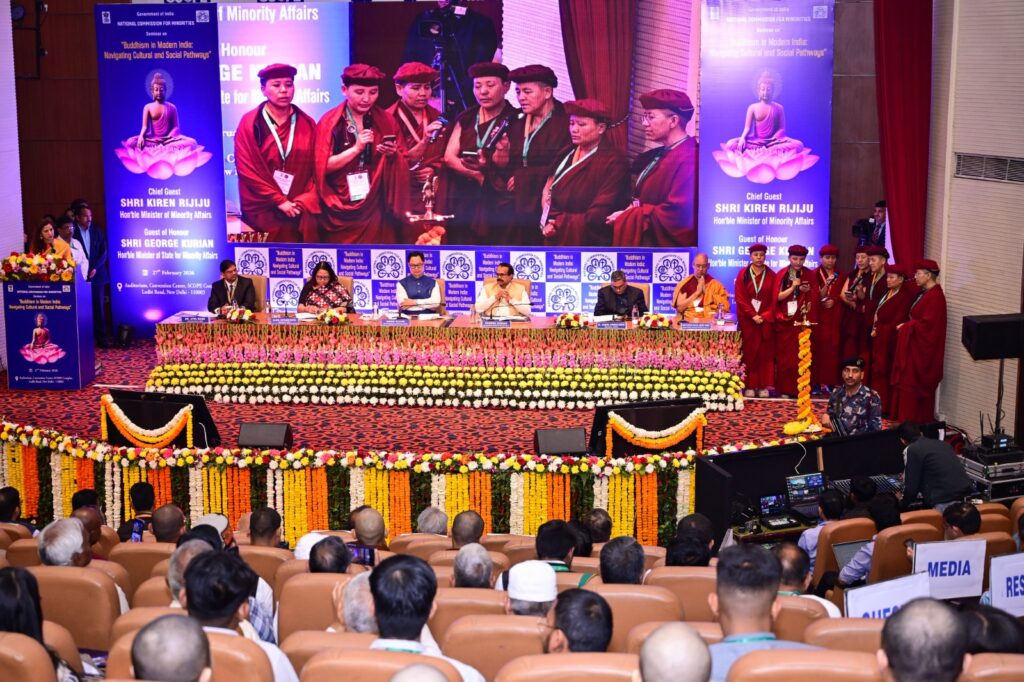
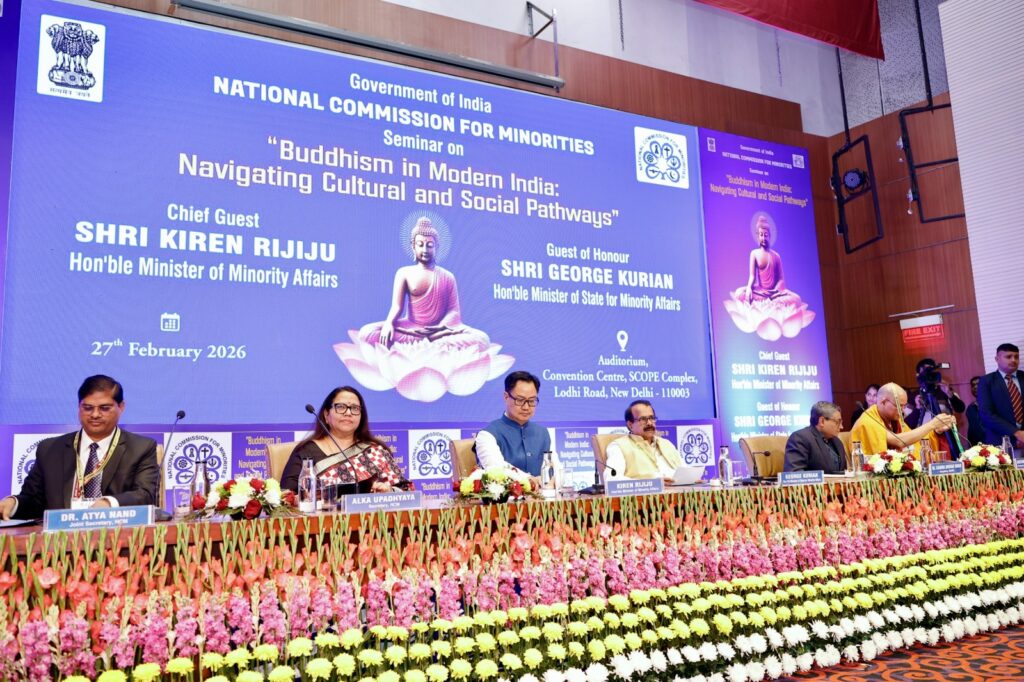
New Delhi: The National Commission for Minorities on Friday organized a national seminar titled “Buddhism in Modern India: Navigating Cultural and Social Pathways” at the SCOP Complex in New Delhi, bringing together policymakers, scholars, spiritual leaders and community representatives to deliberate on the evolving role of Buddhism in the country’s socio-cultural landscape.
The programme was attended by Kiren Rijiju, Union Minister for Minority Affairs, and George Kurian, Minister of State for Minority Affairs. Also present was International Buddhist Confederation Secretary General Shartse Khensur Rinpoche Jangchup Choeden, along with senior officials including Ms. Alka Upadhyaya, Secretary, NCM; Dr. Chandra Shekhar Kumar, Secretary, Ministry of Minority Affairs; and Dr. Atya Nand, Joint Secretary, NCM.
Addressing the gathering, Rijiju stressed the importance of preserving and promoting India’s rich Buddhist heritage while ensuring inclusive development for minority communities. Kurian highlighted the government’s commitment to strengthening cultural identity and expanding educational opportunities among Buddhists across the country.
The seminar also featured a panel discussion moderated by Niraj Kumar, Joint Secretary in the Ministry of Development of North Eastern Region. Speakers included Testen Tashi Bhutia; Acharya Shri Yeshi Phuntsok; Jigme Youdron Lhamo; Mahendra Bhante; Manish Sinha; and Sanjeev Kumar H. M..
Discussions focused on contemporary challenges and opportunities for Buddhism in India, including heritage conservation, education, youth engagement, regional development and the global relevance of Buddhist philosophy in promoting peace and social harmony.
The event concluded with a reaffirmation of the commission’s commitment to encouraging dialogue, research and policy initiatives aimed at strengthening the cultural and social pathways of Buddhism in modern India.