
By Chandan Singh | Page 3 News Worldwide
Patna: At the 5th International Conference on Corporate Social Responsibility (ICCSR) in Patna, UNICEF and the Chandragupt Institute of Management Patna (CIMP) convened a high-level roundtable to strengthen the framework and on-ground rollout of the newly launched Bihar State CSR Policy 2025 — the first such state-level CSR policy in India.
The session, designed to translate the policy into measurable development outcomes, brought together CSR experts, industry leaders and development practitioners to discuss practical pathways for effective implementation.
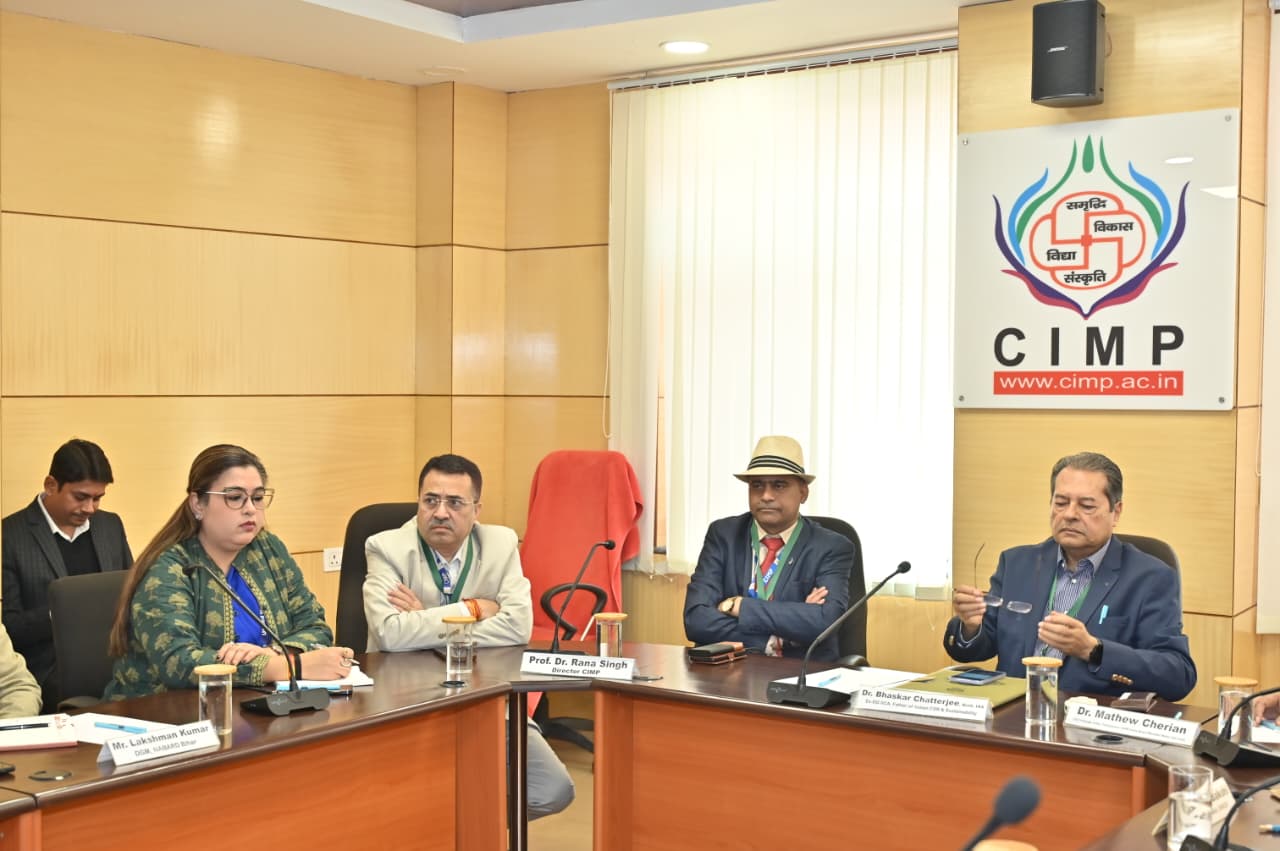
Former IICA Director General and widely regarded “Father of CSR in India,” Bhaskar Chatterjee, said the policy provides long-awaited clarity for corporates but should incorporate incentives encouraging companies to deploy their CSR funds within Bihar.
UNICEF Bihar Chief Margaret Gwada underscored the potential of CSR partnerships in advancing critical sectors such as WASH, nutrition and child-focused programmes. CIMP Director Prof. (Dr.) Rana Singh stressed the need for long-term CSR commitments, noting that sustained investments are essential to demonstrate real impact.
Joining virtually, Hishmi Jamil Husain of Saudi Arabia’s Aramco called Bihar a “high-return geography” for sustained social investment. Former HelpAge India CEO Mathew Cherian urged a rebalancing of CSR allocations toward rural and underserved regions, while Lakshman Kumar, DGM, NABARD, highlighted the need for improved coordination in livelihoods, skilling and rural health.
A focused roundtable following the inaugural session delved into key components of the policy, particularly the development of a dedicated CSR portal and mechanisms for seamless implementation. Moderated by Ramona Bakshi, Partnership Specialist at UNICEF India, the discussion featured representatives from the Gates Foundation, Palladium India, Jubilant Ingrevia, Wabtec, Apollo MedSkills, TERI, ICICI Foundation, ARAMCO and NABARD Foundation.
Participants emphasised the need for district-wise priority mapping, a unified state-level CSR project repository and a sharpened focus on sustainability — both environmental and developmental. Discussions centred around four priority areas: embedding core CSR values such as equity and transparency; enabling flexible funding pathways; strengthening institutional structures at state and district levels; and creating a user-friendly CSR portal to track projects and monitor impact.
Speakers also called for stronger collaboration among government, corporates and civil society, along with more robust monitoring systems, capacity-building for implementing agencies and regular stakeholder consultations.
Notified by the state finance department, the Bihar State CSR Policy 2025 aims to align private sector CSR investments with the development vision of Viksit Bihar @2047 and Viksit Bharat @2047. UNICEF and CIMP will submit recommendations from the roundtable to the state government to support the policy’s rollout.
CIMP’s Prof. Senapati noted that the dialogue marks an important shift from policy formulation to execution, with participants agreeing to form thematic working groups to steer coordinated implementation in the months ahead.