

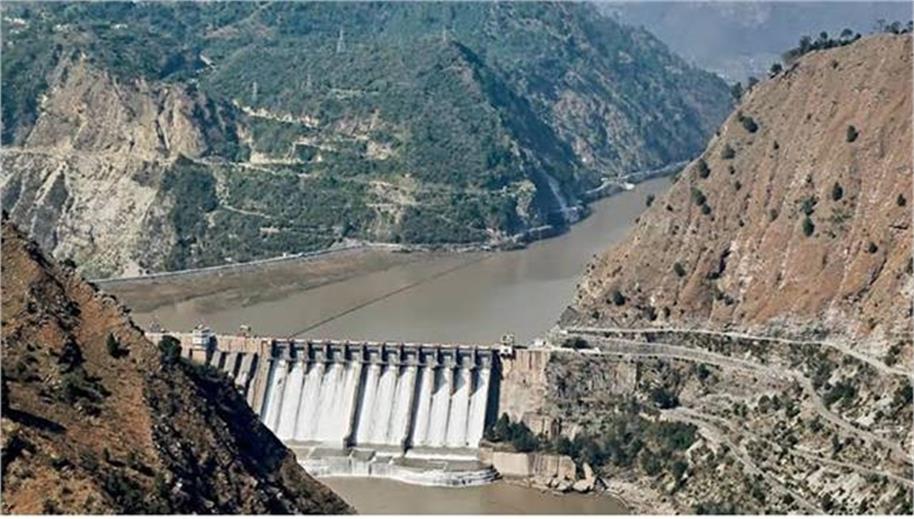
India is preparing to commission two major hydropower projects on the Chenab River, marking a significant development following the suspension of the Indus Water Treaty with Pakistan. The two projects – the 1,000 MW Pakal Dul and 624 MW Kiru hydropower stations – are targeted to become operational by the end of December.
According to reports, the commissioning process for both projects has already begun, with electricity generation expected to start in the coming months. A senior government official associated with the projects confirmed that the necessary procedures are under way.
India Accelerates Hydropower Development After Treaty Suspension
India suspended the Indus Water Treaty, signed with Pakistan in 1960, in April following the Pahalgam terror attack. The commissioning of the Pakal Dul and Kiru projects would mark an important step in India’s efforts to expand hydropower infrastructure on the western rivers.
Under the treaty, India was allocated the waters of the three eastern rivers – Ravi, Beas and Sutlej – which account for approximately 20% of the total water resources of the Indus river system. Pakistan was granted rights over the three western rivers – Indus, Jhelum and Chenab – which carry around 80% of the system’s total water.
A senior government official, speaking on condition of anonymity, explained that completing construction does not mean a hydropower project can immediately begin commercial operations. Each facility must undergo extensive technical inspections, system testing and reservoir-related procedures, including filling and emptying, before it can be commissioned. These processes can take considerable time.
Kiru Hydropower Project: 624 MW Capacity
The Kiru Hydropower Project is being developed on the Chenab River at an estimated cost of Rs 4,287 crore. Prime Minister Narendra Modi laid its foundation stone in February 2019.
The project comprises a 135-metre-high dam and an underground powerhouse, with an installed electricity generation capacity of 624 MW. Once operational, it will add significantly to India’s hydropower generation capacity in the region.
Pakal Dul Project: 1,000 MW Generation Capacity
The Pakal Dul Hydropower Project is being constructed on the Marusudar River, a tributary of the Chenab, at an estimated cost of Rs 8,112 crore.
The project features a 167-metre-high dam and an underground powerhouse. It will have four generating units of 250 MW each, taking its total installed capacity to 1,000 MW.
Both projects are based on the run-of-the-river model, which allows electricity to be generated using the natural flow of water, with only limited water storage facilities.
The projects are being developed by Chenab Valley Power Projects Limited, a joint venture between NHPC and the Jammu and Kashmir State Power Development Corporation.
India Speeds Up Work on Other Chenab Hydropower Projects
Alongside Pakal Dul and Kiru, the central government is accelerating work on other major hydropower projects along the Chenab River.
These include:
- Kwar Hydropower Project: A proposed 540 MW project, expected to become operational by 2028.
- Ratle Hydropower Project: An 850 MW project that has experienced construction delays due to various reasons.
The development of these projects is part of India’s broader strategy to strengthen its hydropower infrastructure and utilise its available resources more effectively.
Indus Water Treaty Suspension: What It Means for India’s Hydropower Strategy
The Indus Water Treaty imposed several technical restrictions on the design and operation of India’s hydropower projects in the Indus Basin, particularly those located on the western rivers.
However, according to a government official, these restrictions are currently not in force following the suspension of the treaty. The absence of the earlier treaty-related constraints and objections is expected to make it easier for India to accelerate infrastructure development.
Although there is still uncertainty over whether India and Pakistan will resume negotiations on the treaty, India is moving ahead with plans to strengthen its infrastructure along the western rivers.
Under the original treaty framework, Pakistan had rights to the unrestricted use of the western rivers, while India’s permitted uses included non-consumptive activities such as run-of-the-river hydropower generation, along with specified agricultural and domestic uses.
India has already developed several hydropower projects on the western rivers, including Baglihar, Salal and Kishanganga. However, the existing infrastructure represents only a fraction of the country’s potential hydropower capacity in the region.
India has an estimated hydropower generation potential of 18,569 MW across the western rivers, but only around 3,500 MW of capacity has been developed so far.
Officials believe that completing the remaining projects will help India strengthen its energy security and make better use of its hydropower resources.
Another proposal under consideration involves constructing a 10–12 km-long tunnel to divert water from the Chenab River towards the Ravi River. If implemented, the proposal could further strengthen India’s water management infrastructure.
Shahpur Kandi Project Expected to Become Operational by Mid-2027
India is also making progress on the eastern rivers, where the Shahpur Kandi Multipurpose Project on the Ravi River is expected to become operational by mid-2027.
A senior official from the Punjab Irrigation Department said that construction of the dam has been completed, while the project’s 206 MW hydropower unit is in its final stages.
India is already utilising approximately 95% of its allocated share of the eastern rivers’ water through major infrastructure projects, including:
- Bhakra Dam on the Sutlej River.
- Ranjit Sagar Dam on the Ravi River.
- Pong Dam on the Beas River.
- Pandoh Dam on the Beas River.
A Major Push to Strengthen India’s Water and Energy Infrastructure
The planned commissioning of the Pakal Dul and Kiru hydropower projects represents a significant addition to India’s energy infrastructure in Jammu and Kashmir.
With several other projects under construction or in the planning stage, India is seeking to expand its hydropower generation capacity, improve energy security and strengthen water management infrastructure across the Indus river system.
The coming years will be crucial in determining how quickly these projects are completed and how India’s approach to the western rivers evolves following the suspension of the Indus Water Treaty.