
By Chandan Singh | Page 3 News Worldwide | New Delhi
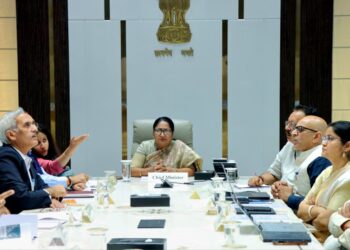
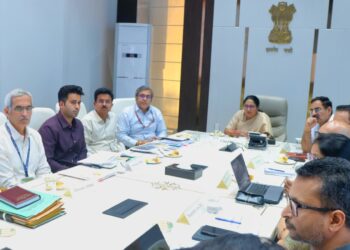
New Delhi: The Indian Institute of Corporate Affairs (IICA) on Thursday hosted a high-level delegation from the National Productivity Council (NPC) to explore strategic collaboration in the areas of training, research, productivity, sustainability and compliance support, aligned with the national vision of Viksit Bharat.
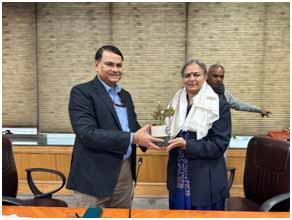
The NPC delegation was led by its Director General, Smt. Neeraja Shekhar, and Deputy Director General (Group) Shri Umashankar Prasad. They were welcomed by IICA Director General and CEO Gyaneshwar Kumar Singh, who felicitated the visiting dignitaries.
Addressing the gathering, Singh highlighted the evolving demands of industry and the need for institutions to remain relevant to national priorities. He said India’s leadership has articulated a clear roadmap for the future and institutions must contribute both individually and collaboratively to achieve the goal of a developed India. Institutional partnerships, he noted, are crucial to address emerging challenges in governance, productivity, sustainability and innovation.
During the visit, Heads of various Schools and Centres at IICA made detailed presentations on the institute’s mandate and activities, outlining its role in education, training, research, advocacy and advisory services for government and the private sector. The presentations also highlighted IICA’s expanding national footprint, including its upcoming North-East campus aimed at supporting regional development and capacity building.
Speaking at the interaction, NPC Director General Neeraja Shekhar traced the organisation’s origins to 1958, soon after Independence, when India faced resource constraints and an urgent need to enhance productivity. She recalled the historic productivity delegation to Japan that laid the foundation for institutionalising productivity efforts in the country. Over the decades, NPC has expanded its work beyond industry to agriculture, services, MSMEs, sustainability, green productivity and ESG-linked initiatives.
She said NPC is a practice-oriented organisation with strong implementation capabilities, supported by expert teams and campus infrastructure. Its work spans environment and energy management, industrial engineering, organisational restructuring, human resource studies and capacity building. She also underlined NPC’s long-standing role in conducting national certification examinations for Energy Managers, Energy Auditors and Supervisors, contributing directly to improvements at the shop-floor and process levels.
Shekhar further highlighted NPC’s engagement with the Asian Productivity Organization, which enables international exposure through study visits, expert exchanges and productivity benchmarking. These initiatives help assess industrial readiness, organisational strength, financial capability and manufacturing maturity, particularly for MSMEs.
NPC’s growing role in compliance support was also outlined, especially for MSMEs and startups, including assistance in environmental audits, energy compliance, water management, BRSR reporting and ESG advisory. NPC is also working with the Ministry of Environment, Forest and Climate Change on emerging compliance frameworks and capacity development to meet regulatory requirements.
Echoing the need for convergence, Singh said training institutions, research bodies and policy organisations can no longer operate in silos. He identified areas such as international exposure programmes, CSR impact frameworks, compliance capacity building and applied research as immediate opportunities for collaboration between IICA and NPC.
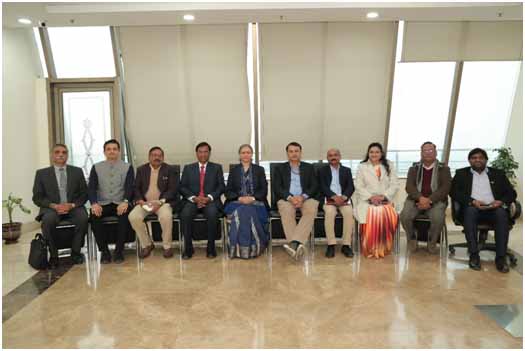
Both institutions expressed a strong intent to work together, combining IICA’s strengths in policy research, training and advisory services with NPC’s implementation-driven productivity expertise to support India’s transition towards a competitive, innovative and sustainable high-income economy. The event was coordinated by Dr Naveen Sirohi, Head, School of Finance and Management, IICA.