
By Chandan Singh | Page 3 News Worldwide | New Delhi
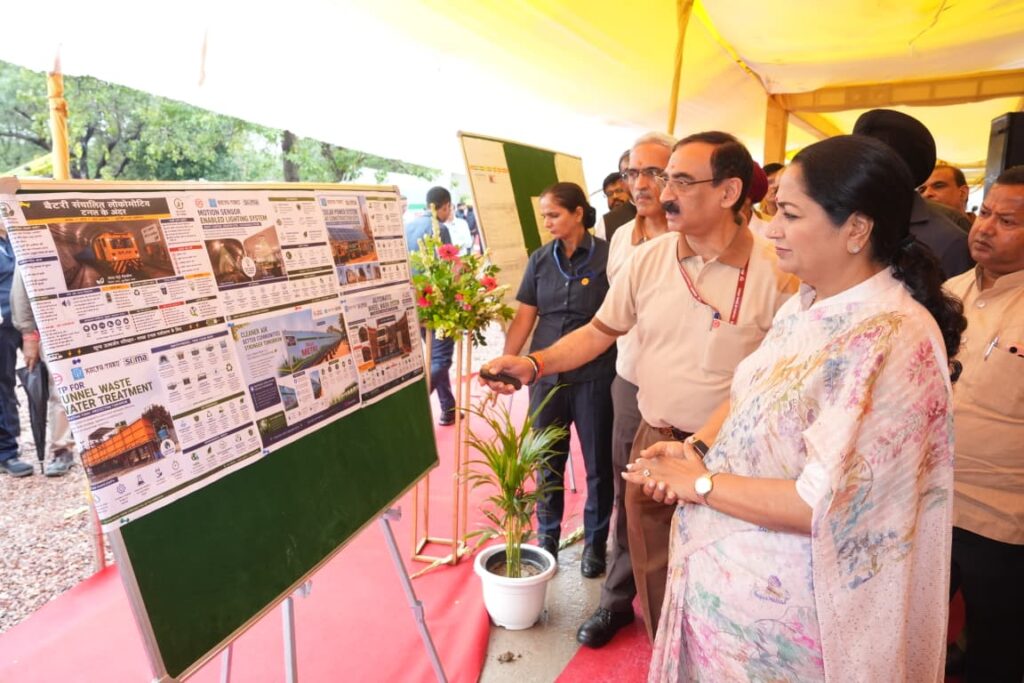
CM says new Inderlok–Indraprastha corridor will improve connectivity, cut congestion and pollution, and power sustainable urban growth
New Delhi: Delhi Chief Minister Rekha Gupta on Thursday launched the construction of the 12.377-km fully underground Inderlok–Indraprastha Metro Corridor, marking a major expansion of the Delhi Metro network. The project commenced with diaphragm wall construction at the upcoming Sarai Rohilla Metro Station.
Calling the Metro the “foundation of a developed Delhi,” Gupta said the project would provide faster, safer and environmentally friendly public transport while reinforcing the Capital’s urban infrastructure. She added that the Delhi Government is working in close coordination with the Centre under Prime Minister Narendra Modi’s vision of building world-class infrastructure.
The new corridor will extend the Magenta Line (Line-8) by 12.377 km and include 10 underground stations—Inderlok, Daya Basti, Sarai Rohilla, Ajmal Khan Park, Jhandewalan Temple, Nabi Karim, New Delhi, Delhi Gate, Delhi Sachivalaya–IG Stadium and Indraprastha.
Once operational, the Magenta Line will stretch to nearly 89 km, making it the longest line in the Delhi Metro network. It will also feature the highest number of interchange and underground stations, significantly enhancing cross-city connectivity.
The corridor will offer seamless interchanges with seven Metro lines—the Red and Green Lines at Inderlok, Magenta Line at Nabi Karim, Yellow Line and Airport Express at New Delhi, Violet Line at Delhi Gate and Blue Line at Indraprastha.
The project is expected to improve access to major transport hubs and landmarks, including New Delhi Railway Station, Sarai Rohilla Railway Station, Delhi Secretariat, Arun Jaitley Stadium, Indira Gandhi Indoor Stadium, India Gate, Kartavya Path, the National War Memorial and Central Vista. It will also strengthen connectivity to commercial centres, educational institutions and densely populated neighbourhoods in Central Delhi.
Sarai Rohilla is set to emerge as a key transit hub, linking residential areas, Karol Bagh Market, Deshbandhu Gupta Road and other commercial zones with the Metro network.
Highlighting the environmental benefits, Gupta said the Metro expansion would encourage greater use of public transport, reducing dependence on private vehicles, easing traffic congestion, lowering fuel consumption and cutting carbon emissions.
“Better public transport will reduce pollution, improve mobility and strengthen Delhi’s economy,” the Chief Minister said, reiterating the government’s commitment to building a modern, sustainable and citizen-friendly transport system.