

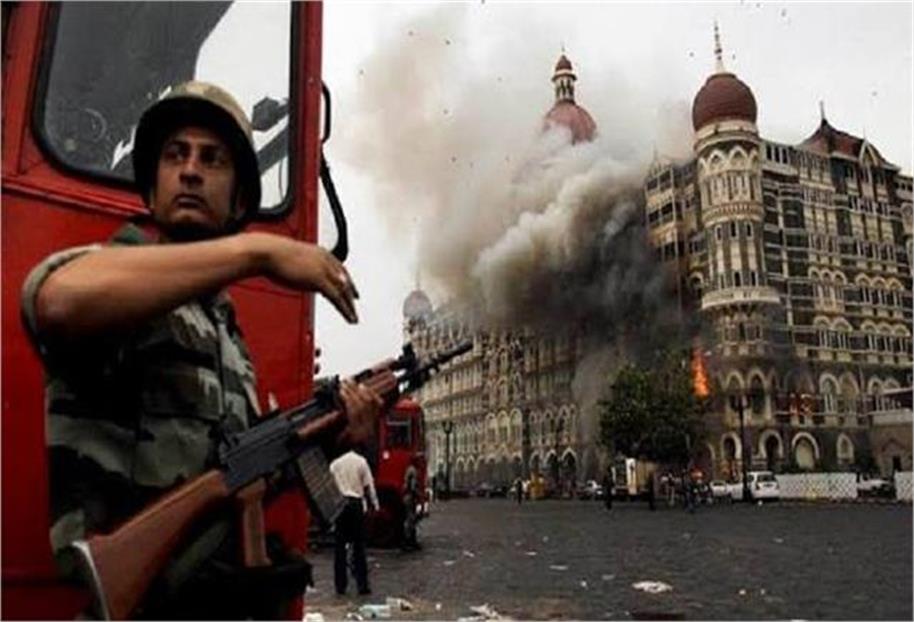
Eighteen years after the 26/11 Mumbai attacks, India’s approach to combating terrorism has undergone a significant transformation. From the surgical strikes in 2016 and the Balakot air strikes in 2019 to Operation Sindoor in 2025, India has increasingly relied on direct military action against cross-border terror infrastructure. While casualties among civilians and security personnel have declined sharply, persistent terror networks and emerging security threats remain major challenges.
New Delhi: The anniversary of the 26/11 Mumbai terror attacks offers an opportunity to assess how India’s fight against terrorism has evolved over the past 18 years. What was once largely characterised by defensive measures and diplomatic responses has increasingly included targeted military operations against terrorist infrastructure across the border.
Operation Sindoor, launched in May 2025 following the Pahalgam terror attack, marked another significant development in this approach. The operation involved strikes against terrorist facilities in Pakistan and Pakistan-occupied Kashmir, reflecting India’s willingness to respond militarily to major terror attacks.
Union Home Minister Amit Shah recently highlighted the government’s assessment of India’s progress in tackling terrorism. Speaking at the Counter-Terrorism Conference in Delhi on 19 November, he praised the security forces and said that the killing of Latif Bhat, described as the last known locally active terrorist, marked the elimination of terrorists of Indian origin in Kashmir. He also called for a more aggressive counter-terrorism strategy and further strengthening of the country’s security framework.
Terror-related fatalities show a significant decline
Data from the South Asia Terrorism Portal indicates a substantial reduction in the number of terrorists, security personnel and civilians killed in terror-related incidents over the years.
The number of terrorists killed has fallen to 25 so far this year, compared with 3,005 in 2001 and 1,232 in 2008. Similarly, fatalities among security personnel have dropped to four this year, against 883 in 2001 and 366 in 2008.
Civilian casualties have also declined considerably. Two civilian deaths have been recorded so far this year, compared with 1,508 in 2001 and 915 in 2008.
These figures highlight the changing security situation in the country, although the threat posed by cross-border terrorism and evolving militant networks remains.
From Kashmir militancy to the 26/11 watershed
Cross-border terrorism emerged as a major national security challenge during the 1990s, particularly in Jammu and Kashmir, where Pakistan-backed militant activities intensified.
The December 1999 hijacking of Indian Airlines flight IC-814 further exposed the threat posed by Pakistan-based terrorist organisations. In a bid to secure the release of the passengers, India released several militants, including Masood Azhar and Ahmed Omar Saeed Sheikh.
The challenge escalated on 13 December 2001, when Jaish-e-Mohammed terrorists attacked the Indian Parliament. India responded by launching Operation Parakram, involving a large-scale military mobilisation along the border with Pakistan. However, international diplomatic pressure and concerns over a possible nuclear confrontation eventually brought the military stand-off to an end without direct military engagement.
The years that followed witnessed several major terrorist attacks, including the 2002 Akshardham temple attack, the 2005 Delhi market bombings, the 2006 serial blasts in Varanasi, the 2008 Delhi blasts and the 2011 explosion outside the Delhi High Court.
However, the attacks of 26 November 2008 in Mumbai marked a turning point in India’s internal security debate.
Ten heavily armed terrorists who arrived by sea from Pakistan carried out coordinated attacks at several prominent locations, including the Taj Mahal Palace Hotel, the Oberoi-Trident, Chhatrapati Shivaji Terminus and Nariman House. The siege continued for nearly 60 hours, leaving 166 people dead.
Beyond the devastating loss of life, the attacks exposed major gaps in intelligence coordination, security preparedness and coastal surveillance. They also prompted a wider reassessment of India’s counter-terrorism capabilities and institutional response mechanisms.
Surgical strikes and Balakot: A shift towards direct military action
A more assertive approach to counter-terrorism became increasingly evident after the Narendra Modi-led government took office in May 2014.
In September 2016, following the Jaish-e-Mohammed attack on the Indian Army’s Uri military camp, which resulted in the deaths of soldiers, India announced that its forces had conducted surgical strikes against terrorist launch pads in Pakistan-occupied Kashmir.
The operation was widely seen as a departure from India’s earlier approach, signalling its willingness to undertake targeted military action across the Line of Control in response to major terror attacks.
Another defining moment came on 14 February 2019, when a suicide attack on a Central Reserve Police Force (CRPF) convoy in Pulwama killed 40 personnel.
In retaliation, the Indian Air Force carried out air strikes against a Jaish-e-Mohammed facility in Balakot, Pakistan, on 26 February 2019. The operation involved Indian aircraft entering Pakistani airspace and represented a further expansion of India’s military response to cross-border terrorism.
Operation Sindoor: Expanding the scope of India’s response
The terrorist attack in Pahalgam on 22 April 2025, in which 26 people were killed, prompted another major military response from India.
The attack triggered widespread outrage, particularly after reports that the terrorists had identified male victims by asking their names before shooting them.
On 7 May 2025, the Indian Armed Forces launched Operation Sindoor, targeting nine identified terrorist facilities in Pakistan and Pakistan-occupied Kashmir. The operation continued over four days and represented another significant phase in India’s evolving counter-terrorism strategy.
According to the account, military infrastructure, including airbases and radar installations, also sustained damage during the subsequent hostilities. Pakistan later sought a ceasefire, bringing the immediate military confrontation to an end.
Operation Sindoor demonstrated the expanded scope of India’s response to major terrorist attacks, extending beyond diplomatic measures and targeted operations along the Line of Control.
The changing nature of India’s counter-terrorism strategy
India’s counter-terrorism approach has evolved considerably since the Mumbai attacks of 2008. The shift towards direct military action, alongside improvements in security preparedness and intelligence capabilities, has changed the country’s response to cross-border terrorism.
The decline in reported fatalities among civilians and security personnel, together with the increasing use of targeted operations against terrorist infrastructure, reflects important changes in the security landscape.
However, the challenge is far from over. Cross-border terror networks, their support structures and changing methods of operation continue to test India’s security apparatus.
The experience of the past 18 years suggests that counter-terrorism requires more than military responses alone. Intelligence coordination, border management, coastal security, international cooperation and efforts to disrupt terrorist financing and support networks remain essential components of India’s long-term security strategy.